Reptile Hygiene & Biosecurity Best-Practice Hygiene for Professional Reptile Catchers
Professional reptile relocation involves more than safely removing an animal from a property.
Every time a snake catcher or reptile handler handles an animal, uses a snake bag, transport container, hook or other piece of equipment, there is the potential to carry infectious organisms from one animal or location to another.
With serious fungal diseases now being detected in Australian wild reptiles, biosecurity needs to become part of everyday professional reptile relocation.
Urban Reptile Removal Biosecurity Standard
One animal. One clean bag or container. Every time.
At Urban Reptile Removal, equipment that has been used with one reptile is treated as potentially contaminated until it has been properly cleaned, disinfected and dried.
Used equipment is kept separate from clean equipment, and visibly sick reptiles are managed with additional biosecurity precautions.
Our aim is simple:
Protect the individual animal. Protect the public. Protect the wild population it belongs to.
Why Does Reptile Hygiene Matter?
Professional reptile catchers may handle hundreds or even thousands of wild reptiles over the course of their careers.
Without appropriate hygiene procedures, snake bags, hooks, transport containers, clothing, footwear and even vehicles can potentially become pathways for infectious organisms to move between animals and locations.
This is becoming increasingly important as emerging fungal diseases are identified in Australian reptile populations.
Ophidiomycosis – Snake Fungal Disease
Ophidiomycosis is caused by the fungus Ophidiomyces ophidiicola.
In 2026, researchers published the first reported detections of the fungus in free-ranging Australian snakes. Cases were identified in south-east Queensland in species including Coastal Carpet Pythons, Eastern Bandy-bandys and White-crowned Snakes.
Affected animals can develop significant skin disease, abnormal shedding, inflammation and other complications.
Nannizziopsis Fungal Disease
Another serious fungal pathogen, Nannizziopsis barbatae, is already known from free-ranging reptiles in Queensland, New South Wales and Western Australia.
The fungus has been associated with severe dermatitis, debility and death in a range of reptiles, including Eastern Water Dragons and Blue-tongue Lizards.
Wildlife Health Australia advises that infection can spread through direct physical contact and through contaminated environments.
This makes appropriate hygiene particularly important for anyone routinely handling wild reptiles.
Best-Practice Procedures
1. One Reptile – One Clean Bag
Every reptile should be placed into a clean and disinfected snake bag or transport container.
A bag that has carried one animal should not be used for another animal until it has been properly cleaned, disinfected and dried.
Professional catchers should carry enough clean bags to complete multiple jobs without needing to reuse contaminated bags during the working day.
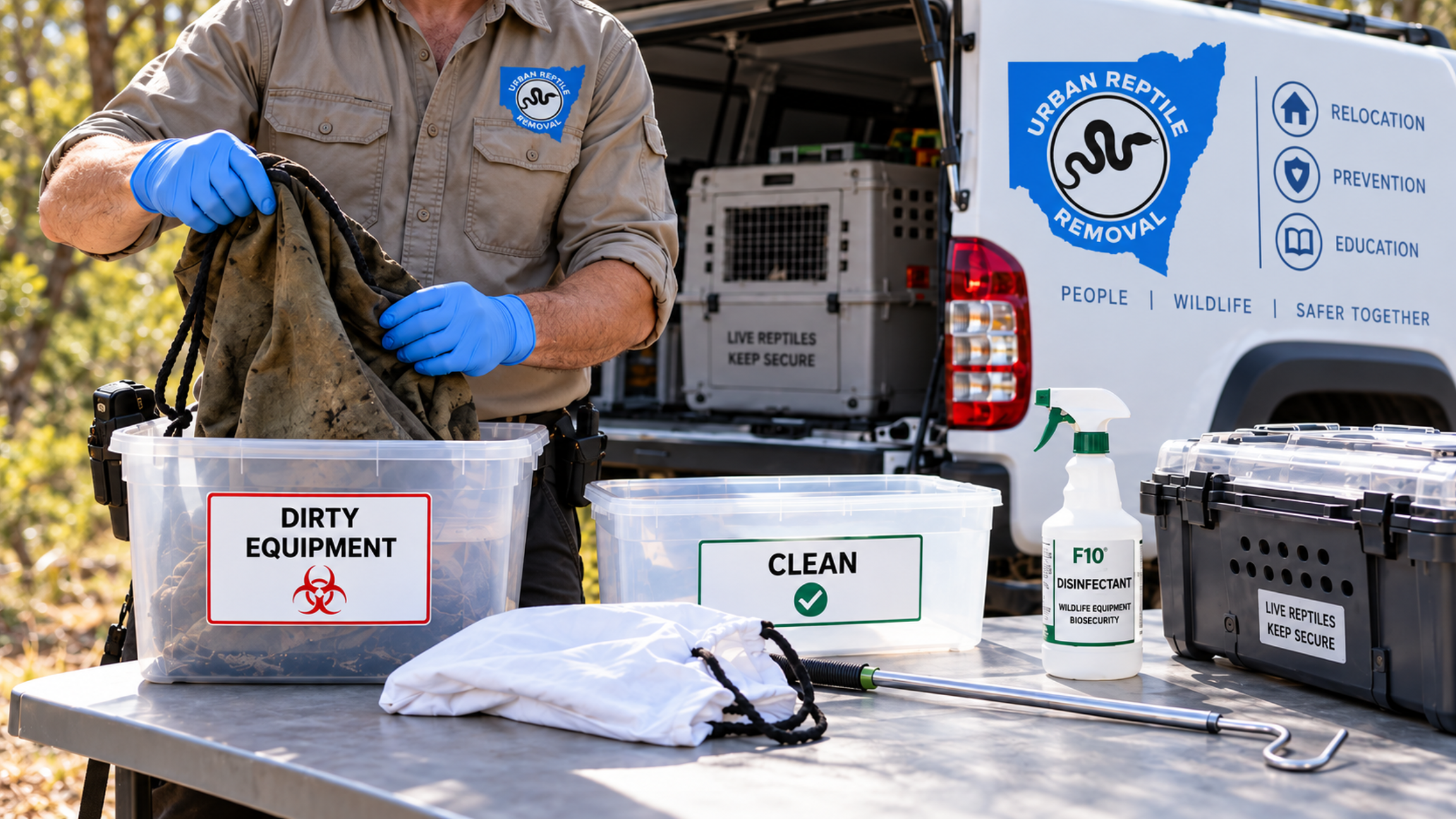
After use, bags should immediately be placed into a separate sealed container or designated dirty equipment bag so they cannot contaminate clean equipment.
Cleaning Snake Bags
After every animal:
Place the used bag directly into the designated dirty-equipment container.
Turn the bag inside out.
Remove faeces, shed skin, soil and other organic material.
Wash away visible contamination.
Soak the bag in an appropriate reptile-safe disinfectant, following the manufacturer's recommended dilution and contact time.
Wash snake bags separately from normal household washing.
Allow bags to dry completely before returning them to service.
A visibly dirty bag should never simply be sprayed with disinfectant and considered clean.
Cleaning comes before disinfection.
Organic material such as faeces, soil, blood and shed skin can interfere with the effectiveness of disinfectants.
2. Clean Equipment Between Animals
Anything that contacts a reptile should be considered potentially contaminated.
This can include:
snake hooks
tongs
handling tubes
transport tubs
buckets
restraint equipment
scales
temporary holding containers
work surfaces.
Visible dirt and organic material should first be removed.
Equipment should then be disinfected using an appropriate reptile-safe disinfectant according to the manufacturer's directions.
Where required, equipment should then be rinsed and allowed to dry thoroughly before reuse.
3. Separate Clean and Dirty Equipment
Every reptile-catching vehicle should have clearly separated clean and contaminated areas.
CLEAN
Unused or disinfected:
snake bags
containers
hooks
gloves
towels
handling equipment.
DIRTY
Used equipment awaiting cleaning and disinfection.
Dirty equipment should ideally be placed into sealed tubs or bags immediately after use.
A clean snake bag sitting beside a contaminated transport tub can itself become contaminated before it ever reaches the next animal.
4. Hand Hygiene
Hands should be washed thoroughly with soap and water after handling reptiles, their waste or contaminated equipment, and before handling another animal wherever practical.
Cuts and wounds on the hands should be covered.
Disposable gloves should be considered when handling:
reptiles with visible skin lesions
reptiles showing abnormal shedding
animals contaminated with faeces or body fluids
obviously sick reptiles
dead reptiles.
Gloves should be changed between animals.
Wearing gloves does not replace hand washing.
5. Clothing and Footwear Matter
Pathogens are not restricted to snake bags and catching equipment.
Biological material can also be carried between locations on:
boots
trousers
shirts
gloves
vehicle floors
equipment boxes.
Clothing that becomes heavily contaminated during a capture should be changed before handling other reptiles where practical and washed before reuse.
Boots contaminated with faeces, biological material or significant amounts of soil should be cleaned before entering another sensitive location.
6. Keep Captive and Wild Reptile Equipment Separate
Reptile catchers who also keep reptiles privately need to be particularly careful.
Wherever possible, equipment used with captive reptiles should not be used for professional wild reptile relocation.
Likewise, wild-caught animals should not unnecessarily be brought into reptile rooms or other areas containing captive collections.
Professional catchers should ideally maintain separate:
Wildlife relocation equipment
and
Captive reptile equipment.
This reduces the chance of introducing disease from captive animals into wild populations, or vice versa.
7. Take Extra Precautions With Sick Reptiles
Professional reptile catchers may be among the first people to encounter an emerging wildlife disease.
Signs of concern can include:
unusual crusting of the skin
yellow, brown or discoloured skin lesions
ulcerated or bleeding skin
abnormal or retained sheds
unexplained swelling
damaged or dying scales
lesions around the mouth or head
severe lethargy
significant loss of condition
unusual weakness
multiple sick or dead reptiles at the same location.
An animal displaying significant signs of disease should not simply be treated as a routine relocation.
The reptile should be isolated from other animals and appropriate veterinary or wildlife-health advice sought.
All bags, equipment and surfaces that contacted the animal should be treated as potentially contaminated.
8. Avoid Unnecessary Translocation
Reptiles should not be moved greater distances than necessary.
This is particularly relevant to animals such as Blue-tongue Lizards, which may have established home ranges around suburban properties.
If a healthy Blue-tongue is not in immediate danger, the best outcome may sometimes be to leave the animal where it is and remove or reduce the threat instead.
Unnecessary long-distance movement potentially creates another mechanism through which disease organisms could be moved between otherwise separated reptile populations.
9. Never Transfer Reptiles Through Contaminated Bags
Cross-contamination can occur even when neither animal appears sick.
If one animal contaminates a bag and another animal is subsequently placed into that bag, infectious material can potentially be transferred between animals from completely different locations.
The safest rule is straightforward:
One animal. One clean bag. Every time.
10. Replace Equipment That Cannot Be Properly Cleaned
Old, damaged or porous equipment can become difficult to clean effectively.
Damaged snake bags, badly contaminated materials and equipment that cannot be reliably disinfected should be removed from service.
When dealing with suspected infectious disease, inexpensive equipment may be better discarded than reused.
Disease Surveillance Is Part of Professional Reptile Catching
Professional reptile catchers spend more time interacting with wild reptiles than almost any other group in the community.
That places the industry in a valuable position to notice:
unusual skin diseases
clusters of sick animals
unexplained reptile deaths
emerging changes in wildlife health.
Good hygiene protects animals.
Good observation can also help identify emerging disease before it becomes widespread.
At Urban Reptile Removal, we believe biosecurity should be considered a fundamental part of professional reptile relocation.
Every capture should leave the animal's environment no more contaminated than we found it.
