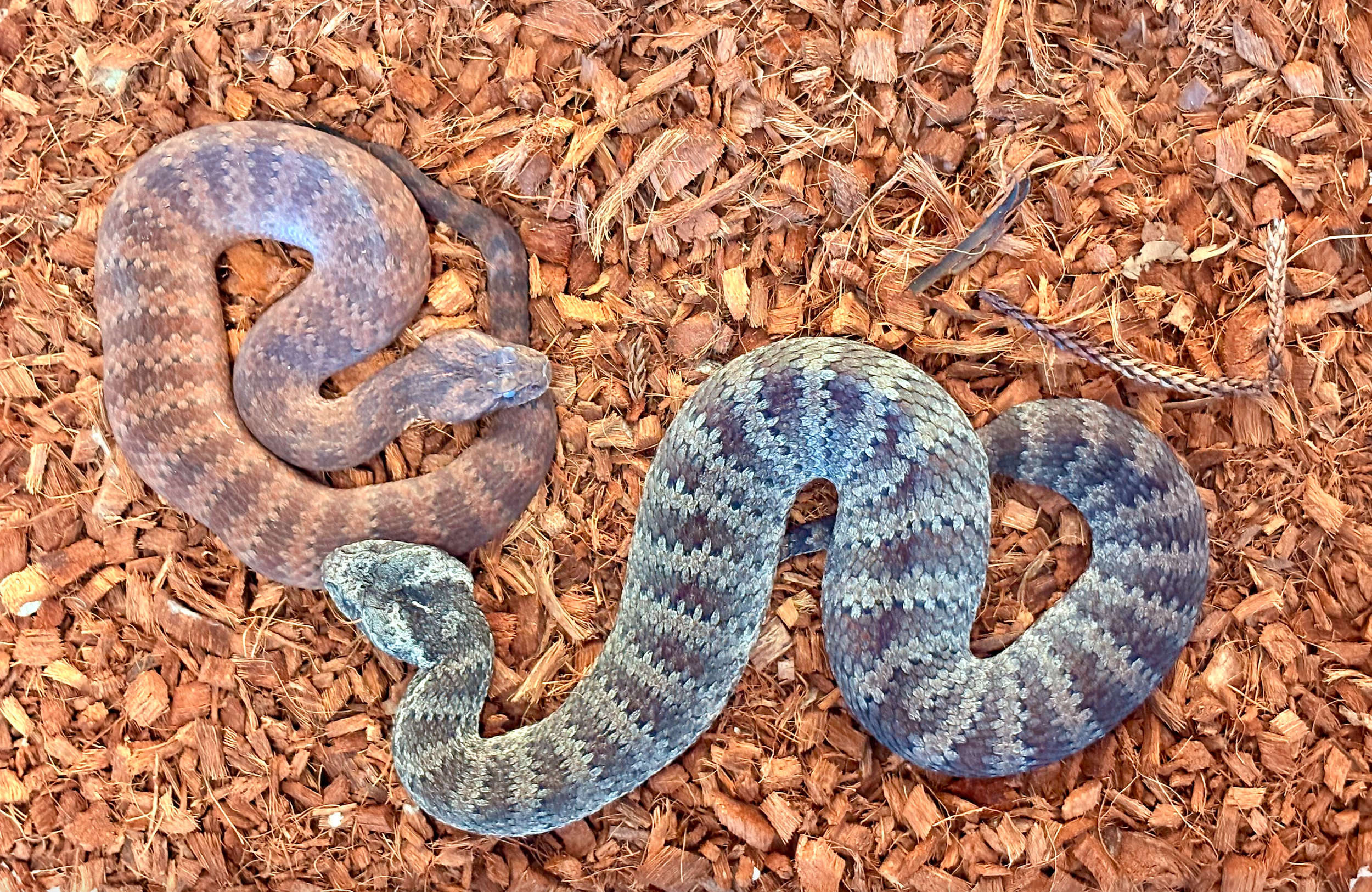
Common Death Adder
The Common Death Adder is one of Sydney's most distinctive and most dangerous snakes — a sit-and-wait ambush predator that does not flee when approached, delivers fast accurate strikes with highly neurotoxic venom, and is genuinely hard to see even when you know where it is. They are restricted to bushland habitats with sandy soils and leaf litter, particularly on the Central Coast, in parts of the Hawkesbury, and around the Sutherland Shire. Encounters are uncommon but consequential.
The right response to finding one is to stop, identify the exact location, keep it in sight, mark the spot, back away and call a licensed reptile catcher. Don't try to handle, kill or interact with the snake. If anyone is bitten, treat it as a life-threatening emergency regardless of how mild the initial symptoms appear.
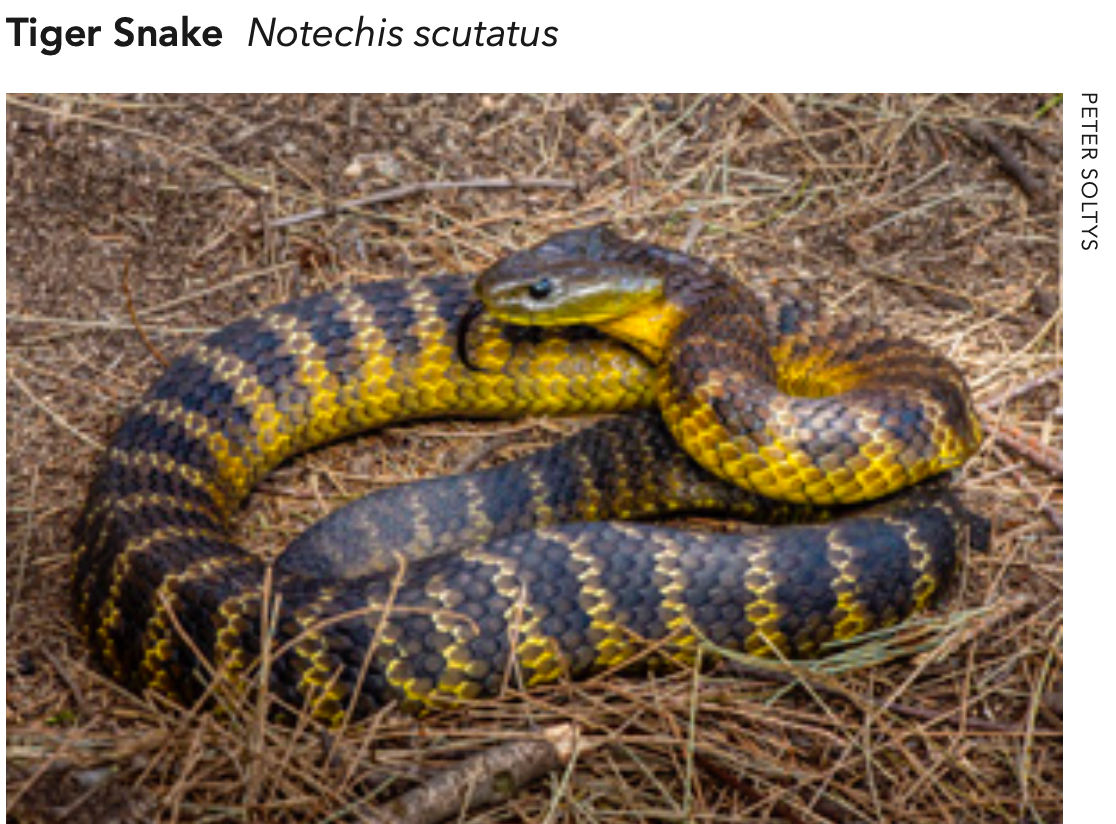
Tiger Snake
The Tiger Snake is one of Australia's most dangerously venomous snakes — historically a major cause of snakebite deaths, and still capable of killing a person within hours without treatment. They are largely gone from metropolitan Sydney but remain present in the Blue Mountains, the Southern Highlands and the cooler, wetter parts of the Greater Sydney region. They are wetland specialists, closely tied to frogs and damp habitats, and they defend themselves more readily than most Sydney snakes.
The right response to finding one is to stop, back away slowly, keep pets and children clear, watch where the snake goes, and call a licensed reptile catcher. If anyone is bitten, treat it as a life-threatening emergency.
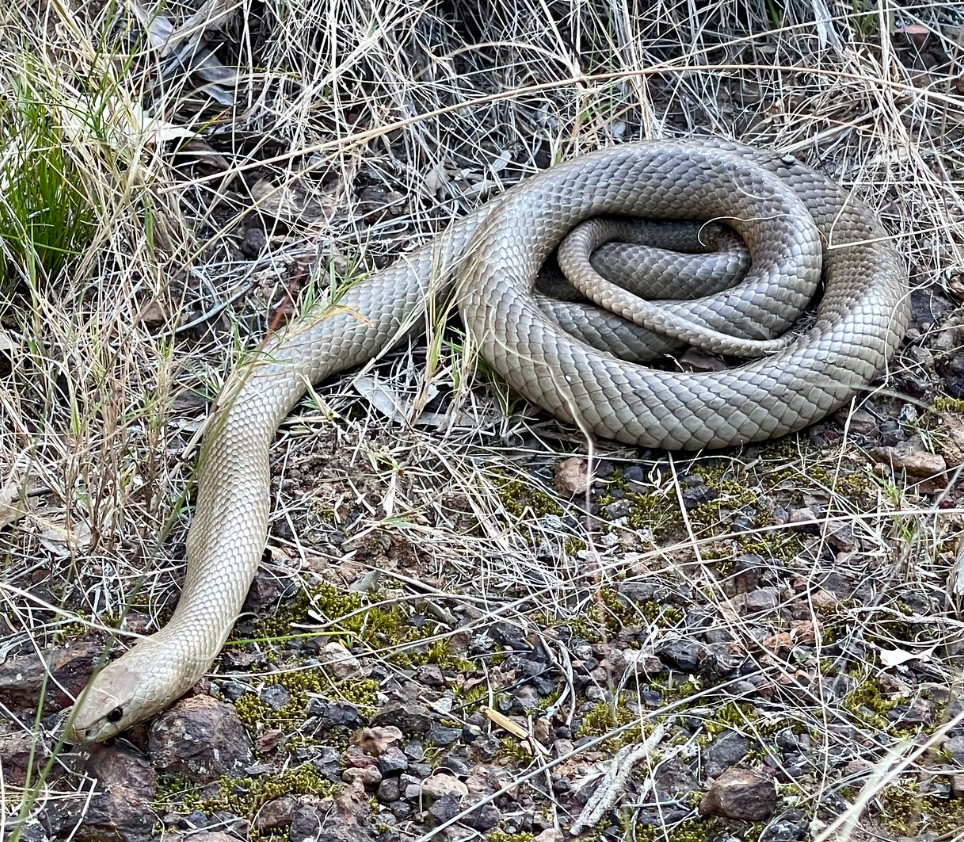
Eastern Brown Snake
The Eastern Brown Snake is Australia's most medically significant snake. They are dangerously venomous, widespread across Sydney's western and outer suburbs, and capable of killing a person within hours if a bite is untreated. They are not aggressive, but they will defend themselves vigorously when they feel threatened, and they don't always retreat. Juveniles are just as dangerous as adults despite looking quite different.
The right response is non-negotiable: stop, back away, keep pets and children clear, watch where the snake goes, and call a licensed reptile catcher. Don't try to handle, kill or interact with the snake. If anyone is bitten, treat it as a life-threatening emergency.
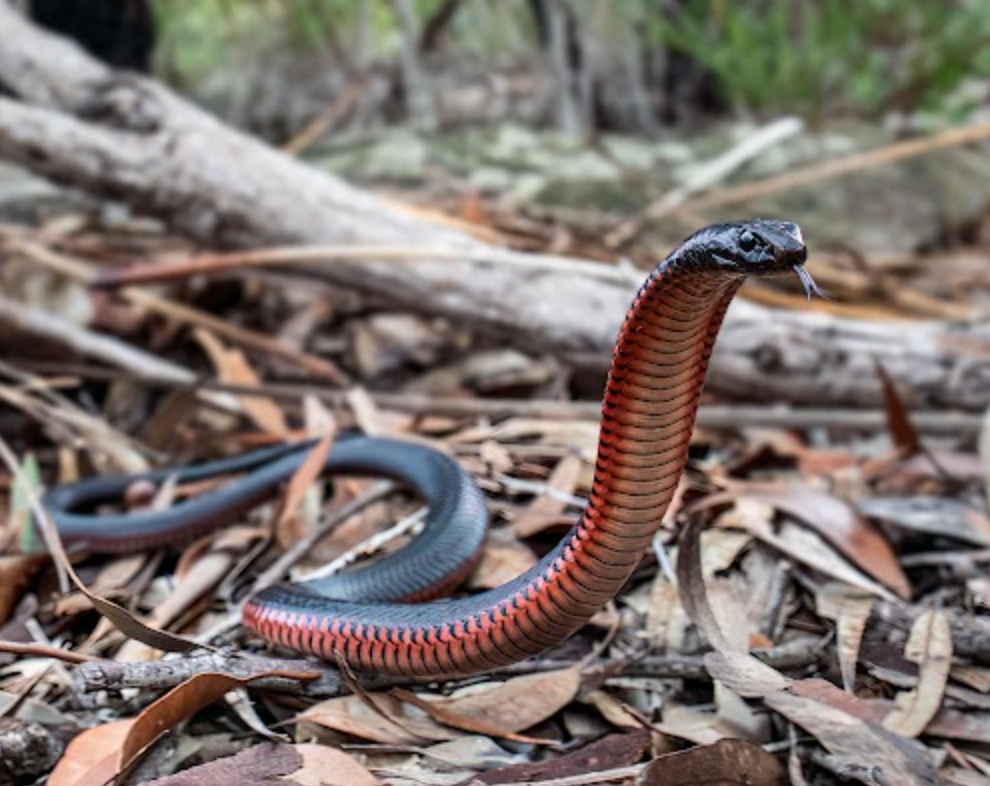
Red-bellied Black Snake
The Red-bellied Black Snake is one of Sydney’s most recognisable venomous snakes — glossy black with a vivid red or pink belly, and far less dangerous to people than its reputation suggests, with bites rarely proving fatal. They live close to water, favouring creeks, dams, swamps and the damp margins of well-watered bushland right across the Greater Sydney region. Strong swimmers and frog specialists, they are tied to wet habitats in much the same way Tiger Snakes are. Shy and even-tempered by nature, they almost always retreat when given the chance and bite only when cornered or trodden on.
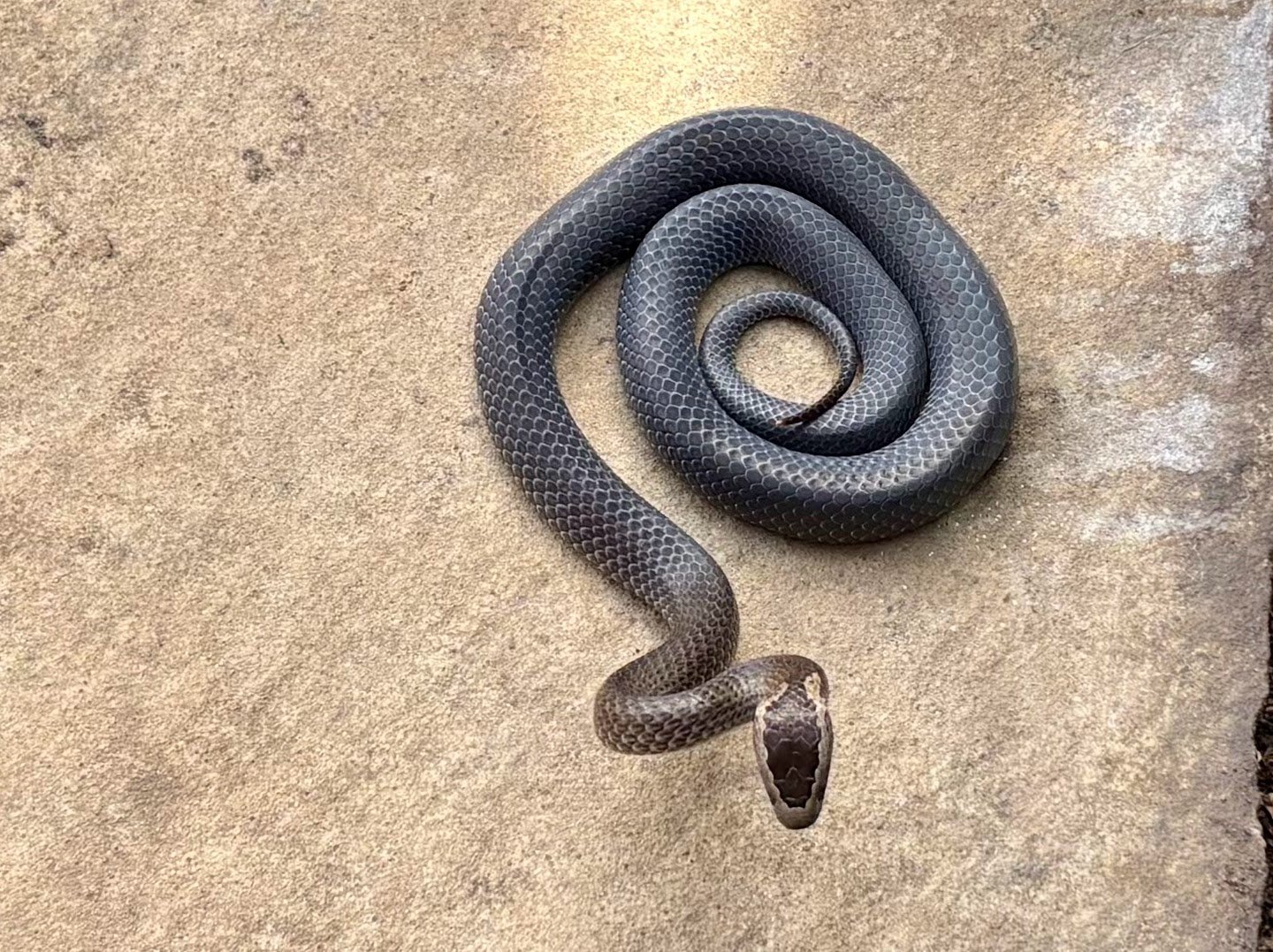
Golden-crowned Snake
The Golden-crowned Snake (Cacophis squamulosus) is one of Sydney's most commonly encountered nocturnal snakes — small, dark, mildly venomous but not dangerous to humans, and well-adapted to the leafy suburban gardens that characterise so much of the city. With around 47 Golden-crowned Snake call-outs in 2025 alone, they sit comfortably among the species we work with most often, and they are one of the calmer and easier species to relocate when needed. If you find one in your garden, the right response is to identify it carefully, leave it alone if it is just passing through, and call a licensed reptile catcher if it is in a problem location. Their presence is a sign that your local environment is supporting a functioning native ecosystem.
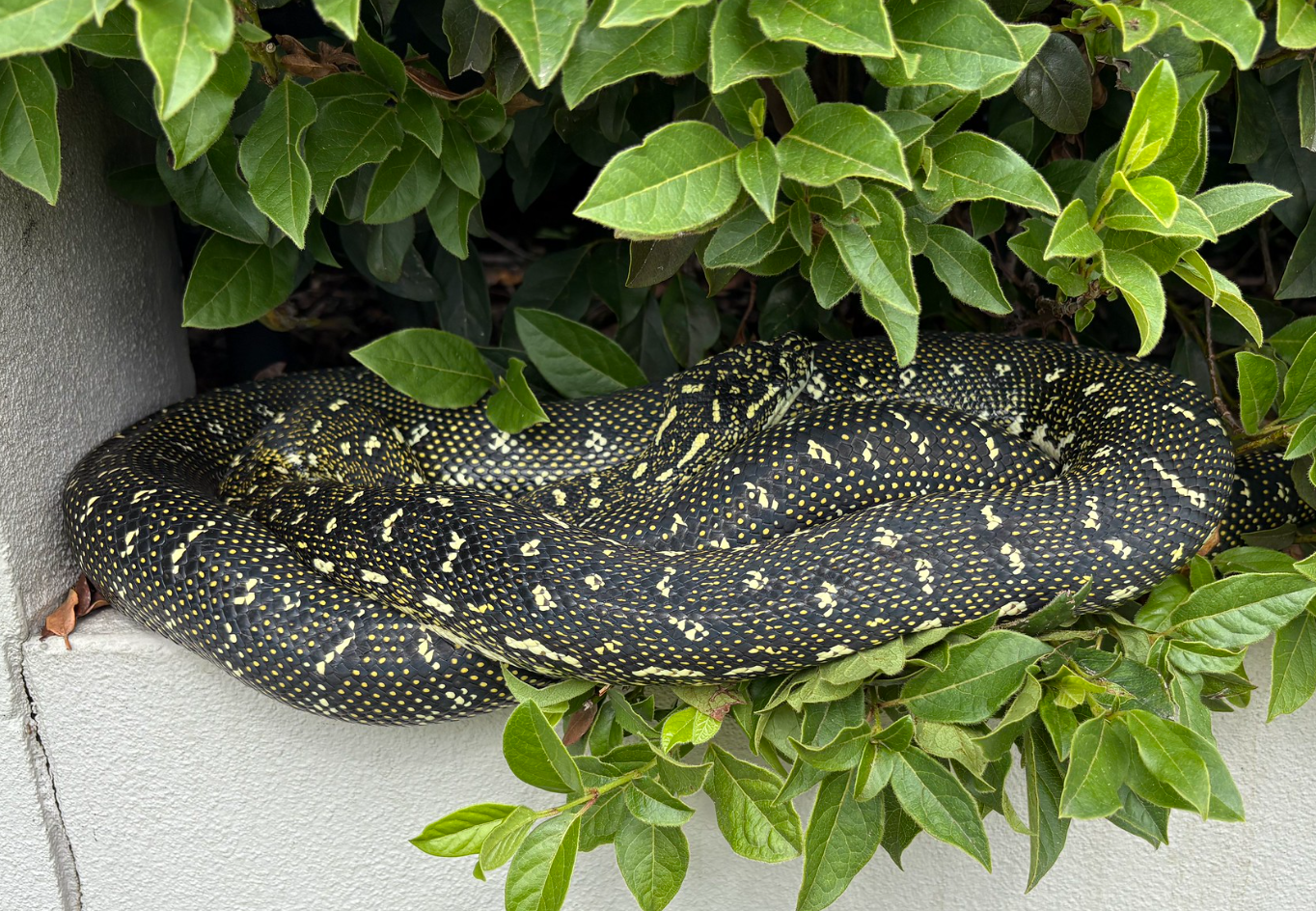
Diamond Python
The Diamond Python (Morelia spilota spilota) is Sydney's signature snake — a large, beautiful, non-venomous native python found nowhere else in the world outside of New South Wales and eastern Victoria. They are present across all five distribution zones of the Greater Sydney region, and they have adapted to suburban life better than almost any other large native reptile. Calm, charismatic and genuinely beneficial, they are one of the species that makes Sydney's wildlife distinctive. If you find one in your garden or your roof, the best response is calm appreciation rather than panic — and if you genuinely need it moved, a licensed reptile catcher can do it without harm to you, the snake or anyone else.
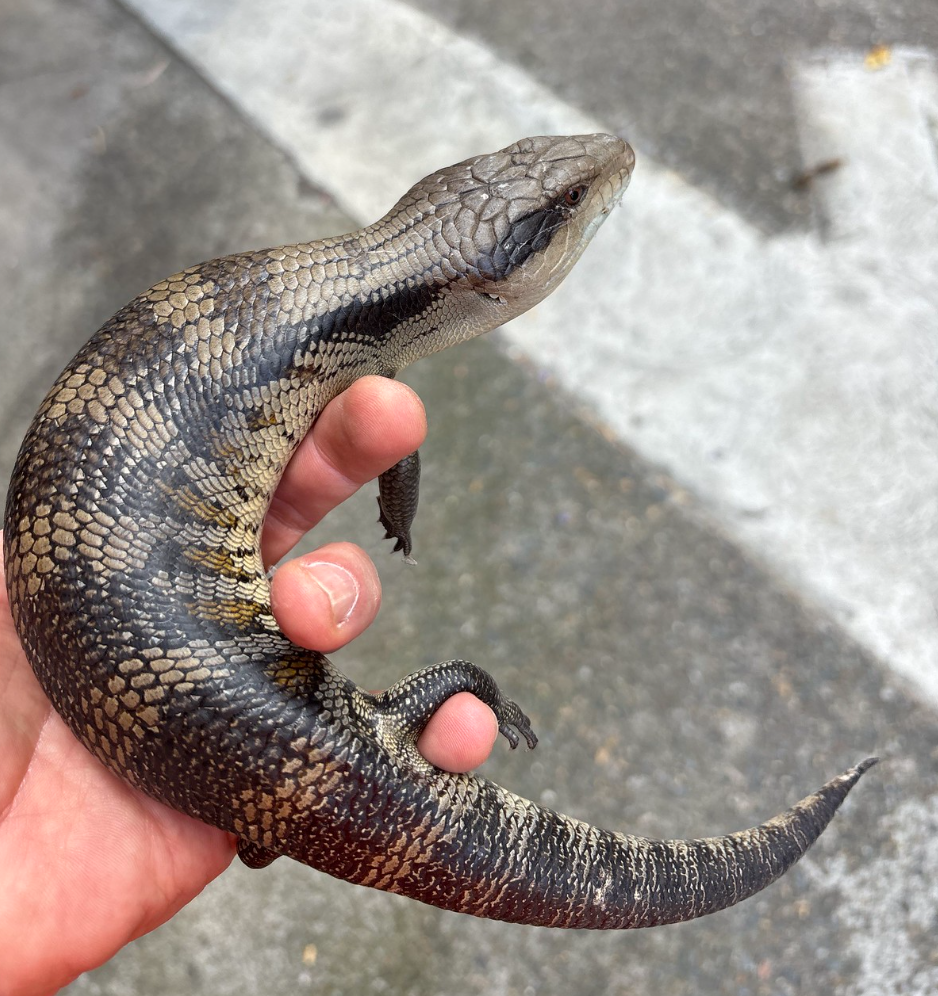
Eastern Blue-tongue
The Eastern Blue-tongue Tiliqua scincoides scincoides) is Sydney's quintessential backyard reptile — large, charismatic, completely harmless and one of the most beneficial wildlife species a suburban garden can host. They are present across all five distribution zones of the Greater Sydney region, thriving in environments from coastal heath to highland forest to dense suburban housing. If you have one in your garden, you are doing something right ecologically. Protect them from dogs, switch your snail bait if you use it, watch out for them on the driveway, and otherwise let them get on with the long, slow, useful business of being a blue-tongue.
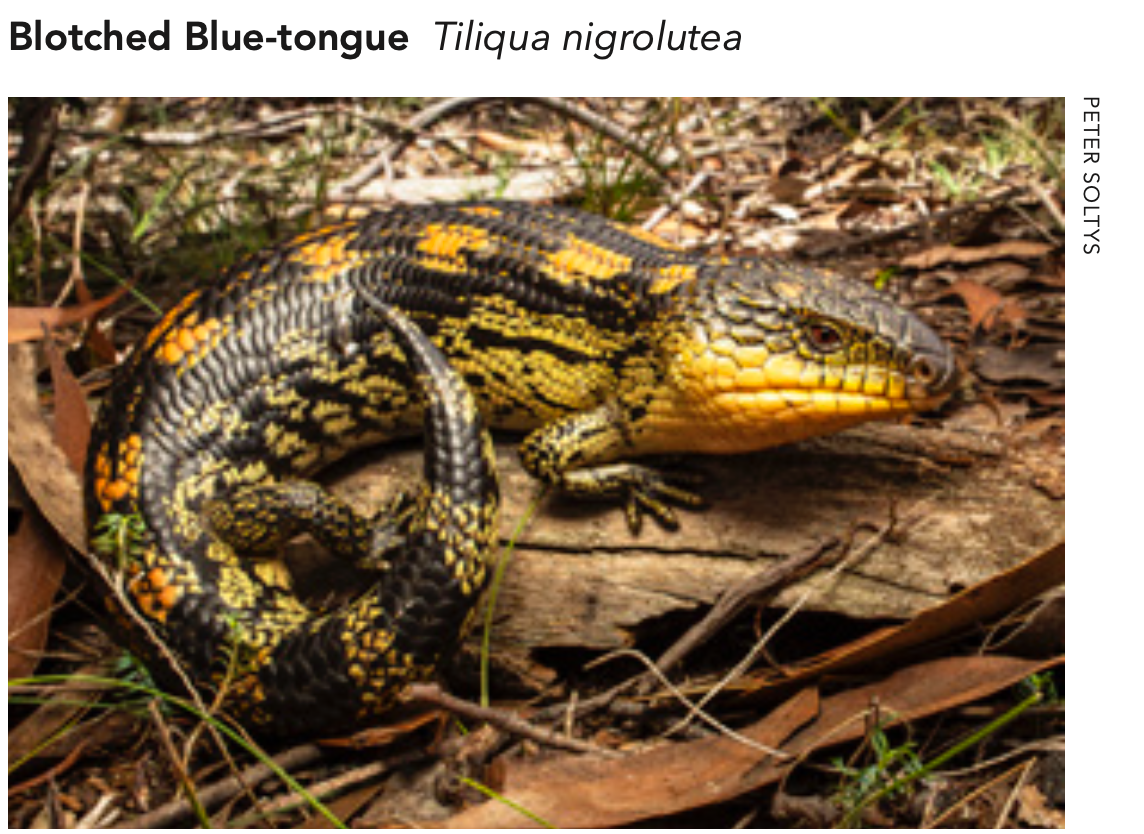
Blotched Blue-tongue
The Blotched Blue-tongued Lizard (Tiliqua nigrolutea) is Sydney's highland blue-tongue — a large, dramatic, slow-moving native lizard found in the cooler and higher parts of the Greater Sydney region, particularly the Blue Mountains. They are distinguished from the more common Eastern Blue-tongue by their blotchy rather than banded pattern, and by their preference for elevated, cool-climate habitat. Completely harmless to humans, genuinely beneficial in the garden, and long-lived enough to become a familiar resident over many years, they are one of the species that makes Sydney's highland gardens worth living in. If you have one, treat it as a privilege rather than a problem.
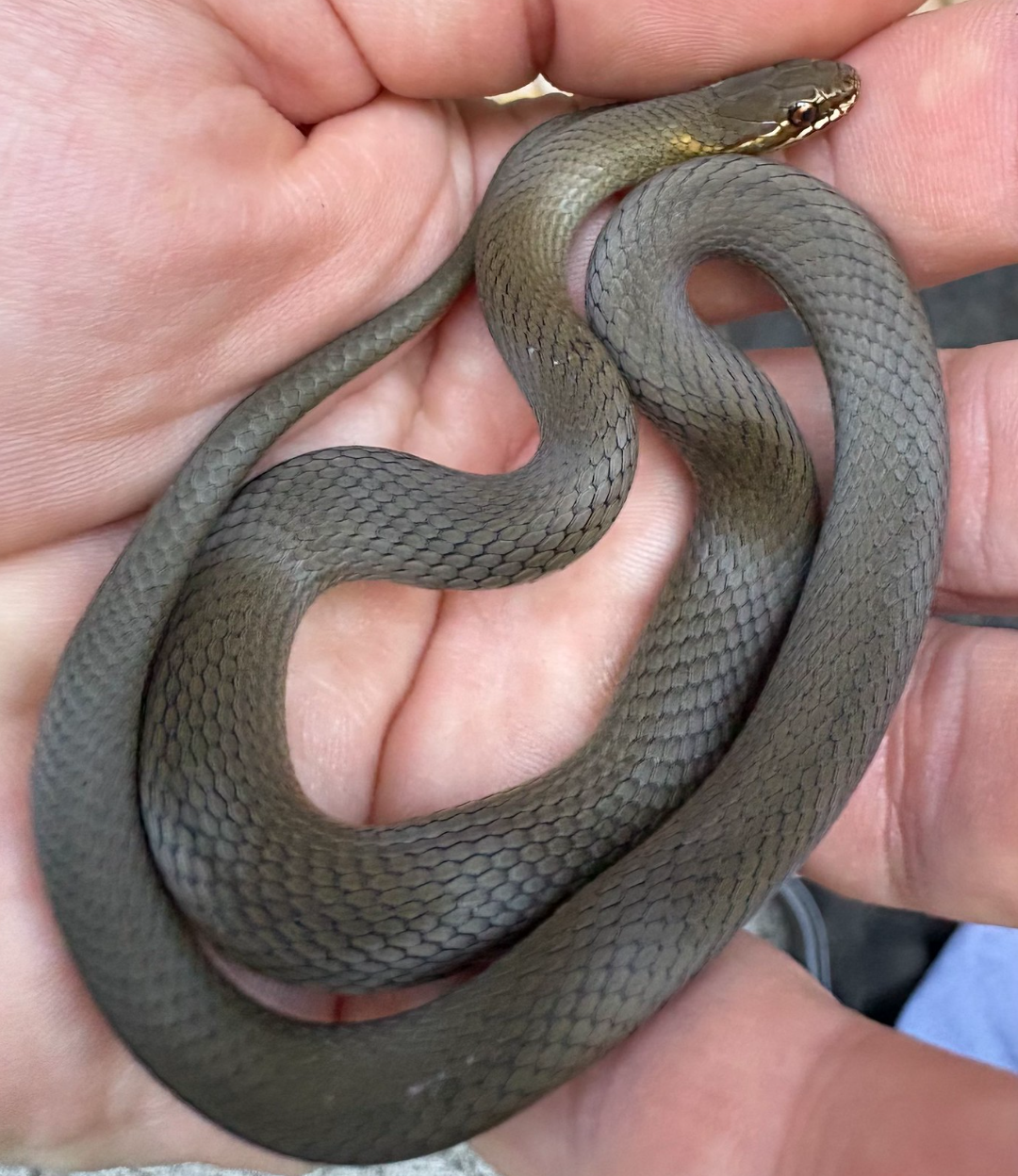
Marsh Snake
The Marsh Snake (Hemiaspis signata) is a small, mildly venomous native snake that specialises in wet habitats and frog prey across the Sydney region. They are not considered dangerous to humans, and their distinctive paired pale head stripes make identification possible with a good photograph. If you have a pond, a creek or a damp garden corner with active frogs, you may well have Marsh Snakes — and that is a sign of a healthy local ecosystem, not a problem requiring intervention. If in doubt about identification, photograph from a safe distance and call a licensed reptile catcher.
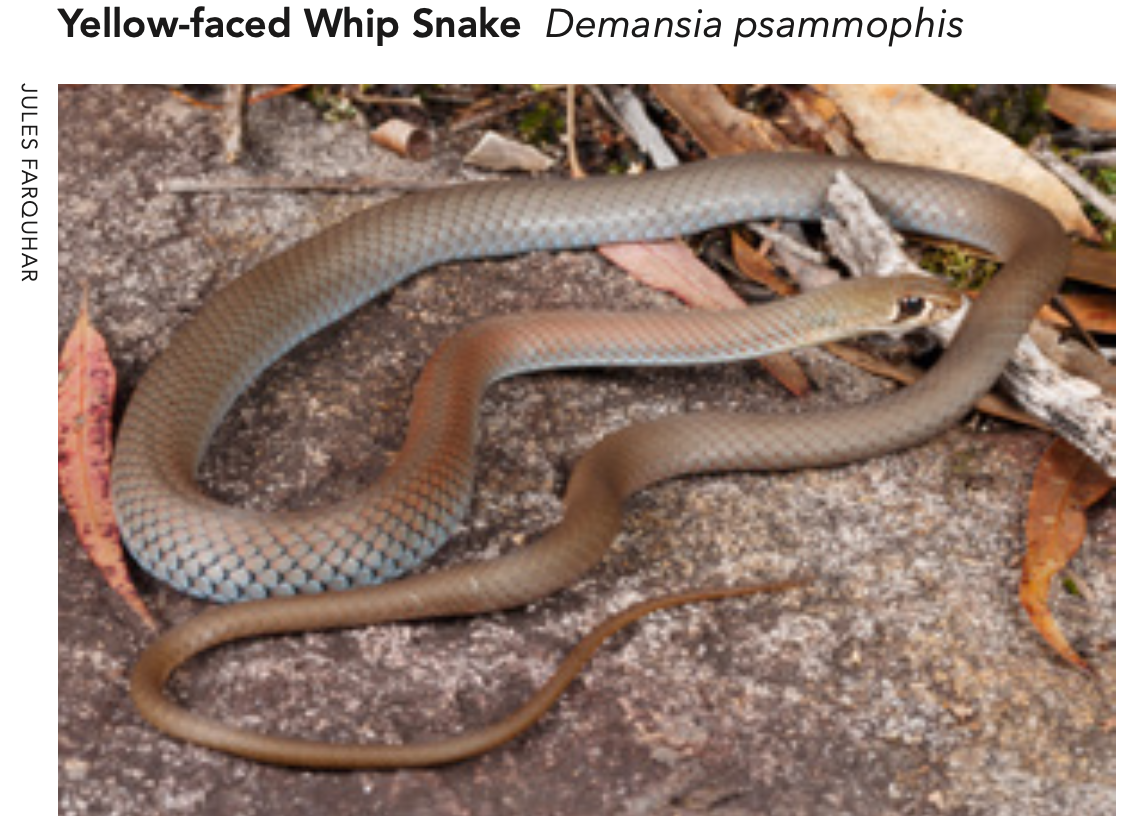
Yellow-faced Whip Snake
The Yellow-faced Whip Snake (Demansia psammophis) is one of the most commonly misidentified snakes in the Sydney region — fast, slender and often mistaken for an Eastern Brown Snake. They are mildly venomous but not dangerous to humans, and they play a useful ecological role by controlling skink populations. The distinctive comma-shaped pale eye markings, combined with the slim build and grey-blue colouring, make identification possible once you know what to look for. If in doubt, photograph from a safe distance and call a licensed reptile catcher — getting the identification right is more important than guessing.
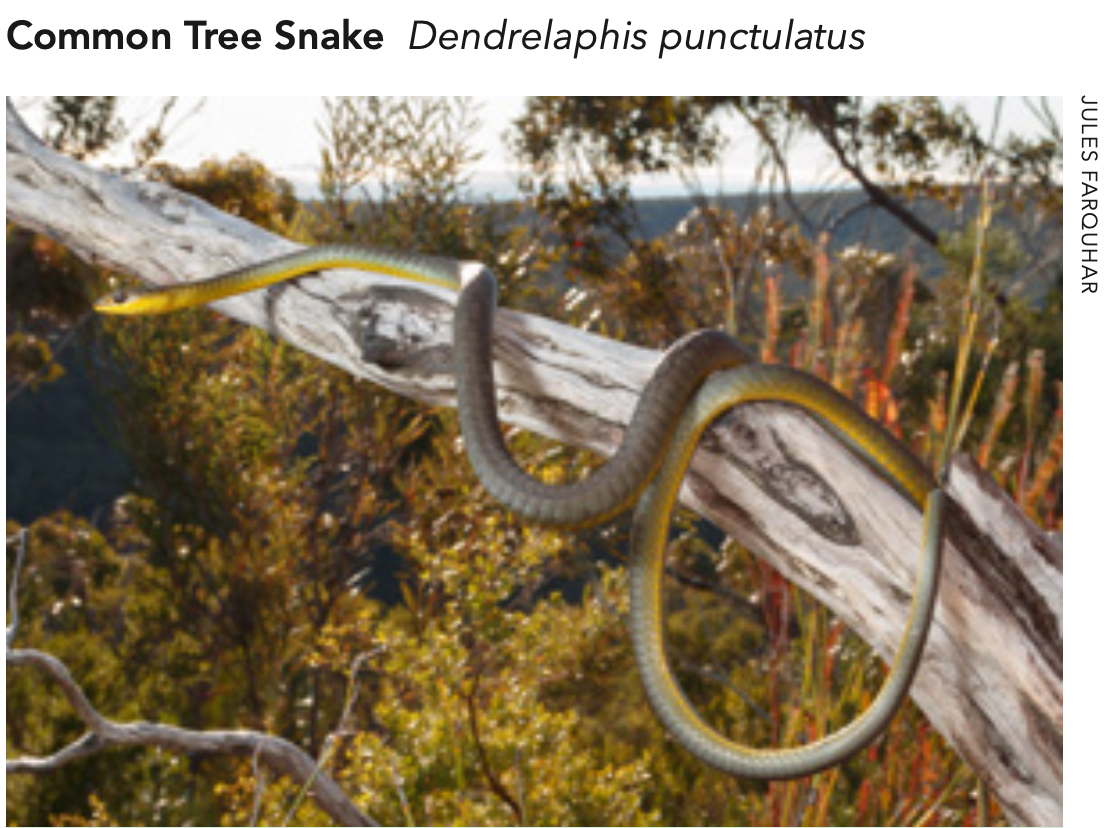
Green Tree Snake
The Green Tree Snake (Dendrelaphis punctulatus) is one of the most welcome native snakes a Sydney homeowner can find on their property — slim, fast, brightly coloured, completely harmless and genuinely beautiful. They are diurnal, easy to identify with their bright green back and yellow belly, and they thrive in mature gardens with good vegetation, frogs and structural complexity. Their presence is a sign that your property is supporting a functioning native ecosystem, and the right response to finding one is to enjoy the sight and let the snake go about its business.
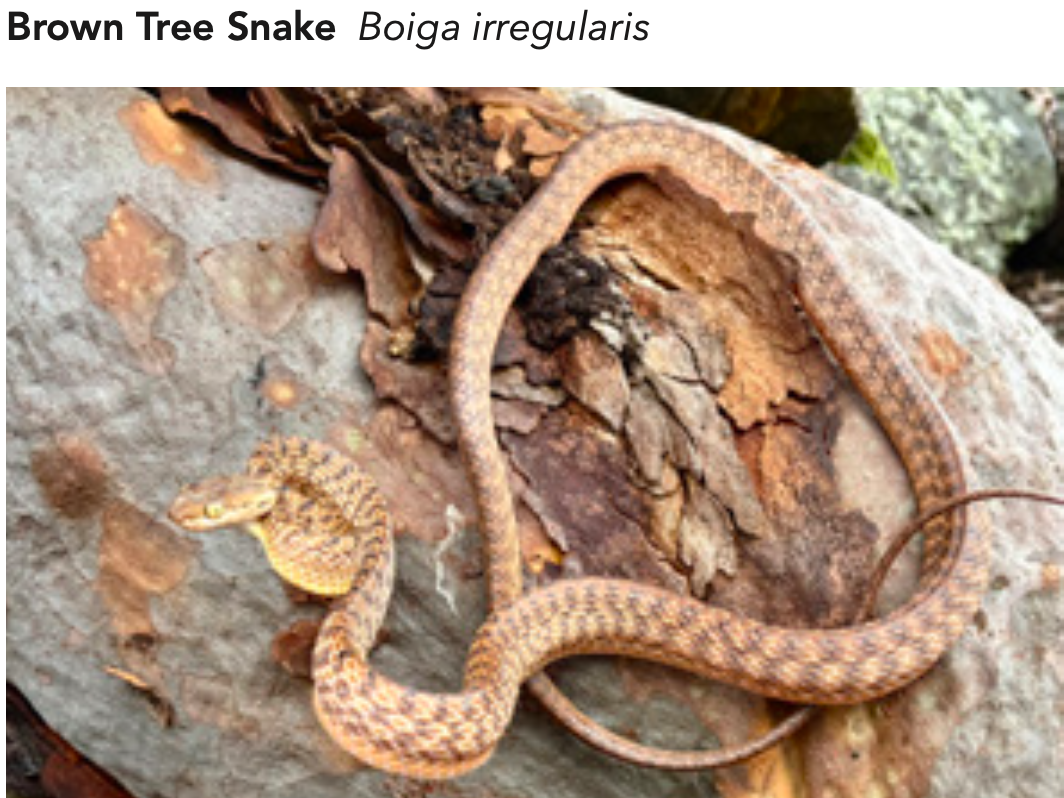
Brown Tree Snake
The Brown Tree Snake (Boiga irregularis) is one of Sydney's most distinctive snakes — a slender, nocturnal, oversized-eyed climber that thrives in suburban Sydney as easily as in the bush. They are mildly venomous but not dangerous to humans, with bites producing only localised swelling and discomfort. They are, however, accomplished raiders of aviaries, chicken coops and roof spaces, and removal from enclosed structures should always be handled by a licensed reptile catcher. Their presence in a garden is a sign that the local ecosystem is intact enough to support a healthy population of birds, lizards and small mammals.
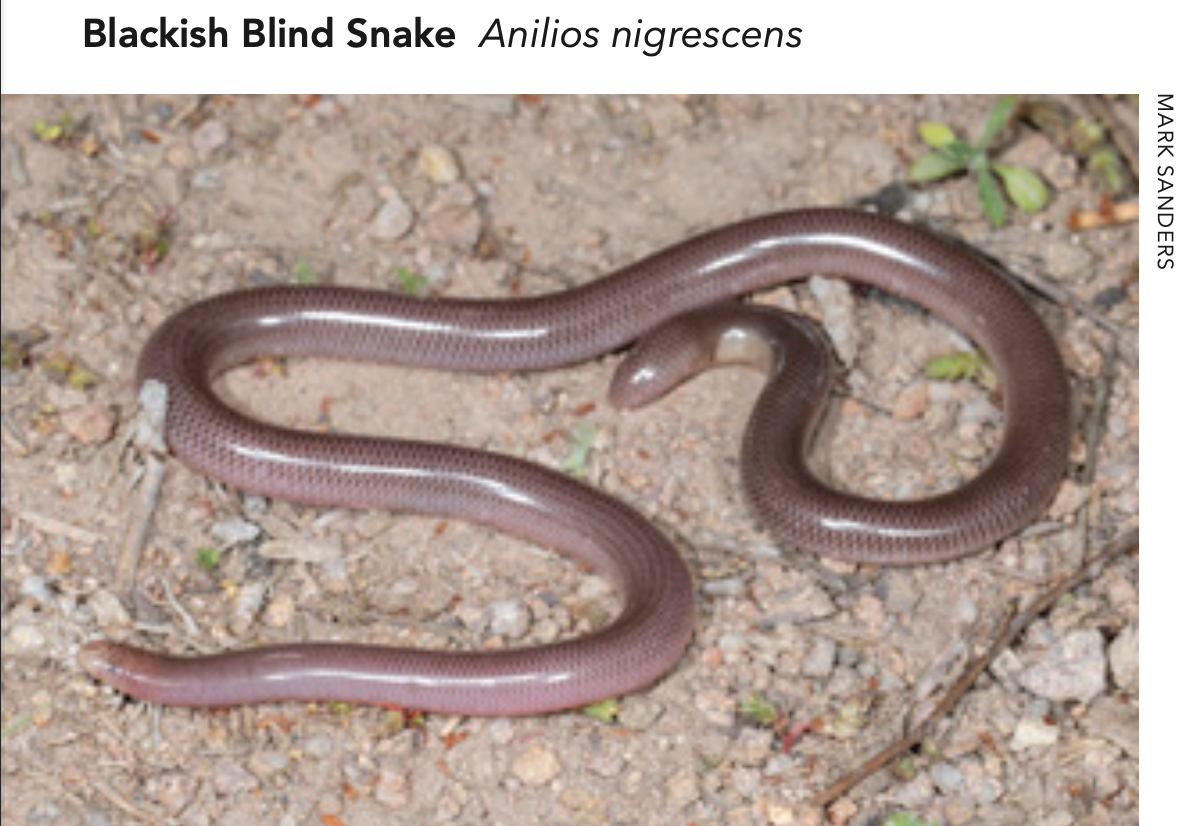
Blackish Blind Snake
The Blackish Blind Snake (Anilios nigrescens) is one of Sydney's most common but least visible native snakes. They live almost entirely underground, feeding on ant and termite brood, and only surface when heavy rain or disturbance forces them up. They are completely harmless to humans and pets, beneficial in the garden, and easily confused with worms or with juvenile venomous snakes. If you find one, the right response is to identify it carefully, move it to safety if it is exposed, and otherwise let it go about its quiet underground life.
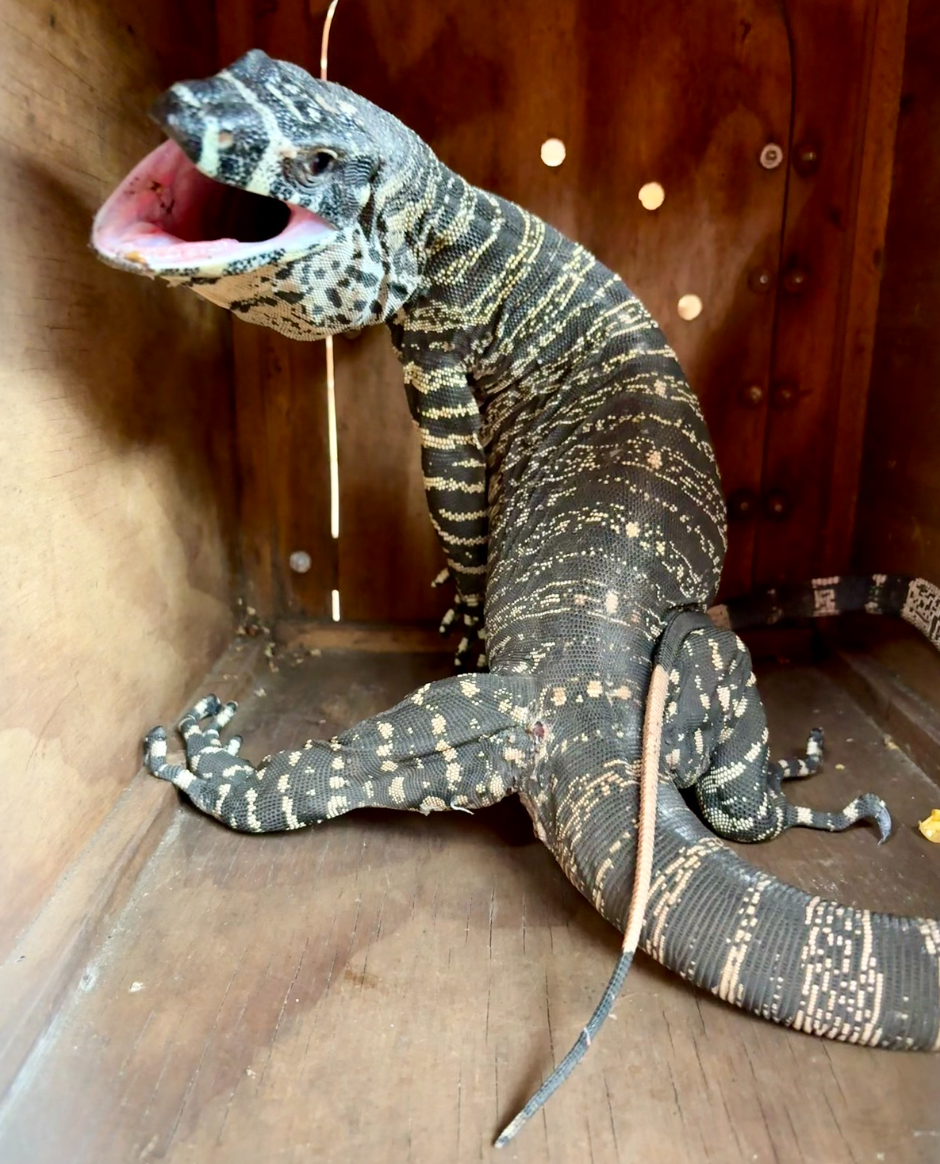
The Lace Monitor
The Lace Monitor (Varanus varius) is Sydney's largest lizard and one of the most impressive reptiles in the region. They are still common across Zones 1 to 4, particularly in areas bordering bushland and national parks. They are intelligent scavengers and predators, generally peaceful around humans who give them space, and an important part of the ecology of Sydney's bushland fringe. The proper response to finding one in your yard is to enjoy the sight, take a photo from a respectful distance, and let the animal go on its way.
Eastern Water Dragon
The Eastern Water Dragon (Intellagama lesueurii) is Sydney's most successful urban dragon — a large, charismatic native lizard that has adapted brilliantly to suburban parks, botanic gardens, backyard ponds and restaurant terraces. They are present across all five distribution zones in the Greater Sydney region and remain a common, harmless and genuinely welcome part of the city's wildlife. If you have water on your property and good basking sites nearby, you very likely have water dragons — and that is one of the better outcomes you can have as a Sydney homeowner.
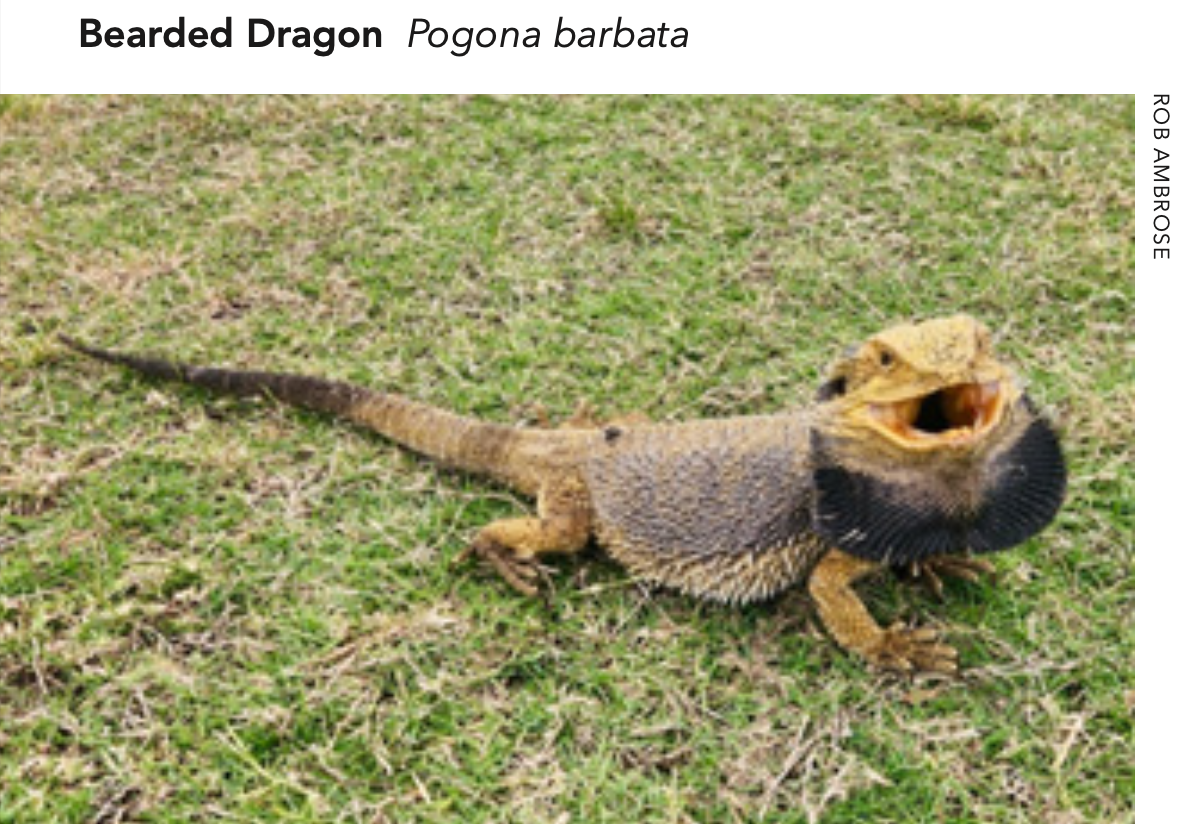
Eastern Bearded Dragon
The Eastern Bearded Dragon (Pogona barbata) is one of Sydney's classic native reptiles, but also one of the most visibly affected by the city's growth. Once common across much of the region, they are now largely restricted to Zone 1 on the western fringe, where remnant bushland and lower housing density still support viable populations. They are harmless, charismatic, and an indicator species for the health of Sydney's outer bushland. Where they still exist, they are worth protecting — because once they are gone from an area, they rarely come back.
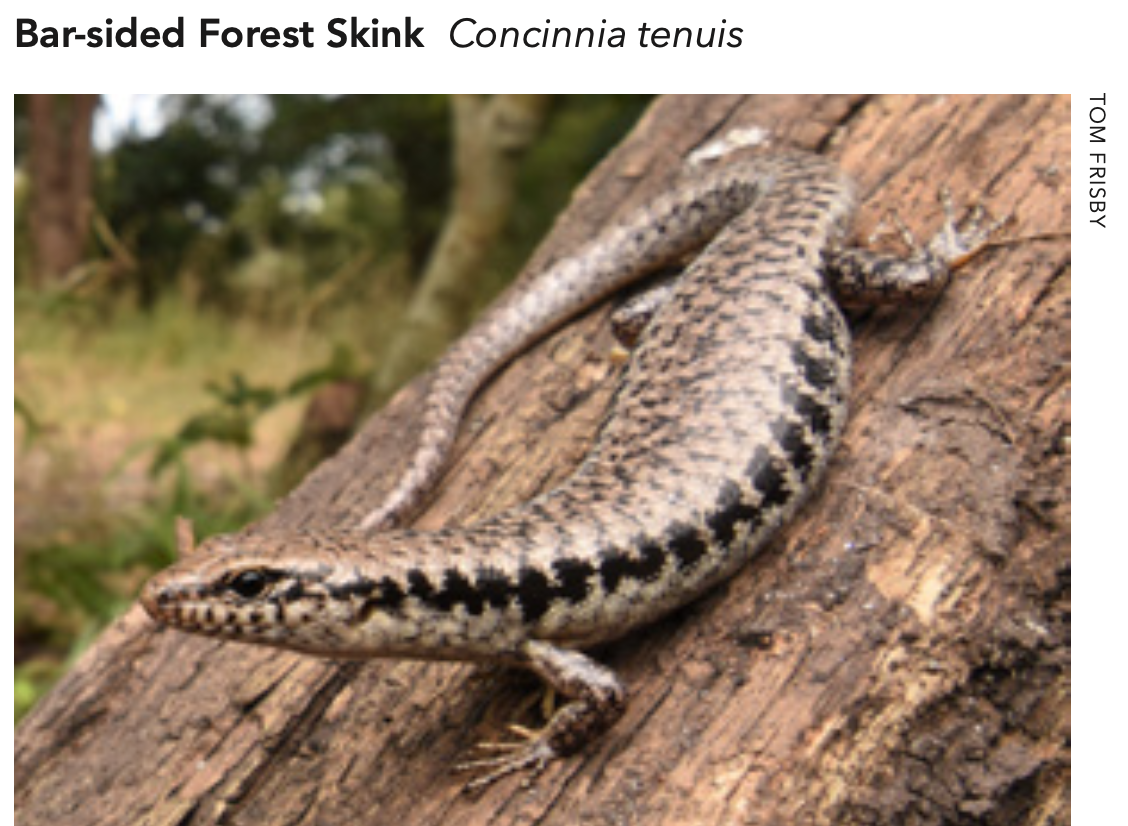
Bar-Sided Forest Skink
The Bar-Sided Forest Skink (Concinnia tenuis) is one of Sydney's quiet success stories — an agile, semi-arboreal native lizard that has adapted brilliantly to the older suburbs of the Lower and Upper North Shore, where mature gardens and double-brick homes provide near-ideal habitat. The cavity in double-brick walls gives them a vertical highway that lets them move freely up and through homes, often turning up on first floors after climbing inside from the ground. Their curious nature means they are one of the few Sydney lizards that will readily come inside — usually harmlessly, and usually departing on their own once you open a door. Their presence is a good sign that your home and garden retain the structure to support a functioning native ecosystem.
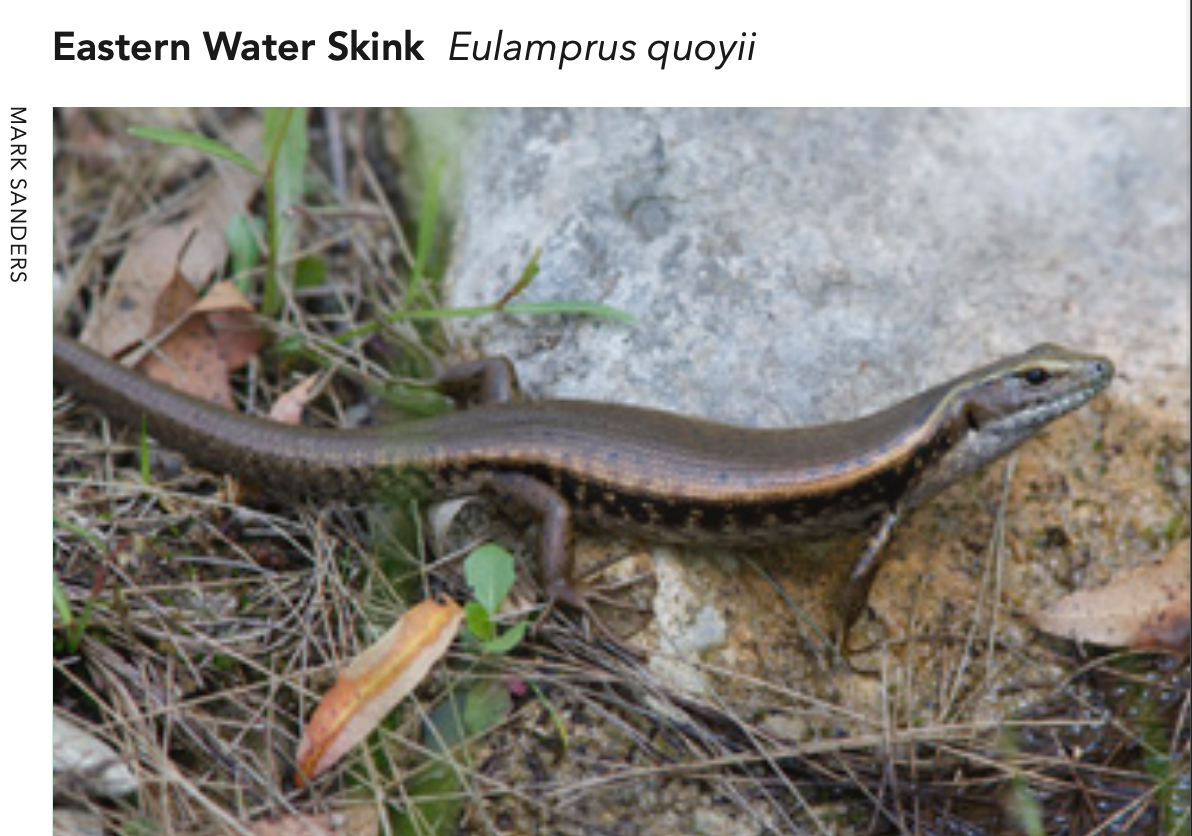
Eastern Water Skink
The Eastern Water Skink (Eulamprus quoyii) is one of Sydney's most successful and most visible native reptiles. Common across all five distribution zones of the Greater Sydney region, adapted to both natural waterways and urban garden ponds, and genuinely beneficial to have around, they are a species worth appreciating rather than dismissing. If you have a creek, pond or even a damp corner with good cover in your Sydney garden, you almost certainly have water skinks — and that is a good sign.
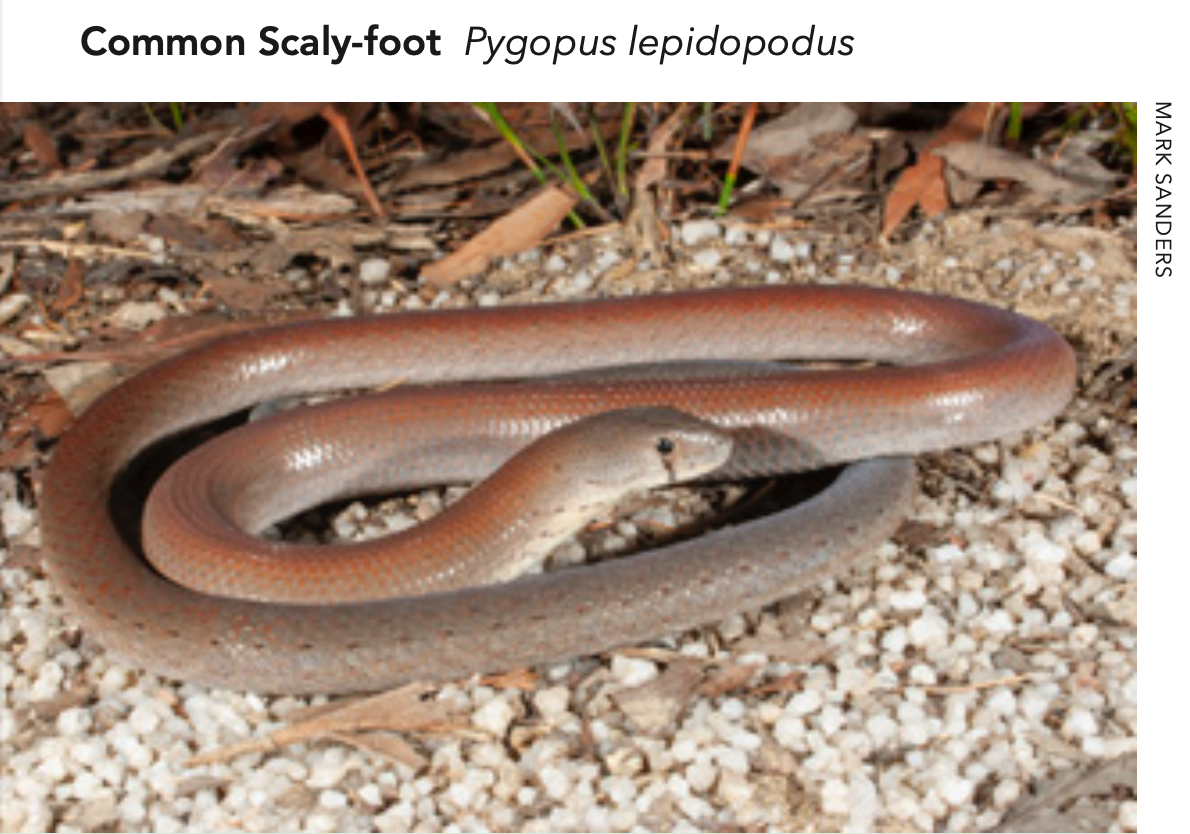
Common Scaly-foot
The Common Scaly-foot (Pygopus lepidopodus) is a harmless native lizard that has evolved to look and act like a snake, and it does that job almost too well. They are widespread across Greater Sydney, common in the right habitats, and almost always misidentified when they are encountered. Learning to recognise them — ear openings, fleshy tongue, long tail, vestigial limb flaps — is one of the most useful pieces of reptile knowledge any Sydney homeowner can have.
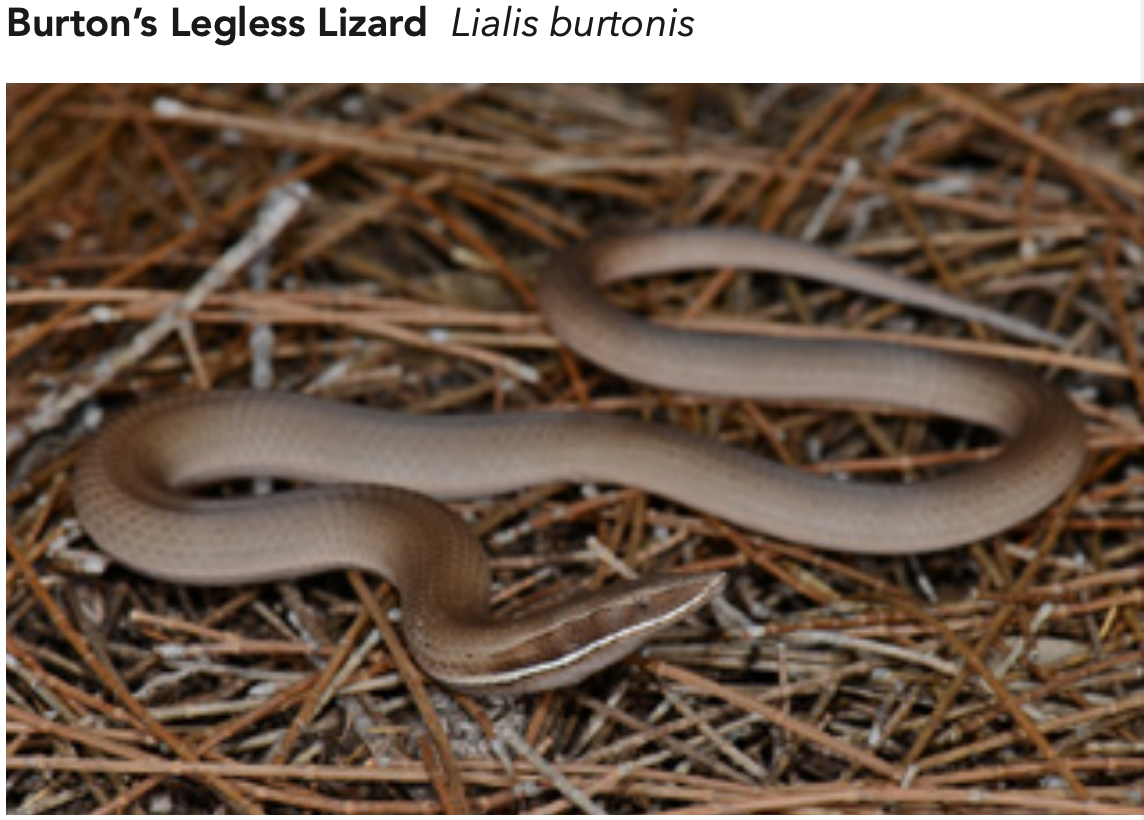
Burton's Legless Lizard
The Burton's Legless Lizard (Lialis burtonis) is one of those species that quietly proves how interesting Australian reptile diversity really is. It looks like a snake, hunts like a viper, and is built for a job no other animal in the Sydney region does. They are common across Greater Sydney but rarely seen, and almost always misidentified when they are. Knowing what one looks like — and being able to tell the difference between a Burton's and a snake — is one of the most useful pieces of reptile knowledge a Sydney homeowner can have.