Urban Reptile Removal- Voted the #1 Sydney Snake Catcher.



Contact Now : 0418 633 474
Urban Reptile Removal — Sydney's #1 Snake Catcher
Urban Reptile Removal is a licensed reptile removal service covering the Greater Sydney region and the Central Coast. If there is a snake or lizard on your property now, phone 0418 633 474.
We attend homes, schools, workplaces and building sites across Sydney and the Central Coast. Every animal is caught by a licensed catcher and relocated under NSW licence conditions.
If you have seen a reptile and it has moved out of sight, keep watching from a safe distance and keep your eyes on the last place you saw it. That is the most useful thing you can tell us when we arrive.
Look where they can hide!
This incredible footage is courtesy of Dr Gavin Smith, the Principal investigator on the ANU’s Canberra Snake Tracking Project. It shows an adult Brown Snake disappearing into a tiny gap between bricks. The snake is around 1.5m in length.
Who we are
Founded on thirty-five years of experience
Urban Reptile Removal was founded by Chris Williams, who has worked with Australian reptiles since 1989, including at Taronga Zoo and the Australian Reptile Park. He has been President of the Australian Herpetological Society since 2014 and is the author or co-author of eight books on Australian reptiles, including Urban Reptiles, Reptiles of the Red Centre and Reptiles of the Greater Sydney Region.
Urban Reptile Removal trades alongside Sydney Snake Catcher, our sister brand, established in 2010. Together they form the largest licensed network of professional snake catchers in NSW.
Snakes are normal
Sydney has more than a dozen native snake species. They turn up in yards, sheds, gardens, garages, and roof spaces during the warmer months, drawn by food, warmth, shelter, and the natural movement corridors running through every suburb. Snakes don't want conflict. They don't chase people. Almost all defensive behaviour happens only when a snake feels cornered. That's why removal should be done by someone trained.
Species we handle most often
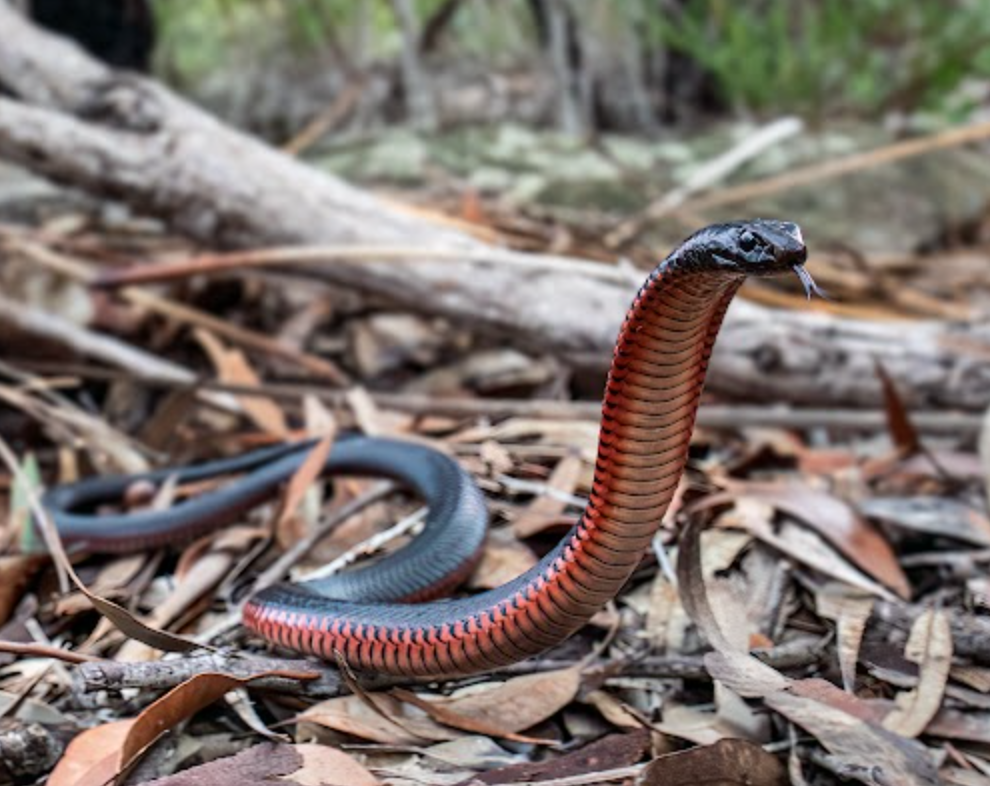
Roughly 60% of our work. Glossy black with a bright red or pink underside, commonly seen near water, drainage lines, frog habitats, creeks, and damp vegetation. Red-bellies are venomous but shy. They retreat when given space and will avoid confrontation if they can. They're common in suburbs bordering bushland or wetlands across the North Shore, Hornsby Shire, and the Northern Beaches. If you find one, do not approach. Do not try to make it leave. Call 0418 633 474.
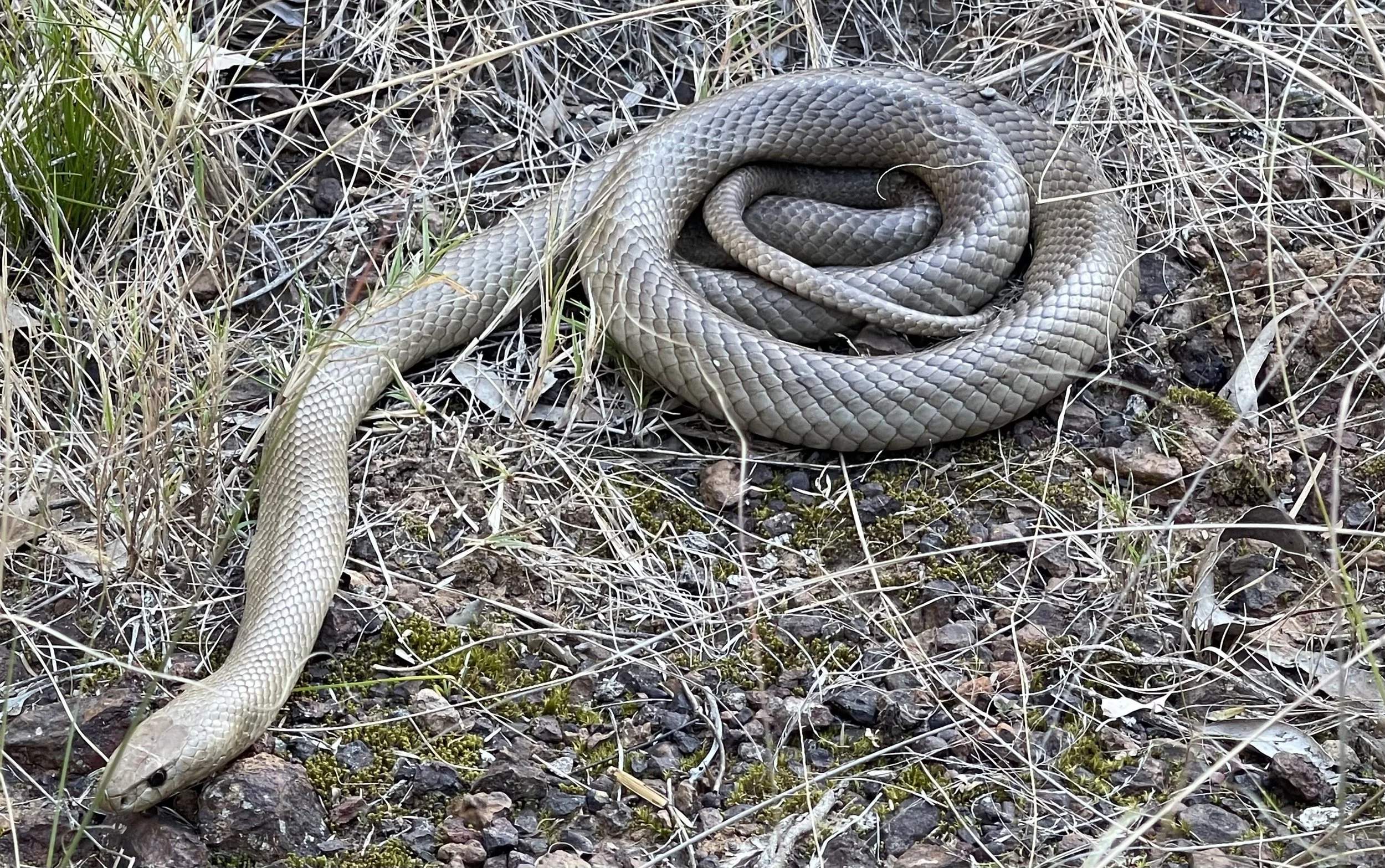
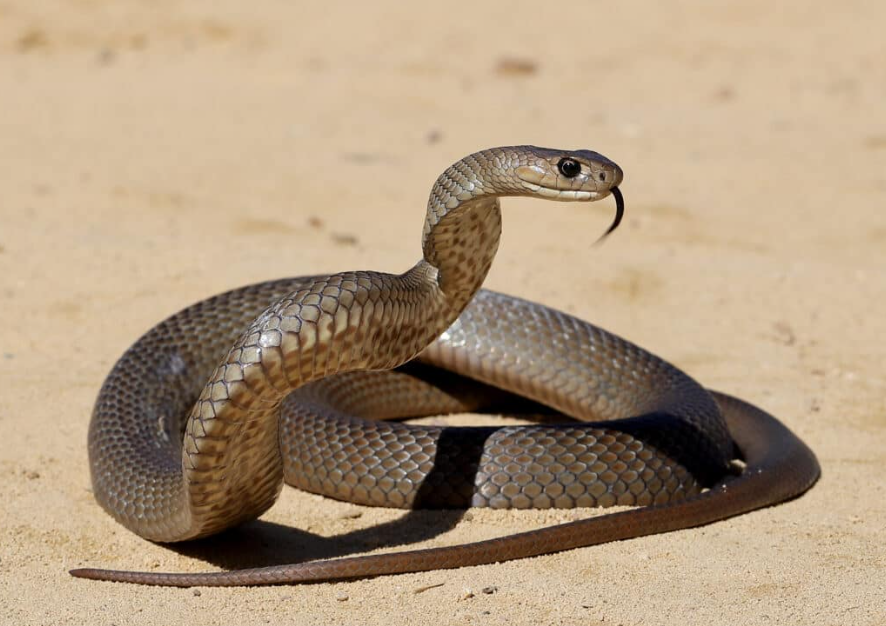
Sydney's most frequently encountered dangerously venomous snake. Fast, alert, and adaptive, with colour ranging from light tan to dark chocolate. Juveniles can have banding and a black head. Browns follow rodents, which makes them common around sheds, timber piles, compost heaps, and warm surfaces on properties with mice or rats. They defend themselves if cornered, and their speed catches people off guard. Never attempt to block, chase, or trap one. Call 0418 633 474.
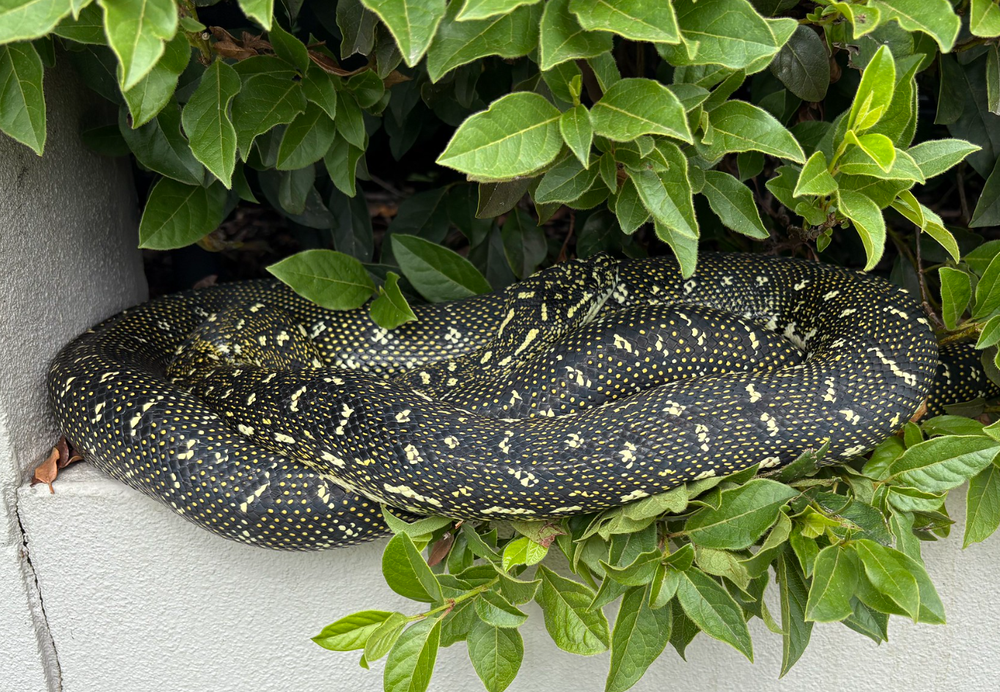
Large, calm, non-venomous snakes that are common throughout Sydney. Black scales with yellow or cream spots in rosette patterns. Diamond pythons hunt rats, mice, and possums, and are often found resting on verandas, rafters, patios, or in roof cavities. We treat diamond pythons differently from venomous species. They are protected, beneficial, and important to Sydney's ecology. Where possible, we encourage residents to let them be. When relocation is needed, we move them carefully and release them into appropriate habitat. Call 0418 633 474.
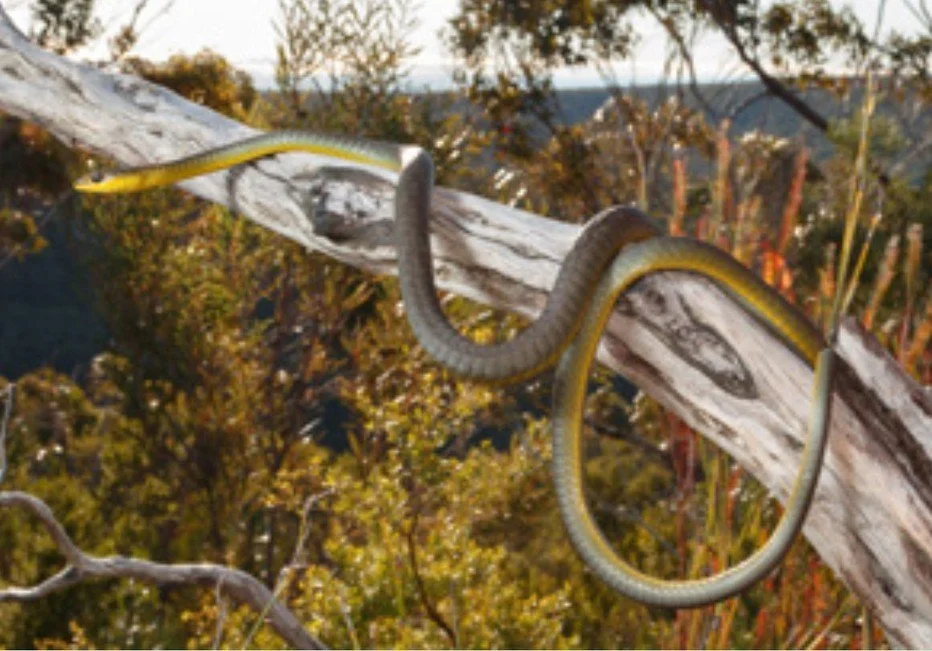
Slim, fast, harmless. Bright green, olive, grey, or almost black, with a yellow underside. When startled, they flatten their bodies and show flashes of blue between the scales. They climb well and often turn up in hedges, fences, garages, and roof edges. Call0418 633 474 if you'd like one safely relocated.
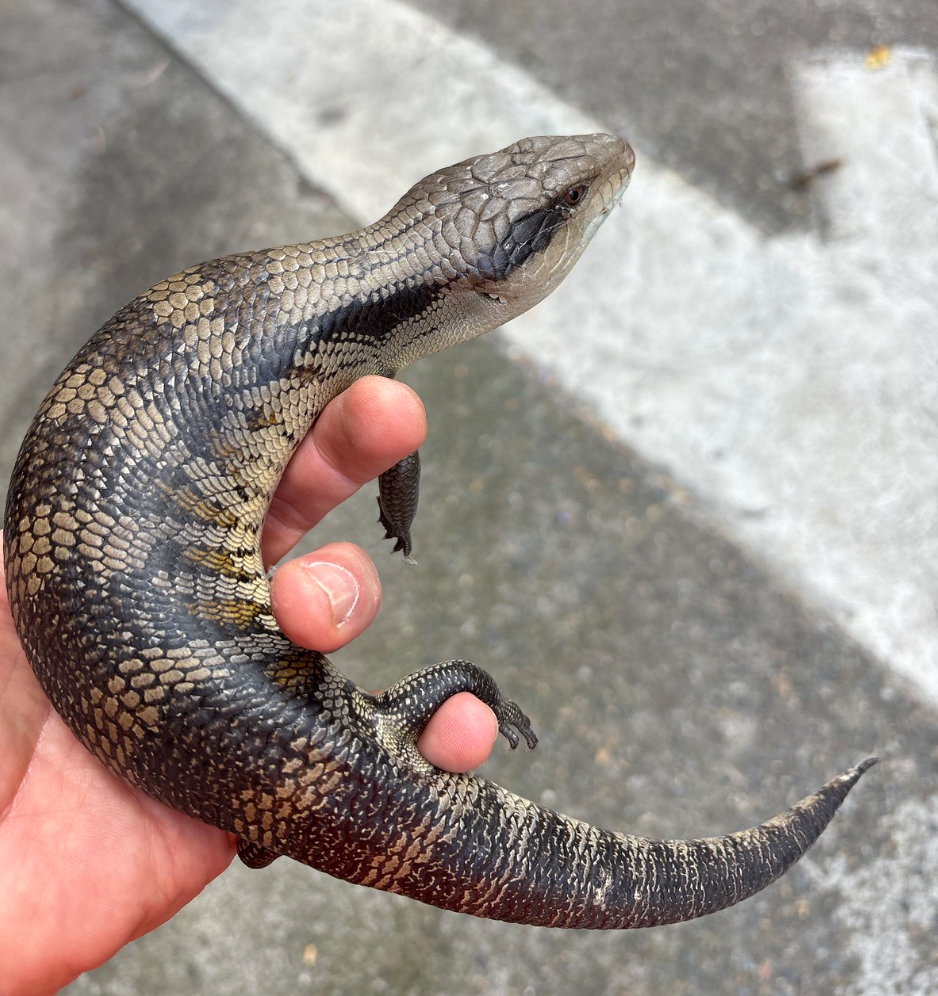
Not a snake. Heavy-bodied skinks with a bright blue tongue that they show when threatened. Blue-tongues rustle loudly through leaf litter, which is why many people mistake them for snakes. They eat snails, insects, and pet food. We get many calls each year from residents who saw movement in the garden and weren't sure. We're always happy to check.
Good to know
Where they hide, and what actually helps
Where snakes hide
Snakes choose hiding spots based on shade, warmth, and safety — and our experience finding them is what turns a stressful afternoon into a 20-minute job.
Sheds & garages
Hot water systems
Garden edging
Under decks
Roof cavities
Pool pumps
Retaining walls
Compost & mulch
When a snake gets inside
Snakes enter houses through open sliding doors, gaps under garage doors, holes near pipes, ventilation gaps, damaged screens, and open windows near overhanging trees.If a snake is inside the home, this is an emergency. Leave the room. Shut the door behind you. Call 0418 633 474.
Practical prevention
Chemical repellents, powders, and ultrasonic devices don't work. What does work: mow regularly, trim vegetation near walls and fences, store timber and materials off the ground, seal small gaps, keep sheds organised, secure outdoor pet food, clear leaf litter, and most importantly — control rodents. The food drives the predator.