The World's Deadliest Snakes: The Most Venomous Snakes Globally and in Australia - Sydney Snake Catcher

An Eastern Brown Snake from Western Sydney
For books, bandages and a whole lot more head to https://sydneysnakecatcher.com.au/shop/
You came here to see the top 10 list. Most Venomous Snake in the World, ranked one to ten, simple as that.
But that's not as easy as it may seem to create.
Snakebites are a serious medical concern, particularly in regions with a high prevalence of venomous species, and it feels like it should be straightforward to say which snakes have the deadliest venom. In practice, the science behind that question is messier than any ranked list lets on. Before we get to the numbers, it's worth understanding how those numbers are actually made, because that changes what the list can honestly tell you.
How venom toxicity is actually measured
Venom toxicity is measured using LD50, the dose of venom per kilogram of body weight required to kill half a group of test animals, almost always mice. The lower the number, the more toxic the venom.
That sounds like a single, clean measurement. It isn't. LD50 results depend heavily on how the venom is injected into the test animal. Researchers use several different routes, mainly subcutaneous (under the skin), intravenous (directly into a vein) and intraperitoneal (into the abdominal cavity), and each route gives a different number for the exact same venom. Boomslang venom makes the point sharply. Published studies put its LD50 at roughly 0.07 to 0.1 mg/kg intravenously, but 12.5 mg/kg subcutaneously. That's more than a hundredfold difference, for the same venom, from the same species, depending only on how it was delivered into the mouse. Most real world snakebites are subcutaneous or intramuscular, not intravenous, so a list that quietly mixes routes between species is not comparing like with like, even when every individual figure in it is accurate.
Not every species has been tested the same way, or at all
The second problem is coverage. There is no single global study that has tested every medically important snake species by the same method in the same laboratory. What exists instead is a patchwork. Some species have been tested multiple times, by different labs, using different routes, on different mouse populations, and the results don't always agree. Other species, including some responsible for large numbers of human deaths, have only ever been tested by one route in one study, which makes them hard to compare fairly against species tested differently. A handful of species barely feature in the comparative literature at all.
Why the "traditional" top 10 list is mostly Australian snakes, and what that actually tells us
If you've read one of these lists before, you'll have noticed something. They lean heavily on Australian species. Inland Taipan, Eastern Brown, Coastal Taipan, Tiger Snake, all clustered near the top. That's not a coincidence, and it's not because Australia's snakes are being talked up. It traces back to a single, genuinely rigorous piece of research: Broad, Sutherland and Coulter (1979), published in the journal Toxicon, which tested subcutaneous LD50 in mice for a wide range of Australian species alongside a handful of overseas species, all under the same laboratory conditions. Because it's one study with one consistent method, it's the closest thing toxinology has to an apples to apples comparison, and for decades it has been the source, directly or indirectly, behind almost every "world's most venomous snakes" list you'll find.
What that means is important. The traditional list isn't wrong about the Australian species it covers. But it was never actually a list of the world's most venomous snakes. It was a list of whichever species happened to be in one Australian lab's comparative study, which is why globally significant killers such as the Saw Scaled Viper, Russell's Viper and Many Banded Krait rarely appear near the top of these rankings, despite being responsible for a huge share of the world's snakebite deaths. They simply weren't part of the dataset the list was built from.
What we're doing here is separating those two things properly. Below is the genuinely comparable data from that single study, followed by the best available figures for the major species it didn't cover, each one clearly marked with the method used, so you can see exactly where the certainty is solid and where it isn't.

Inland Taipan
Most toxic venoms tested under a single, comparable study
Inland Taipan (Oxyuranus microlepidotus), Australia, 0.025 mg/kg The most toxic venom of any snake tested in this study, or in any comparable study since. A single bite carries enough venom to theoretically kill 100 adult humans, though there are no confirmed human deaths from this species, thanks to its remote habitat, shy temperament, and the availability of antivenom since the 1950s.
Eastern Brown Snake (Pseudonaja textilis), Australia, 0.053 mg/kg Responsible for more snakebite deaths in Australia than any other species, despite ranking second on potency rather than first. It is fast moving, defensive when cornered, and lives in agricultural and urban fringe areas, which drives its death toll far more than its venom ranking does.
Coastal Taipan (Oxyuranus scutellatus), Australia and Papua New Guinea, 0.099 mg/kg Capable of striking multiple times in rapid succession, delivering a neurotoxic venom that causes paralysis and severe internal bleeding.
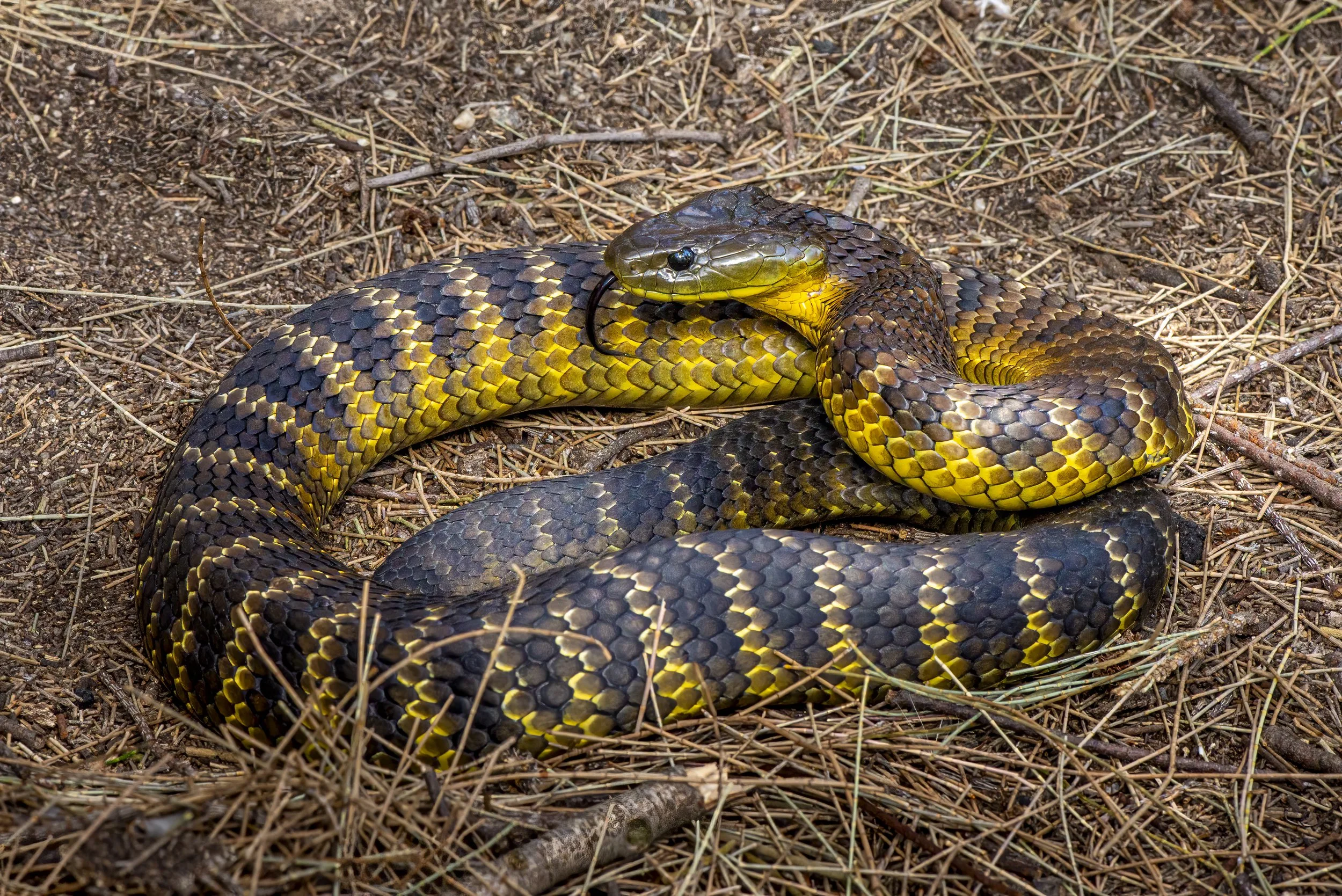
Mainland Tiger Snake (Notechis scutatus scutatus), Australia, 0.118 mg/kg Widespread across southern Australia. Bites cause paralysis, kidney damage and severe muscle breakdown. Other tiger snake populations tested in the same study, such as the Chappell Island and Western tiger snake, returned different figures again, illustrating how much venom composition varies even within one species.
Black Mamba (Dendroaspis polylepis), Africa, 0.32 mg/kg Africa's fastest and most feared snake. Untreated bites are close to always fatal, though contrary to popular belief, death typically takes hours rather than minutes. Clinical case reviews put untreated time to death at roughly 7 to 15 hours, with severe symptoms such as breathing difficulty able to appear within 45 minutes to a few hours.
Gwardar (Pseudonaja nuchalis), Australia, 0.473 mg/kg A widespread brown snake relative found across the drier parts of the country. Note that the taxonomy of this species complex has since been revised. What is commonly called the Western Brown Snake today is now generally classified as Pseudonaja mengdeni, a species split out from the original nuchalis group.
Lowland Copperhead (Austrelaps superbus), Australia, 0.56 mg/kg Common in cooler, wetter parts of southern Australia, including alpine areas.
Indian Cobra (Naja naja), Asia, 0.565 mg/kg Tested in this study for direct comparison. One of India's Big Four snakes responsible for the country's high snakebite death toll, again reflecting how much abundance and proximity to people matter compared with raw venom potency.
Dugite (Pseudonaja affinis affinis), Australia, 0.66 mg/kg Common across southwestern Australia.
Rough Scaled Snake (Tropidechis carinatus), Australia, 1.36 mg/kg Found in rainforest and wet forest habitat along the east coast. Often assumed in popular articles to be far more toxic than this study found it to be.
King Cobra (Ophiophagus hannah), Asia, 1.8 mg/kg The longest venomous snake in the world, reaching up to 5.5 metres. Its venom is comparatively less potent per kilogram than most snakes on this list, but the sheer volume delivered per bite, sometimes several hundred milligrams, makes up for it. Note that other published studies using different venom preparations and routes have reported King Cobra LD50 figures as low as roughly 1.3 mg/kg, so treat this as a representative figure rather than a fixed constant.
Mulga Snake, also known as King Brown (Pseudechis australis), Australia, 2.38 mg/kg Australia's largest venomous snake by volume of venom delivered, despite a relatively modest LD50 ranking.
Red Bellied Black Snake (Pseudechis porphyriacus), Australia, 2.52 mg/kg One of the most commonly encountered snakes in populated parts of eastern Australia. Despite its fearsome reputation, its venom ranks well down this list by potency, and fatalities are rare with modern treatment.
Eastern Small Eyed Snake (Cryptophis nigrescens), Australia, 2.67 mg/kg Small and secretive, rarely encountered, and less toxic on this measure than commonly claimed in general reptile writing.
Source: Broad, A.J., Sutherland, S.K. and Coulter, A.R. (1979). The lethality in mice of dangerous Australian and other snake venom. Toxicon 17: 661 to 664. All figures are subcutaneous LD50 in mg/kg.

Eastern Brown Snake (Pseudonaja textilis), Australia, 0.053 mg/kg Responsible for more snakebite deaths in Australia

Coastal Taipan (Oxyuranus scutellatus), Australia and Papua New Guinea, 0.099 mg/kg Capable of striking multiple times in rapid succession, delivering a neurotoxic venom that causes paralysis and severe internal bleeding.

5. Black Mamba (Dendroaspis polylepis) Africa
LD50: 0.32 mg/kg
Africa’s fastest and most feared snake, the Black Mamba bite can kill within 30 minutes without antivenom.

11. King Cobra (Ophiophagus hannah) Southeast Asia & India
LD50: 1.5 mg/kg
The longest venomous snake in the world (up to 5.5 meters) injects a large dose of venom that can kill an elephant.
8. Russell’s Viper (Daboia russelii) South Asia
LD50: 0.133 mg/kg
One of the Big Four snakes responsible for the most deaths in India, its venom causes severe tissue damage, kidney failure, and internal bleeding.

Russell’s Viper
9. Saw-Scaled Viper (Echis carinatus) Middle East, Asia & Africa
LD50: 0.151 mg/kg
This small but aggressive snake is responsible for more deaths than any other species, particularly in India and Pakistan.
For books, bandages and a whole lot more head to https://sydneysnakecatcher.com.au/shop/

Saw-Scaled Viper
For books, bandages and a whole lot more head to https://sydneysnakecatcher.com.au/shop/
10. Tiger Snake (Notechis scutatus) Australia
LD50: 0.118 mg/kg
This highly venomous snake’s bite leads to paralysis, kidney failure, and severe muscle damage.
The 10 Most Venomous Snakes in Australia
Australia is home to some of the deadliest snakes in the world. Here are the 10 most venomous Australian snakes based on LD50 toxicity:
1. Inland Taipan (Oxyuranus microlepidotus)
2. Eastern Brown Snake (Pseudonaja textilis)
3. Coastal Taipan (Oxyuranus scutellatus)
4. Tiger Snake (Notechis scutatus)
5. Mulga Snake (King Brown) (Pseudechis australis)
6. Lowland Copperhead (Austrelaps superbus)
7. Small-Eyed Snake (Cryptophis nigrescens)
8. Rough-Scaled Snake (Tropidechis carinatus)
9. Red-Bellied Black Snake (Pseudechis porphyriacus)
10. Western Brown Snake (Pseudonaja nuchalis)
For books, bandages and a whole lot more head to https://sydneysnakecatcher.com.au/shop/
How Many People Die from Snakebites Each Year?
For years, the standard figure was the World Health Organization's estimate of 81,000 to 138,000 deaths annually from snakebite envenoming worldwide, with roughly three times that number left with amputations or other permanent disabilities. That figure is now out of date.
A study published in PLOS Medicine in August 2026 used a far larger body of literature and geostatistical modelling to produce a new global estimate, and the number is dramatically higher. Between 2.1 and 7 million people are envenomed by snakes each year, and between 274,000 and 513,000 die, roughly two to four times the WHO's previous range. The researchers attribute the gap mainly to undercounting in the earlier estimate, since a large share of snakebite deaths in Africa and Asia occur in rural areas without hospital access, medical certification or reliable surveillance, meaning many victims were never captured in official mortality data at all.
Snakebite Deaths by Continent, Approximate Annual Estimates
Key Takeaways
The true global snakebite death toll is likely far higher than the WHO's long standing estimate. The 2026 PLOS Medicine study puts it at 274,000 to 513,000 a year, driven mainly by deaths that were never captured in official records.
India still carries the largest absolute burden of any single country, though the current best estimate for India specifically, 37,600 to 70,100 deaths a year from the same 2026 study, sits somewhat below the 58,000 figure from the 2020 nationally representative mortality study, reflecting genuine uncertainty in the underlying data rather than a straightforward downward revision.
Sub Saharan Africa's death toll, at roughly 45 percent of the global total, is driven partly by a lack of reliable antivenom supply in many regions, not just venom potency.
Australia has several of the most toxic venoms in the world by LD50, but one of the lowest snakebite death rates of any country, largely because of fast emergency response, pressure immobilisation first aid, and reliable antivenom supply. Potency and death toll are two different things, and this list makes that clear rather than blurring it.
Key Takeaways
The true global snakebite death toll is likely far higher than the WHO's long standing estimate. The 2026 PLOS Medicine study puts it at 274,000 to 513,000 a year, driven mainly by deaths that were never captured in official records.
India still carries the largest absolute burden of any single country, though the current best estimate for India specifically, 37,600 to 70,100 deaths a year from the same 2026 study, sits somewhat below the 58,000 figure from the 2020 nationally representative mortality study, reflecting genuine uncertainty in the underlying data rather than a straightforward downward revision.
Sub Saharan Africa's death toll, at roughly 45 percent of the global total, is driven partly by a lack of reliable antivenom supply in many regions, not just venom potency.
Australia has several of the most toxic venoms in the world by LD50, but one of the lowest snakebite death rates of any country, largely because of fast emergency response, pressure immobilisation first aid, and reliable antivenom supply. Potency and death toll are two different things, and this list makes that clear rather than blurring it.
How to Stay Safe from Venomous Snakes
Avoid walking through tall grass and undergrowth without boots.
Use a torch at night in areas where venomous snakes are common.
Do not attempt to handle or kill a snake. Most bites occur when people try to interact with one.
Seek immediate medical attention if bitten. Time matters in treating snakebite.
Final Thoughts
Venom potency alone doesn't determine how dangerous a snake is in practice. Australia is home to several of the most toxic venoms ever tested, yet has one of the lowest snakebite death tolls anywhere, while countries such as India, with individually less potent snakes, carry the heaviest human cost in the world. A snake's behaviour, its proximity to people, and the quality of medical response available all matter as much as the raw chemistry of its venom.
Sources
World Health Organization. Snakebite envenoming fact sheet, source of the older 81,000 to 138,000 estimate, now superseded by the PLOS Medicine study below. https://www.who.int/news-room/fact-sheets/detail/snakebite-envenoming
Ediriweera, D.S., Kasturiratne, A., Pathmeswaran, A., Stienstra, Y., Martín, G., Iwamura, T. et al. (2026). Estimates of global burden of snakebite: A literature review and geostatistical modelling study. PLOS Medicine 23(8): e1005201. Published 25 August 2026. Current source for the 2.1 to 7 million envenomings, 274,000 to 513,000 deaths, Sub Saharan Africa's 45 percent share, and India's 37,600 to 70,100 death estimate. https://journals.plos.org/plosmedicine/article?id=10.1371%2Fjournal.pmed.1005201
Suraweera, W. et al. (2020). Trends in snakebite deaths in India from 2000 to 2019 in a nationally representative mortality study. eLife 9:e54076. https://www.ncbi.nlm.nih.gov/pmc/articles/PMC7340498/
Broad, A.J., Sutherland, S.K. and Coulter, A.R. (1979). The lethality in mice of dangerous Australian and other snake venom. Toxicon 17: 661 to 664. https://www.sciencedirect.com/science/article/abs/pii/0041010179902459 (Full comparative table reproduced at the Australian Reptile Online Database FAQ, citing this paper) https://arod.com.au/faq/
Australian Museum. Western Brown Snakes species page, on the taxonomic split of Pseudonaja nuchalis into P. mengdeni, P. aspidorhyncha and P. nuchalis. https://australian.museum/learn/animals/reptiles/western-brown-snakes/
Clinical narrative review on Black Mamba envenomation and untreated time to death. https://www.tandfonline.com/doi/full/10.1080/15563650.2021.1943427
Mukherjee, A.K. et al. Some biochemical properties of Russell's viper (Daboia russelii) venom from Eastern India, reporting LD50 of 0.7 mg/kg intravenously. https://www.sciencedirect.com/science/article/abs/pii/S0041010199001257
Hasan, M. et al. (2025). Biochemical and Biological Profiles of Bangladeshi Russell's Viper Snake Venom, reporting LD50 of 0.33 mg/kg intraperitoneally. https://www.ncbi.nlm.nih.gov/pmc/articles/PMC12500362/
Faisal, T. et al. (2021). Comparative venom proteomics of Bungarus multicinctus from China and Taiwan, reporting intravenous LD50 of 0.027 and 0.087 mg/kg respectively. https://www.sciencedirect.com/science/article/abs/pii/S1532045621000909
Pla, D. et al. (2017). What killed Karl Patterson Schmidt? Combined venomic and antivenomic analysis of Dispholidus typus, reporting LD50 by route (0.07 to 0.1 mg/kg intravenous, 12.5 mg/kg subcutaneous, 1.3 to 1.8 mg/kg intraperitoneal). https://www.ncbi.nlm.nih.gov/pmc/articles/PMC5335903/
About Chris Williams
Sydney’s Most Experienced Urban Reptile Specialist
Chris Williams has spent more than 35 years working with Australia’s most iconic and dangerous reptiles. As founder of Urban Snake & Reptile Removal, he provides fast, safe and highly professional snake removal across Sydney, backed by decades of field experience and scientific knowledge.
Chris is widely regarded as one of Sydney’s leading authorities on urban reptiles — the snakes, lizards, geckos and turtles that now live alongside us as the city expands. His work focuses on how development shapes wildlife populations and how people can safely coexist with the species that turn up in homes, schools, workplaces and construction sites.
A Career Built on Reptile Expertise
Chris began working with reptiles in 1990 as a WIRES reptile-handling instructor before joining Taronga Zoo’s reptile department, where he worked with cobras, rattlesnakes and Australian elapids, and contributed to conservation programs for threatened species.
He later worked at the Australian Reptile Park and Reptiles Alive!, delivering reptile-education programs across NSW. Since 2014 he has served as President of the Australian Herpetological Society, leading the state’s oldest reptile-focused organisation.
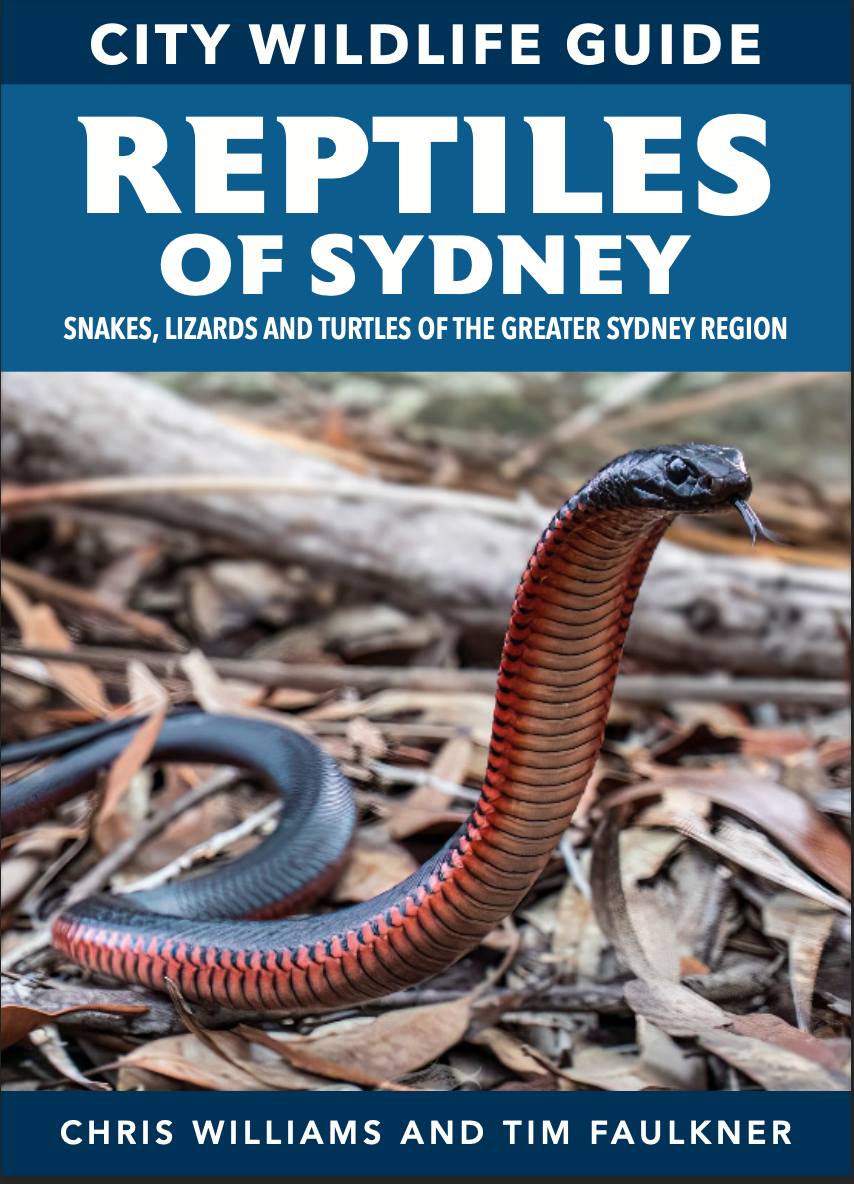
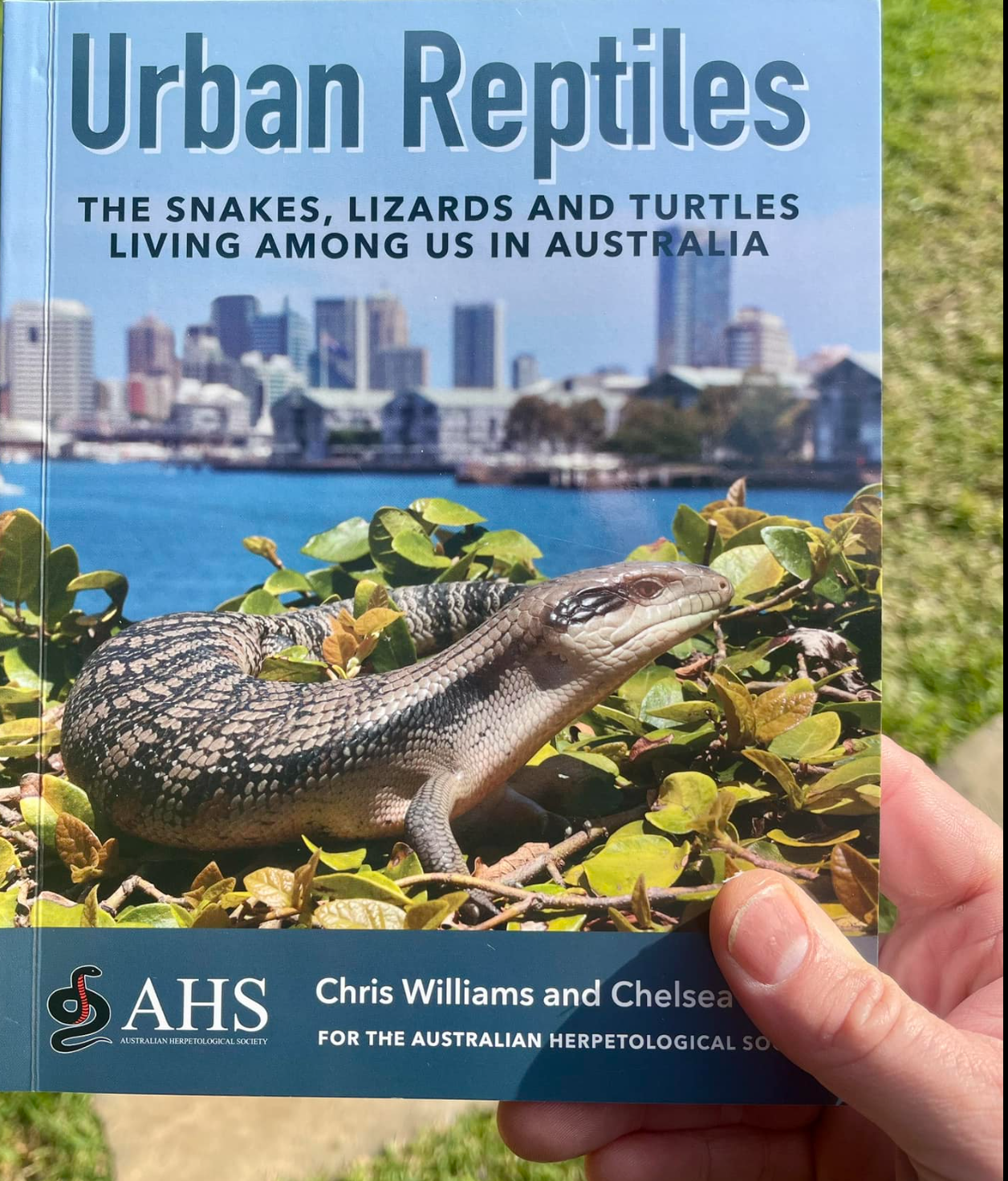
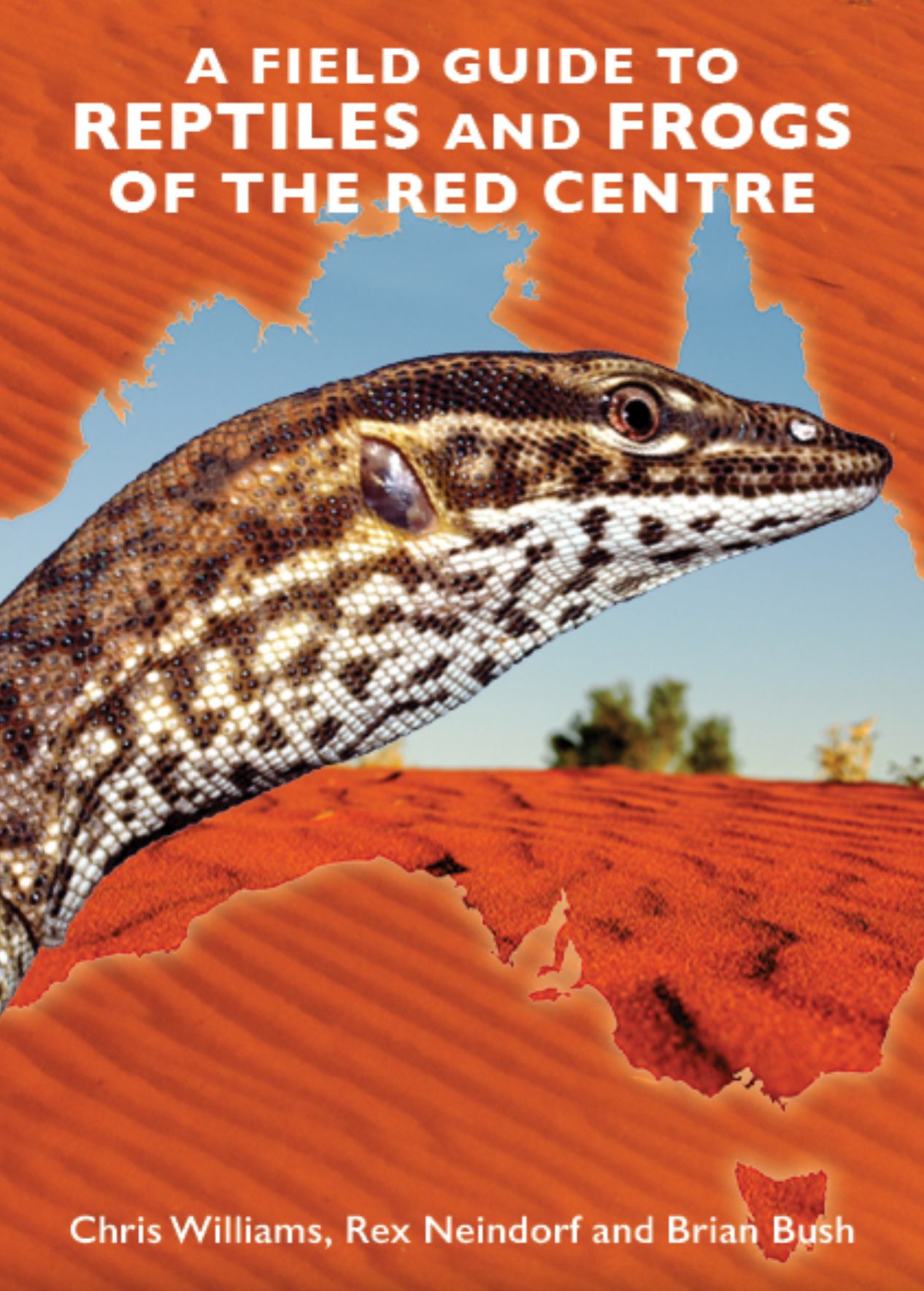
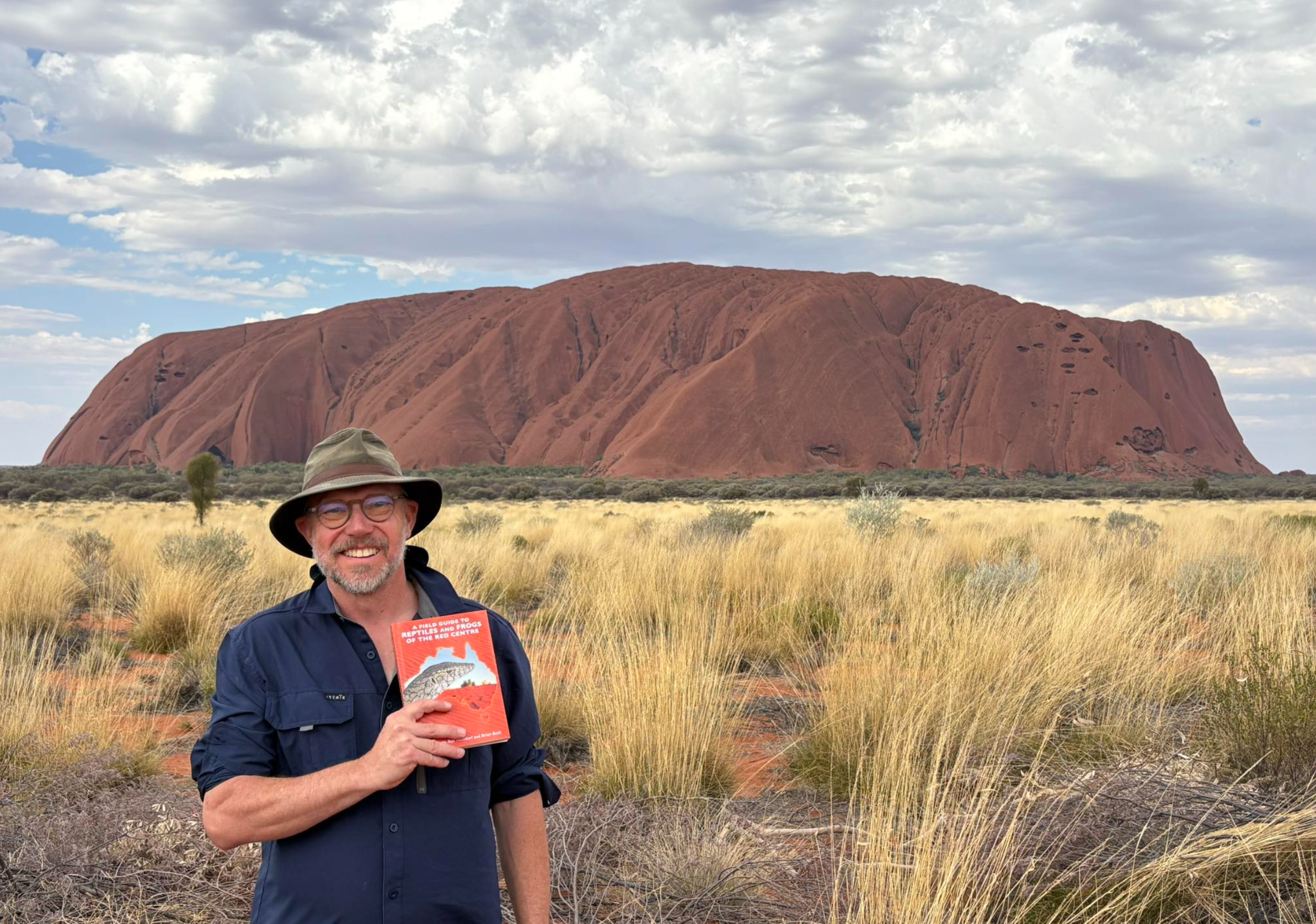
Chris is also the author or co-author of several major reptile books, including Urban Reptiles, Reptiles of the Red Centre and Reptiles of the Greater Sydney Region. These publications have helped cement his position as Sydney’s most knowledgeable urban reptile specialist.
Why Sydney Calls Chris
When people search for snake catcher near me, snake removal Sydney or licensed snake catcher, they want experience. Chris offers:
35+ years of hands-on reptile work
Full accreditation and insurance
Fast, 60-minute Sydney-wide response
Expert species identification
Practical advice on preventing snakes around homes and businesses
Education for schools, daycares, workplaces and community groups
Chris is also the author of:
Reptiles of the Greater Sydney Region,
Reptiles of the Red Centre,
and Urban Reptiles, among many other titles.
Widely regarded as an expert in reptile conservation and management, Chris has dedicated his career to bridging the gap between people and wildlife.
For books, bandages and a whole lot more head to https://sydneysnakecatcher.com.au/shop/
For the most up to date information on snakebite first aid, visit, snakebitefirstaid.com.au
