
The owners of this beautiful Labrador were determined to make sure the snake was removed from the yard.
For books, bandages and a whole lot more head to https://sydneysnakecatcher.com.au/shop/
Protecting Dogs from Snakebite: A Guide for Dog Owners
As snake and reptile relocation experts in Sydney, we frequently help homeowners who've found snakes on their property. A common concern in these conversations is how dogs and snakes interact, as these encounters can sometimes lead to dangerous situations.
"My dog was attacked by a snake." Actually, it's very unlikely that a snake would actively attack a dog. From the snake's perspective, there's no reason to start a confrontation. Dogs are too large to be eaten, and snakes just don't need the drama.
"It was huge. The snake was over 2 metres long." While a snake's length might seem intimidating, it's their height that matters in an encounter. Even the largest snake is much shorter than the smallest dog, and to a snake, both dogs and people appear large and threatening.
Snakes don't have claws, fists or feet, so their only means of defence is biting. They aren't aware that their bite can be deadly; they're simply reacting to a perceived threat in the only way they can.
Many dog breeds, like Jack Russells or Fox Terriers, are instinctively driven to chase animals like snakes and lizards. Because dogs lead with their face, bites often land on the muzzle, gums, tongue or inside the mouth, rather than on the hands or feet as usually happens with people. The snake isn't interested in engaging with the dog, and bites are less likely if the snake has a chance to escape.

Understanding the Risk
It's more common than most people realise for dogs in the Sydney area to suffer snakebites, and they are often fatal. In one tragic incident in Middle Dural, three Jack Russells attacked a Red-bellied Black Snake, resulting in the death of all three dogs and the snake. Most of these encounters are started by the dog, not the snake. Dogs, driven by curiosity or territorial instincts, approach or attack a snake, and the snake defends itself.
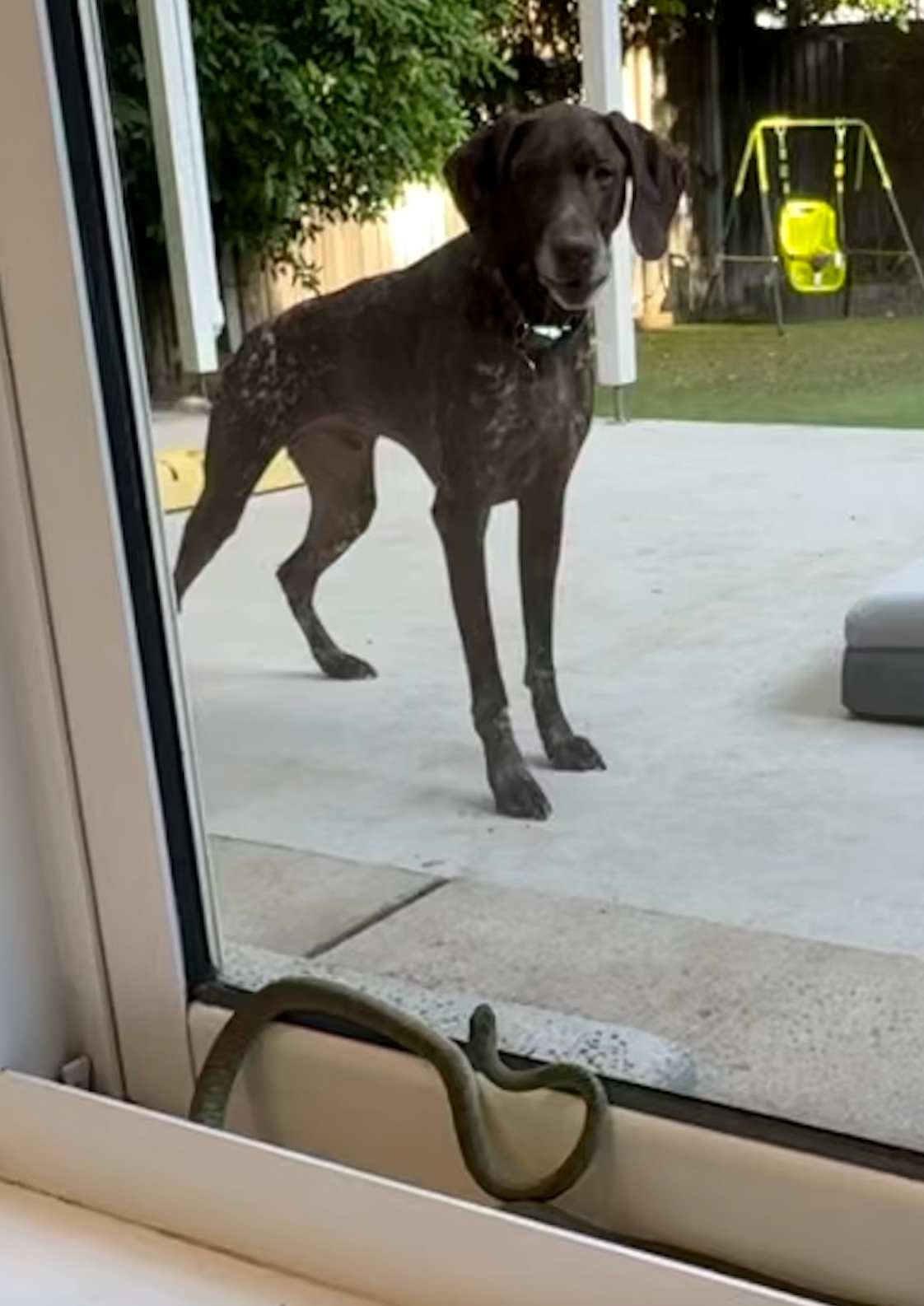
The owners of this townhouse were alerted to a harmless tree snake in the house by their dog barking.
Preventive Measures to Safeguard Your Dog
1. Lead and supervision. Always keep your dog on a lead in unfamiliar areas, especially bushy or grassy places where snakes may hide.
2. Obedience training. A well trained dog is more likely to leave snakes alone and respond to commands. This training can save its life.
3. Yard maintenance. Make your yard less attractive to snakes by keeping it tidy and trimming foliage. Remove potential hiding spots like piles of wood or debris.

This large Eastern Brown snake had plastic mesh caught around its midsection, slowing it down,. This made it easier to be attacked by a dog.
Immediate Steps If Your Dog Encounters a Snake
Should your dog encounter a snake, act quickly.
Keep your dog away. Get your pet away from the snake first. Use a lead or call them back if they are off lead.
Seek professional help. Do not try to catch or kill the snake yourself. Keep an eye on it from a safe distance and call a professional snake catcher.
In case of a bite. Keep your dog as still and quiet as possible and carry them to the car if you can do so safely. Call ahead and get to the nearest vet immediately. Do not wash or cut the bite.
For full snakebite first aid for people and pets, visit snakebitefirstaid.com.au.
Recognising the Signs of a Snakebite
Snakebite can cause subtle symptoms that may worsen rapidly. If you notice any change in your dog's normal behaviour, go to the vet immediately and tell them you're coming in with a possible snakebite. Be alert for signs such as:
Sudden weakness or collapse
Shaking or trembling
Hind leg weakness
Vomiting or diarrhoea
Bloody urine
Nosebleed or other unusual bleeding
Excessive salivation or foaming at the mouth
Dilated pupils
Paralysis
A dog can look completely normal and still have been bitten. Get veterinary care immediately, even if symptoms are delayed.
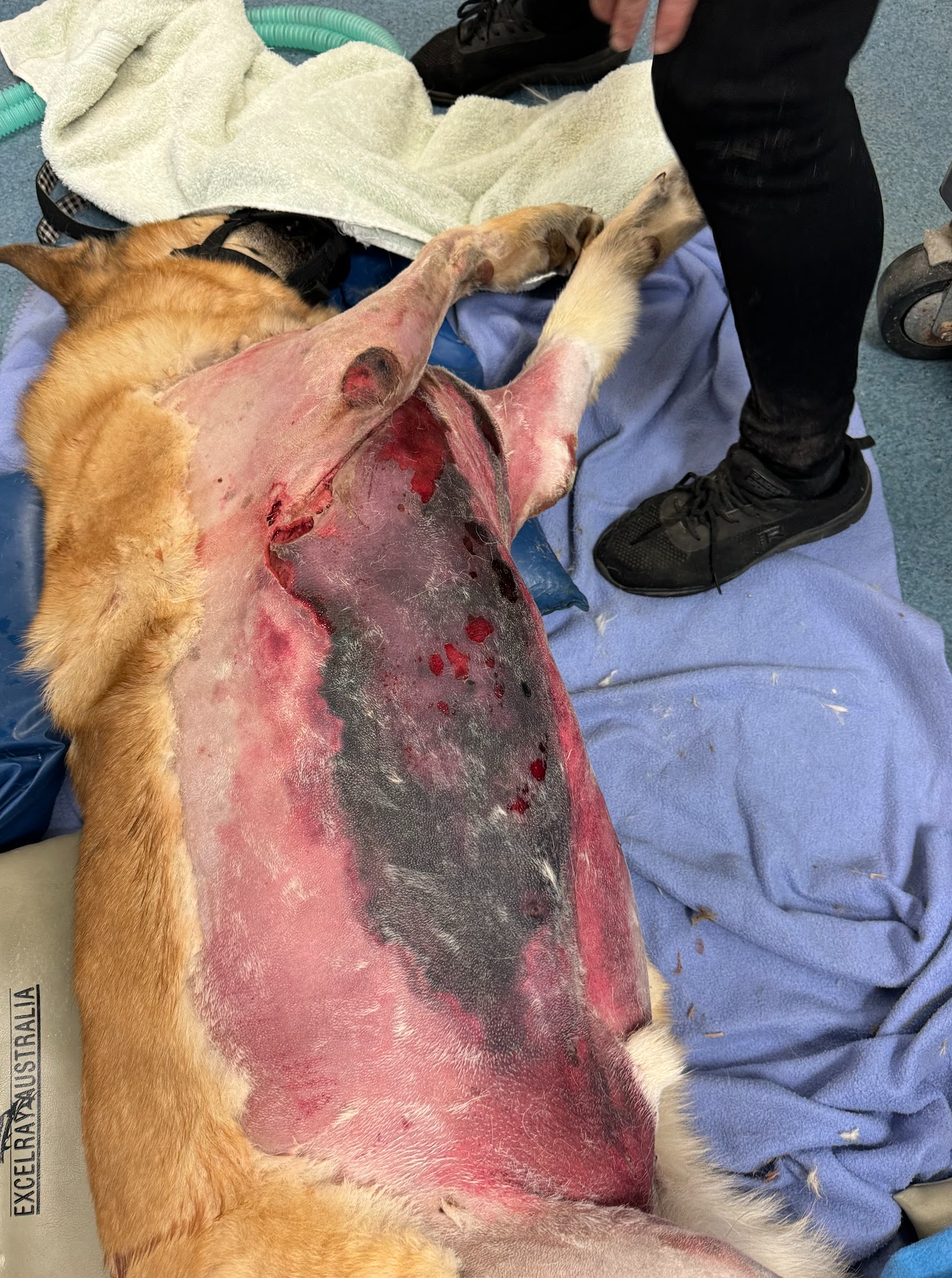
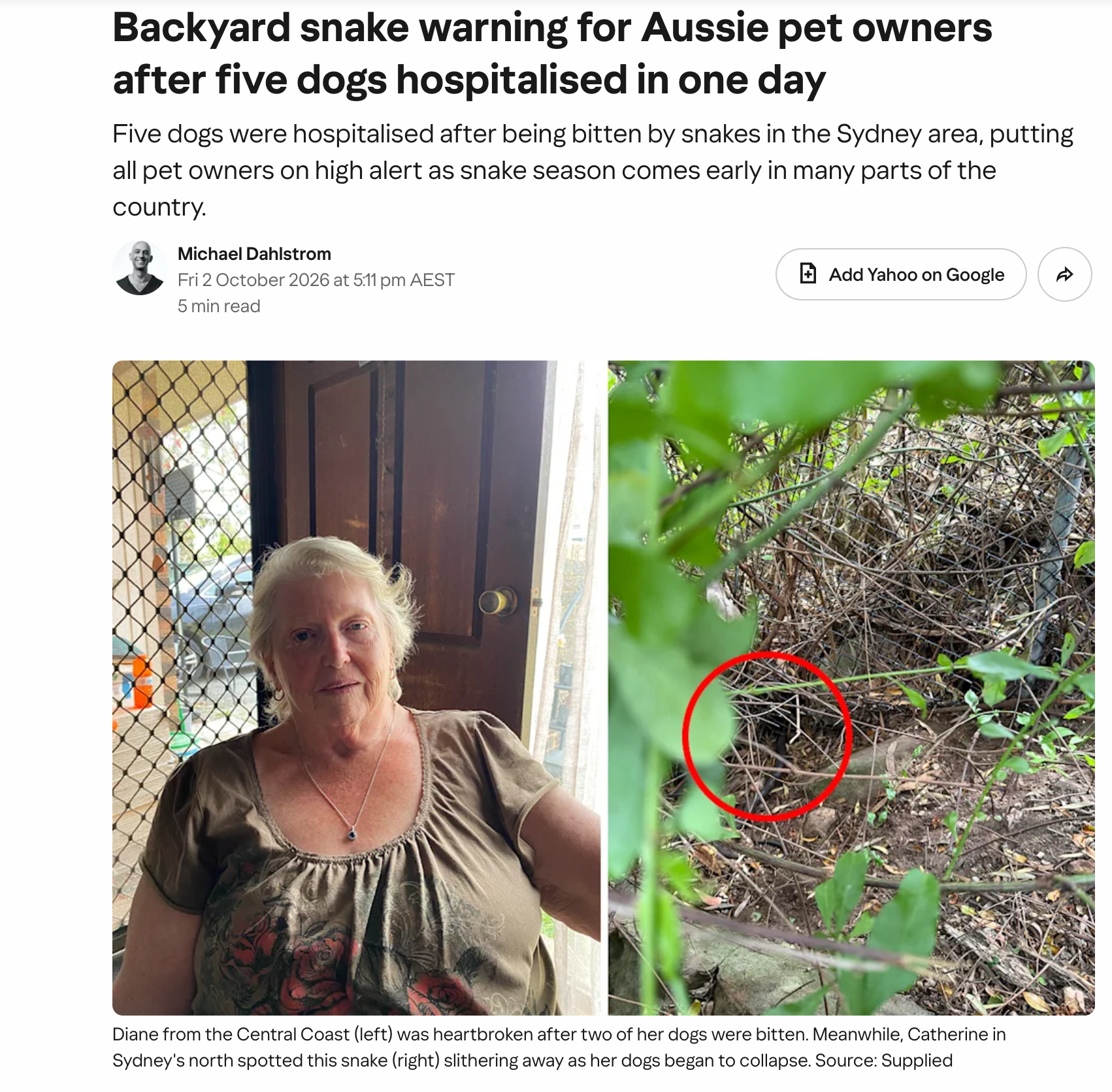
A five year old German Shepherd from Western Sydney was taken to the vet twice before staff shaved his underside and discovered the full extent of the damage caused by snake venom. He had been given pain relief during the earlier visits. By the time the damage was found, he was suffering organ failure, and the owners were advised that euthanasia was the most humane option. Snake venom was confirmed after his death.
What to Expect at the Vet
Vets treat snakebites as emergencies. On arrival, they may shave the bitten area to inspect the wound and run tests. Treatment often includes antivenom, intravenous fluids, and sometimes additional support like oxygen or antibiotics. The sooner your dog receives treatment, the better its chances of recovery.
Recovery and Cost
Quick action is vital for a successful recovery. Veterinary treatment can be costly, so consider pet insurance to cover potential expenses.
Once the weather warms up, Dr Michelle Dalli of North Richmond Vet Hospital treats one to two dogs a week with suspected snakebites. Breathing difficulties, paralysis, neurological problems and collapse are all symptoms she sees.
Treatment can be expensive, and not every owner can afford it. At the time of reporting, tiger/brown snake antivenom cost $1,100 and death adder antivenom $3,500.
https://au.news.yahoo.com/backyard-snake-warning-for-aussie-pet-owners-after-five-dogs-hospitalised-in-one-day-071153426.html

Flooding the cavity under a concrete slab is often an effective way to remove a snake. In this case the whole process took several hours, and the snake was relocated well away from humans and Labradors.
The Case of Rosco
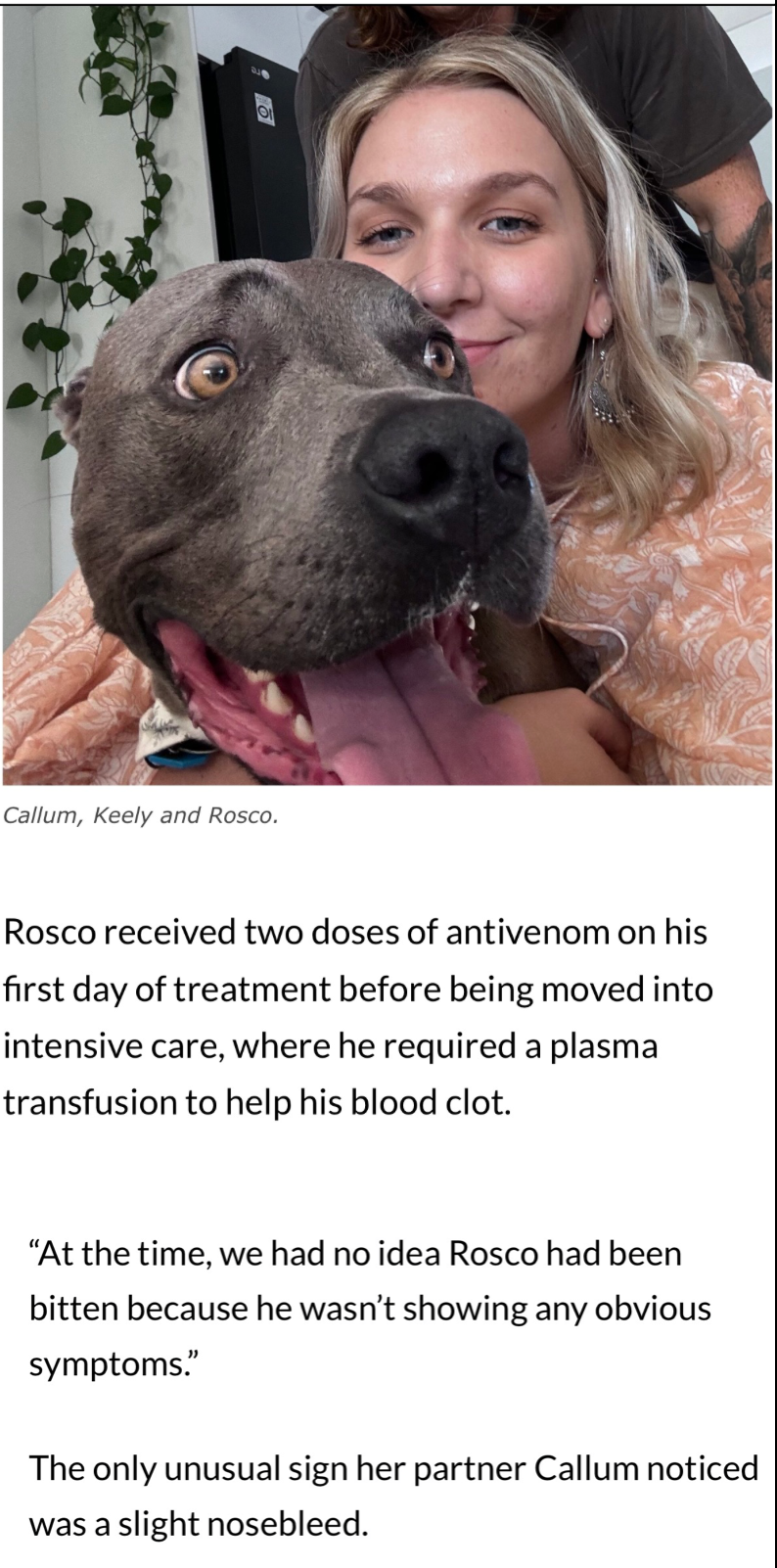
A recent case involving a seven year old Staffy called Rosco shows how little warning there can be after a snakebite. Rosco was found in the backyard near a dead Eastern Brown Snake but appeared completely normal. He was alert, excited to see his owners and showing none of the symptoms normally associated with snakebite. The only unusual sign was a slight nosebleed.
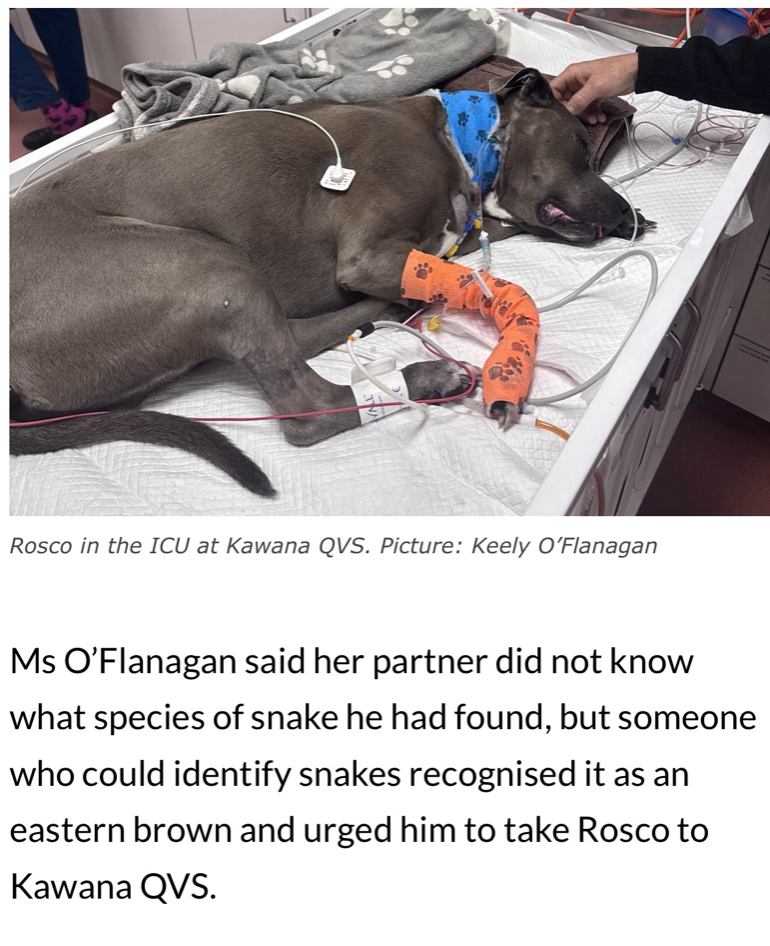
His owners took him straight to an emergency vet, where tests showed the venom was already having a serious effect. Rosco needed two doses of antivenom and a plasma transfusion because his blood was not clotting properly. He spent six nights in hospital before he was well enough to go home.
The important message is not to wait for obvious symptoms. A dog can look perfectly well after being bitten and still be in serious trouble. If your dog has had an encounter with a snake, get it to a vet immediately.
Remember too that in most dog and snake encounters, the dog approaches the snake. The snake is generally trying to defend itself or escape. Keep dogs away, keep an eye on the snake from a safe distance and call a professional snake catchRecovery and Cost
Quick action is vital for a successful recovery. Veterinary treatment can be costly, so consider pet insurance to cover potential expenses.
Once the weather warms up, Dr Michelle Dalli of North Richmond Vet Hospital treats one to two dogs a week with suspected snakebites. Breathing difficulties, paralysis, neurological problems and collapse are all symptoms she sees.
Treatment can be expensive, and not every owner can afford it. At the time of reporting, tiger/brown snake antivenom cost $1,100 and death adder antivenom $3,500.
Final Advice for Pet Owners
Preventing snakebite takes vigilance and preparation. Understand the risks, train your dog, keep your yard tidy and know what to do in an emergency, and you'll go a long way towards keeping your dog safe.
If you find a snake, never try to deal with it yourself. For advice or safe reptile relocation anywhere in Sydney, contact Chris Williams at Urban Reptile Removal on 0418 633 474.

About Chris Williams
Sydney's Most Experienced Urban Reptile Specialist
Chris Williams has spent more than 35 years working with Australia's most iconic and dangerous reptiles. As founder of Urban Reptile Removal, he provides fast, safe and highly professional snake removal across Sydney, backed by decades of field experience and scientific knowledge.
Chris is widely regarded as one of Sydney's leading authorities on urban reptiles: the snakes, lizards, geckos and turtles that now live alongside us as the city expands. His work focuses on how development shapes wildlife populations and how people can safely coexist with the species that turn up in homes, schools, workplaces and construction sites.
A Career Built on Reptile Expertise
Chris began working with reptiles in 1990 as a WIRES reptile handling instructor before joining Taronga Zoo's reptile department, where he worked with cobras, rattlesnakes and Australian elapids, and contributed to conservation programs for threatened species.
He later worked at the Australian Reptile Park and Reptiles Alive, delivering reptile education programs across NSW. Since 2014 he has served as President of the Australian Herpetological Society, leading the state's oldest reptile focused organisation.
Chris is the author or coauthor of several major reptile books, including Urban Reptiles, Reptiles of the Red Centre and Reptiles of the Greater Sydney Region. These publications have helped cement his position as Sydney's most knowledgeable urban reptile specialist, and his career has been dedicated to bridging the gap between people and wildlife.
Why Sydney Calls Chris
When people search for snake catcher near me, snake removal Sydney or licensed snake catcher, they want experience. Chris offers:
35+ years of hands on reptile work
Full accreditation and insurance
Fast 60 minute response across Sydney
Expert species identification
Practical advice on preventing snakes around homes and businesses
Education for schools, daycares, workplaces and community groups
For books, bandages and a whole lot more head to https://sydneysnakecatcher.com.au/shop/
