Snake removal in Hornsby
If you've found an unwanted snake in Hornsby, call 0418 633 474. Bring children and pets indoors, and let us handle the rest. You don't need to take a photo, identify the snake, or keep watching it. Snakes almost always retreat to the nearest hiding place, and a trained catcher will locate it when we arrive. We stay on the phone with you and talk you through what to do until we get there.
About Hornsby
Hornsby is one of the most wildlife-rich suburbs in northern Sydney. The bush corridors, deep valleys, tall eucalypts, established gardens, walking tracks, and easy access to Ku-ring-gai Chase National Park and Berowra Valley National Park bring native fauna right into people's backyards. Snakes move freely between bushland and residential streets, especially through the warmer months. We respond to a high volume of snake removal calls here every year.
The species we see most often
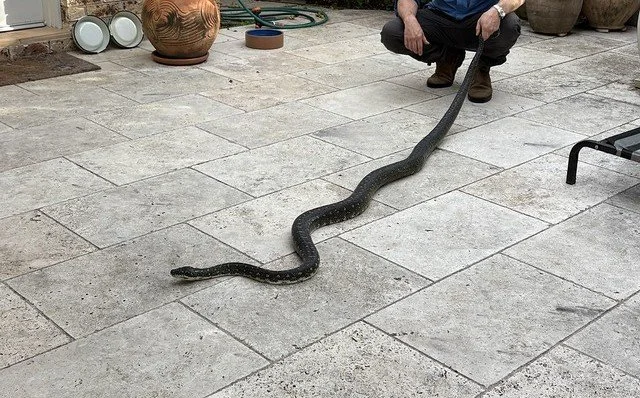
Diamond python. Large, non-venomous, calm by nature, but startling because of their size. Excellent climbers, often seen resting in trees, curled in sheds, draped across fences, or in roof cavities. In Hornsby and the suburbs bordering the national parks, diamond pythons play an important role in controlling possum populations. We encourage residents to leave them alone where it's safe to do so. When relocation is needed, their size and strength means it should be done by a trained handler.
Golden-crowned snake. Small and nocturnal, with a pale yellow marking across the head and nape and a pink or reddish belly. Venomous, but bites usually produce only local symptoms. Shy, prefers damp leaf litter, shaded gardens, rock crevices, and raised garden beds. Often seen after rain or on warm humid nights. Frequently confused with juvenile brown snakes because of their size.
Blue-tongued lizard. Not a snake, but the most common reason people in Hornsby call us thinking they've seen one. Slow-moving skinks that hiss and puff up when threatened, displaying a bright blue tongue. They feed on snails, slugs, and insects, and are excellent for the garden. If you're not sure what you're looking at, call. We'd rather come out for a blue-tongue than not come out and find out it wasn't.
Green tree snake. Slim, fast, harmless. Bright green, olive, or dark grey with a yellow underside. They climb well and turn up on fences, in shrubs, behind garage walls, near pool areas, and high in trees. When startled, they flatten their bodies and show pale blue between the scales, which can be alarming if you don't know the species. They aren't venomous. They still need a trained catcher to relocate from inside a home.
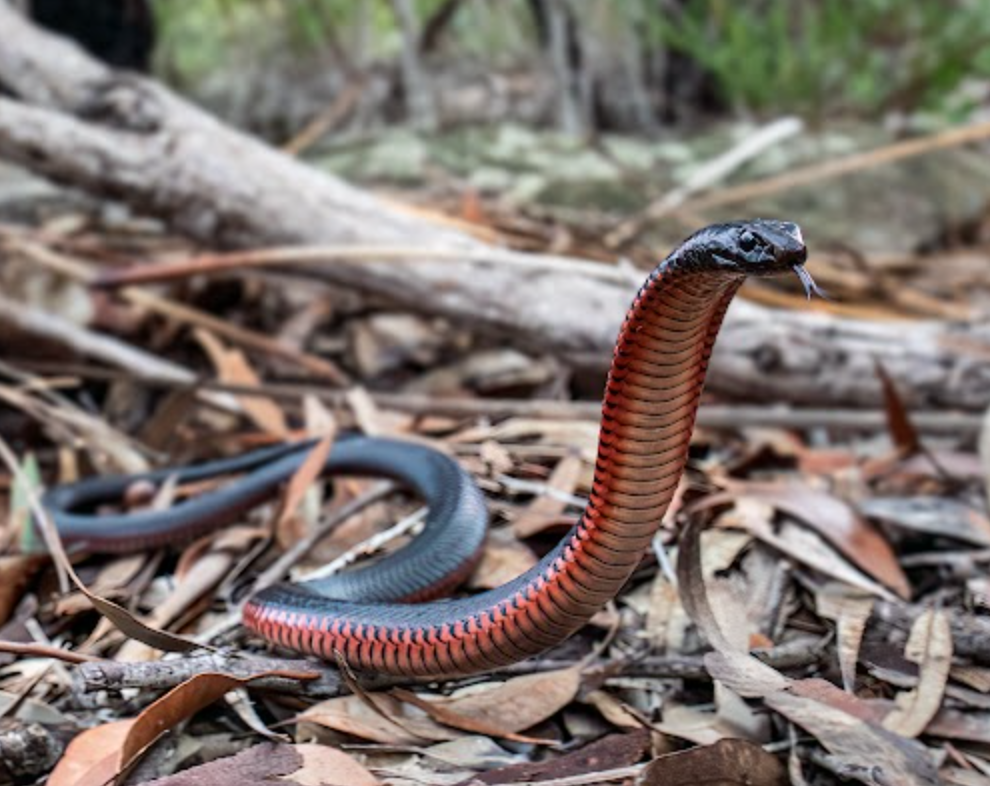
Red-bellied black snake. Glossy black with a red or pink underside. Common around creeks, drainage lines, frog-rich gardens, damp corners, and shaded valleys — Hornsby has plenty of all of these. Less defensive than browns, but venomous and serious. Should only be handled by a professional.
Hornsby has many gardens, bush areas, sandstone walls, sheds, and sloping yards. These all give snakes good places to hide. The most common places we find snakes are:
Where snakes hide in Hornsby properties
Under pot plants and raised garden beds

In hedges, shrubs, and long grass

Under decks, steps, and outdoor storage

Along fences and the edges of buildings

Near pool equipment and garden structures

In wheelie bin areas

Under children's outdoor play equipment

Under timber, tiles, metal sheets, or leftover building materials

Under retaining walls and sandstone blocks

Behind hot water systems and air conditioners

Inside sheds, especially behind stored items

When you call us, you do not need to keep watching the snake. We use our knowledge of snake behaviour, the weather, the time of day, and the layout of your property to work out where it has likely gone. Then we search in a careful, planned way.
Why snakes come here
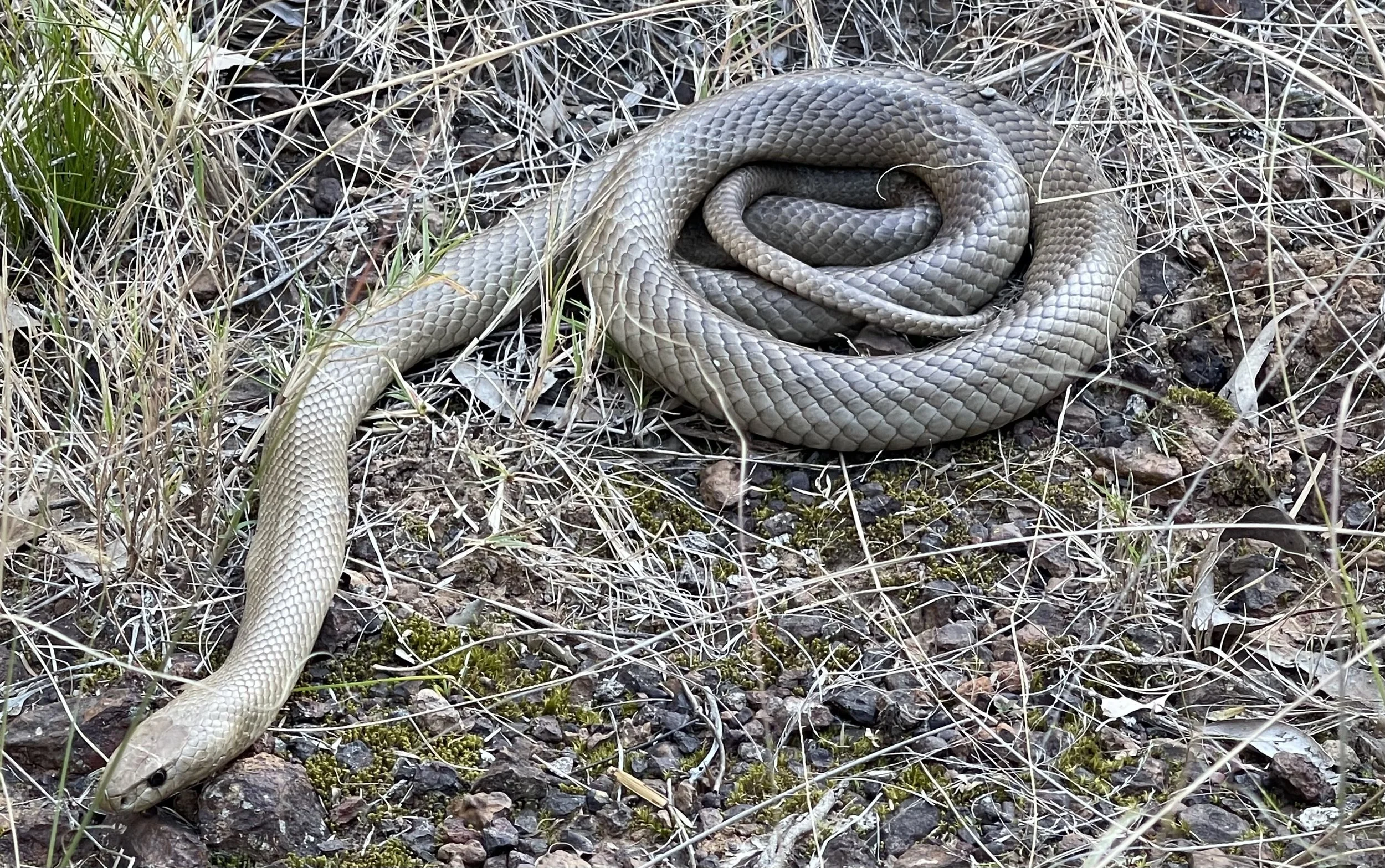
Snakes follow food. Hornsby has a lot of bushland, which means many frogs, insects, skinks, possums, and rodents live here. When these animals move through a garden, snakes often follow them. Snakes are not trying to enter your home on purpose. They are simply moving through the landscape, the same as any other native animal. In Hornsby, that landscape often runs close to your back door.
Common questionsDoes
Does one snake mean there are more nearby?
No. Snakes do not travel in pairs. They do not form groups, and they do not build nests in suburban yards. One sighting almost always means one snake. Once we relocate it, the problem is usually solved.
Did I do something wrong?
No. Snakes move through every suburb in northern Sydney. Hornsby simply has more snake activity than most areas because of the bushland around it.
What attracted it?
In most cases, it is food. If frogs, rodents, or other small animals are active on your property, a snake may follow them. Removing the food source helps reduce future visits.
After we leave…
Before we go, we will explain what likely brought the snake to your property, and what you can do to make it less attractive to snakes in future.
We recommend you avoid chemical repellents, powders, and ultrasonic devices. There is no real evidence that any of these work, no matter what the packaging says.
What does help is changing the conditions around your home:
Keep grass short

Lift stored items off the ground

Keep garden beds tidy

Store outdoor pet food securely

Control rodents

Trim overgrown bushes

Clear away unused building materials

Keep fence lines clear

Keep sheds organised

These steps will not remove snakes completely. Nothing can guarantee that. But they remove much of the food and shelter that attract snakes, which lowers how often you see one.
If a snake is inside the house
A snake inside your home is an emergency. Snakes usually get in through open doors, damaged fly screens, holes left by rodents, gaps around pipes, or worn seals under doors. This is more common in older homes and units near bushland.
If you find a snake inside:
Leave the room straight away.

Close the door behind you so the snake stays in one space.

Keep children and pets away from that door.

Call 0418 633 474.

Do not try to move it, trap it, or check where it has gone. Just close the door and call us. If someone is bitten while a snake is inside the house, call 000 first, then follow basic snakebite first aid while you wait — keep the person still, and apply a pressure immobilisation bandage if you're trained to do so. For a full step by step guide, visit snakebitefirstaid.com.au.
We work across Hornsby and the greater Hornsby Shire every day of the year.
If you hear unusual movement in the house, notice your dog or cat fixated on one part of the yard, or simply want to check — call. We would always rather come out for nothing than have someone put themselves at risk.