

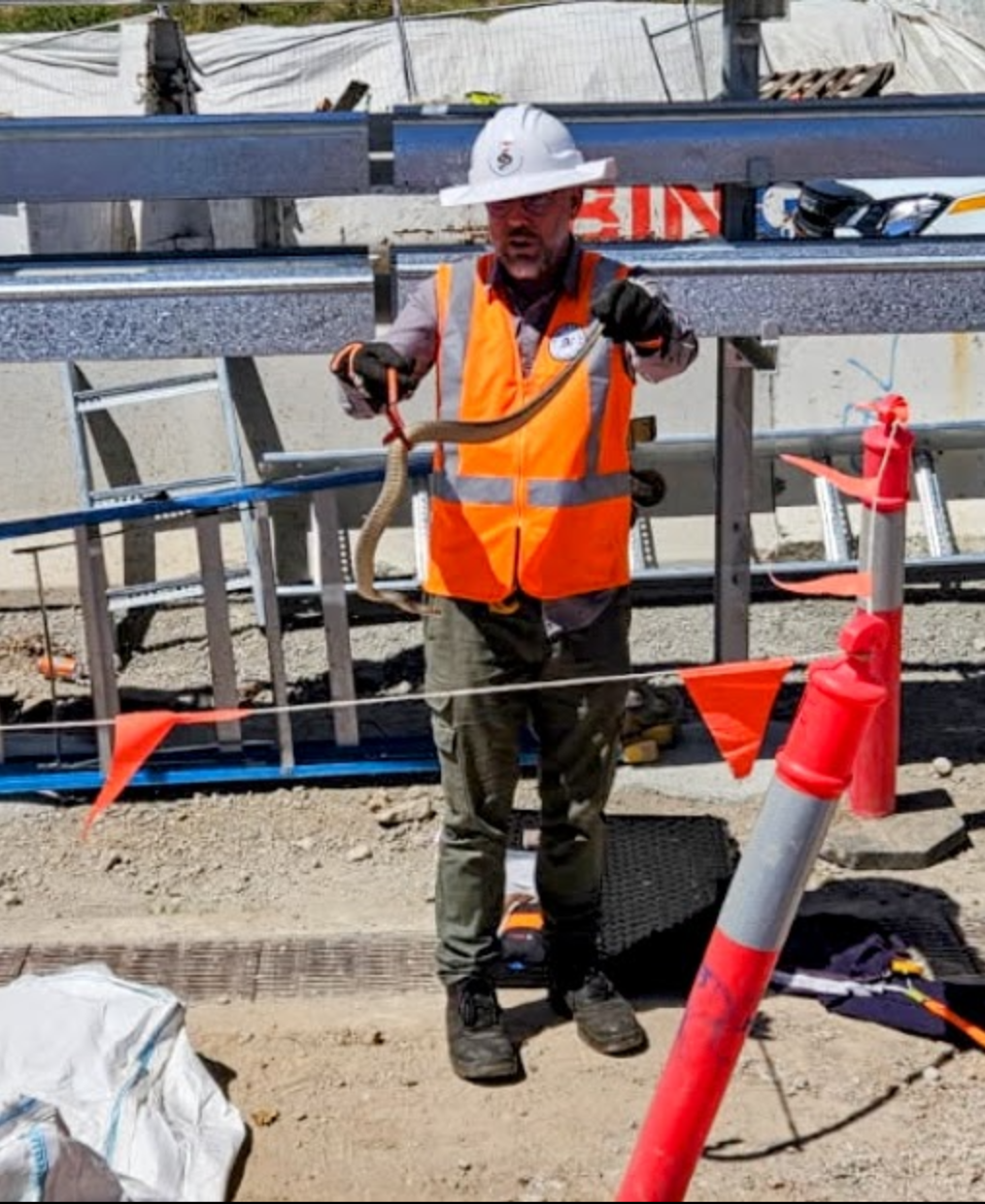
Why snake encounters at work are different
Why Workplace Snake Encounters Are So Dangerous
A recent fatal snakebite at a Queensland childcare centre has highlighted a serious but often overlooked workplace risk: untrained people attempting to deal with snakes found on business premises.
The incident involved a man who was bitten multiple times while trying to remove a juvenile Eastern Brown Snake from a childcare facility. Despite first aid and medical treatment, he later died after suffering cardiac arrest.
This tragedy reinforces a critical message for businesses across New South Wales: snake encounters in workplaces must always be handled by licensed professionals, not staff or bystanders.

Red Bellied Black Snake: FAQ After An Encounter.
Red Bellied Black Snake: FAQ After An Encounter.

Blue-Tongue Lizards in Your Backyard.
Introduction
Bluetongue Lizards are harmless to humans and pets. It is illegal to harm or kill them and the NSW Government may prosecute anyone found to harm native wildlife.
The Eastern Blue-tongue Skink (Tiliqua scincoides) is a common sight in urban areas, particularly in Australian suburbia. This guide provides an overview of their physical characteristics, dietary habits, and ecological significance, focusing on their adaptation to urban environments.

Diamond Pythons: FAQ After An Encounter.
Diamond pythons, commonly found in Sydney, especially in the northern suburbs, account for nearly half of the Northern suburbs snake catcher call-outs. Their significant size makes them more noticeable than smaller snake species. Typically, when residents report a Diamond python, it's often post-feeding, usually having consumed a ringtail possum, a frequent part of their diet. Post-meal, these snakes become less mobile and tend to stay nearby, curled up as they digest, which can take up to a couple of weeks. These snakes are harmless to humans and are usually relocated to nearby bushland, keeping them within their natural range. Nonetheless, if found near busy roads, relocating them further away is wise to prevent potential future accidents or injuries.

Green Tree Snake: FAQ After An Encounter.
Common Tree Snakes are found throughout the Sydney area but often go unnoticed due to their excellent eyesight and speed, both on and off the ground. As their name suggests, they are typically found in trees and shrubs. However, they are most likely to be encountered by the unsuspecting public when they find themselves in unfamiliar territory, such as a home or garage.

Golden Crowned Snake: FAQ After An Encounter.
Discovering the Golden Crown Snake (Cacophis squamulosus) in the Sydney Region
The Golden Crown Snake, scientifically known as Cacophis squamulosus, is a species that thrives in the suburbs of the Sydney region. This small, nocturnal reptile is known for its mild venom and slow movement, making it a rare sighting for humans. Here's a comprehensive overview of the species:

Eastern Brown Snakes: FAQ After An Encounter
Encountering a brown snake in your home or yard can be a stressful experience. Common Brown Snake (Pseudonaja textilis), are known to be dangerously venomous, and their bites can have severe consequences if left untreated. However, it's essential to understand that such encounters are usually transient events, as brown snakes are primarily on the hunt for their favourite prey: mice. In almost all cases the snake was simply passing through and hadn’t set up a home or made a “nest” at your place.

Dogs and Snakes: A Guide by Urban Reptile Removal.
Dogs are naturally curious and can be at serious risk from venomous snakes in Sydney. Learn how to reduce the chances of snakebite, recognise warning signs, and protect your pets around homes, gardens, and bushland areas.

The World’s Deadliest Snakes: The 10 Most Venomous Snakes Globally & in Australia
Snakebites are a serious medical concern, particularly in regions with a high prevalence of venomous species. Every year, thousands of people fall victim to snakebites, with many cases leading to fatalities due to delayed treatment or lack of access to antivenom. In this article, we’ll explore the 10 most venomous snakes in the world, the 10 deadliest snakes in Australia, and provide a breakdown of snakebite deaths worldwide, based on available data from 2020.

How Blue-Tongue Skinks Are Fighting Off Snake Venom
Venom is a powerful evolutionary weapon that helps snakes hunt and survive. Snakes usually have venom that works best on the type of animals they eat the most. For example, venom that might not affect a rodent much can be deadly to a lizard or bird, which are often a snake’s natural prey.
Recent research found that Blue-Tongues have developed resistance to the venom of Red-Bellied Black Snakes. Normally, this venom causes the victim’s blood to clot rapidly by activating a protein in the blood called prothrombin. This effect, called procoagulant, helps many Australian snakes catch their prey quickly.

Snake and Lizard Traps - Exclusively through Urban Reptile Removal
Snake Traps - Safe - Humane - Effective
Catching reptiles when we arrive on-site can often be quite challenging, especially if the animal has found a secluded hiding spot.
Snakes and lizards are masters of camouflage and can easily disappear into tight spaces like retaining walls, under sheds, or in burrows. This often makes immediate capture difficult, even with the best tools and techniques.

Common Sydney Snakes
Sydney is home to a surprising diversity of snake species, ranging from harmless garden dwellers through to some of Australia’s most venomous reptiles. Learn how to identify the most commonly encountered snakes in Sydney, understand their behaviour, and discover what to do if you encounter one around your home, backyard, or workplace.


Understanding and Addressing the Potential Trauma of Reptile Encounters.
Fear of snakes is one of the most common animal phobias and can trigger powerful emotional reactions during reptile encounters. This article explores why people fear snakes, how these encounters can become traumatic, and practical ways to better understand and cope with reptiles in urban environments.
The Unique Role of Snake Catchers in Reptile Education
Snake catchers occupy a unique position in wildlife education, engaging directly with people who are often fearful or uncomfortable around reptiles. Unlike traditional educational settings, these encounters occur in real-world situations where homeowners are faced with an unwanted snake or lizard on their property. By transforming moments of fear into opportunities for understanding, snake catchers help dispel myths, educate the public about reptile behaviour, and foster greater appreciation for these often-misunderstood animals.

Business Risk Assessment
Urban Reptile Removal provides professional reptile risk assessments, snake-proofing solutions, and emergency snake removal services for workplaces, construction sites, schools, government facilities, and commercial properties across New South Wales. From detailed site inspections and compliance reporting through to staff snake awareness training and regional fly-in/fly-out services, our team helps organisations reduce risk, improve safety, and protect staff, contractors, and the public from reptile encounters.

Water Dragons in Suburbia
Water dragons have become a familiar sight in many Sydney suburbs, thriving in backyards, parks, creeks, and swimming pool areas. This article explores how these large native lizards have adapted to urban life, why they are attracted to suburban environments, and how residents can safely coexist with them.

How to Snake-Proof Your Yard: Ultimate Tips for a Safe Oasis
Tips and tricks to help snake proof your home and yard.