Red-bellied Black Snake
The Red-bellied Black Snake (Pseudechis porphyriacus)
The Red-bellied Black Snake (Pseudechis porphyriacus) is the snake Sydney residents are most likely to find on their property. In 2025 we attended 580 Red-bellied Black call-outs — around 62% of our total snake jobs. The next most common venomous species was a long way behind.
Most of these calls come from the Hills Shire and the Blacktown LGA. Both have the right combination — bush corridors, creek systems, and properties backing onto drainage lines, dams and parkland. Baulkham Hills and Toongabbie both get plenty of Red Bellied Black’s turning up.
This is the species Sydney residents most need to be able to recognise and respond to safely.
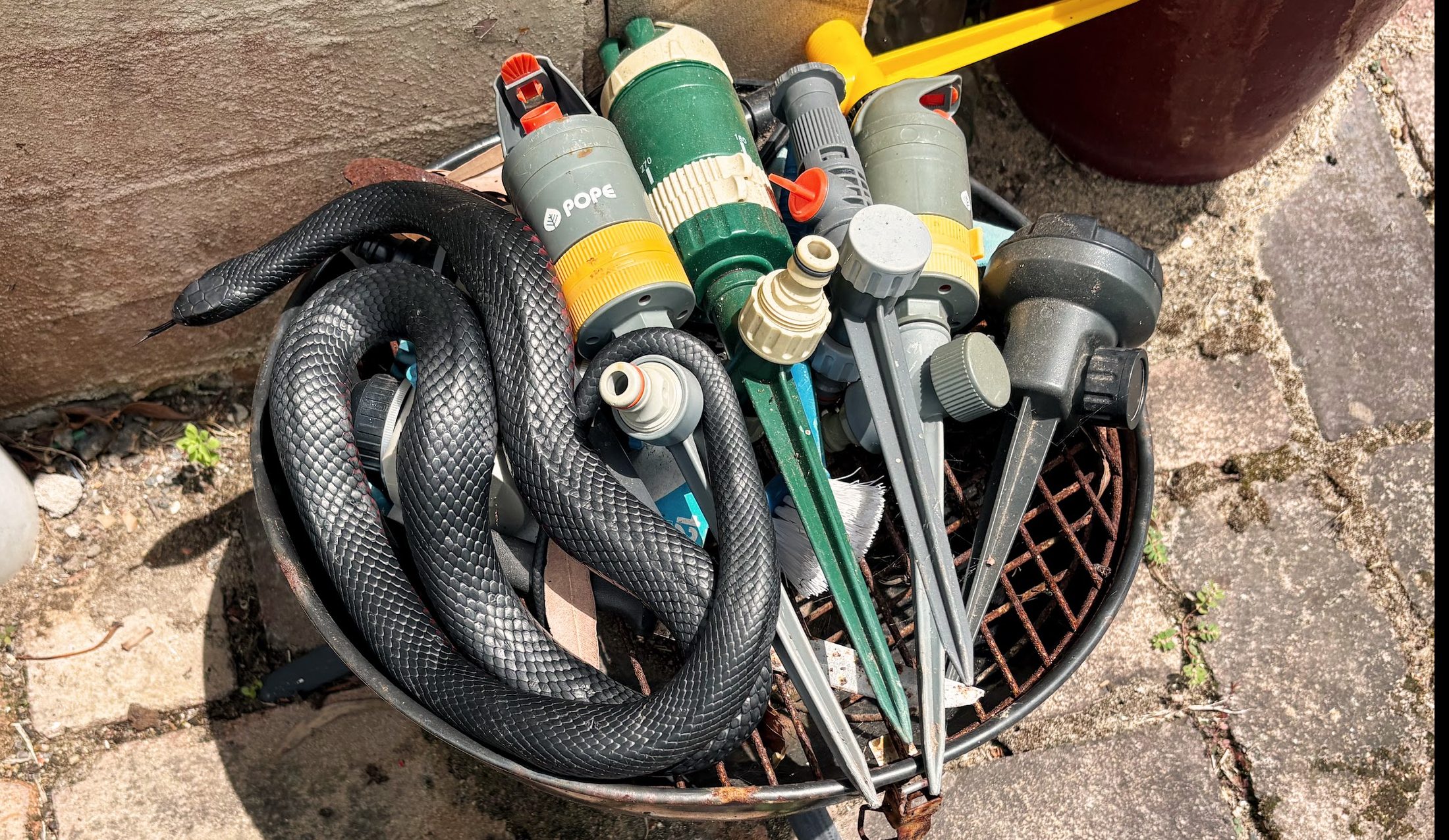
Red Bellied Black Snakes, like this one, are opportunistic in urban environments and will utilize places like this unused BBQ to shelter.
Identification
Adult Red-bellied Blacks are one of the easiest snakes in Australia to identify:
Heavy-bodied snake up to about 2 metres
Glossy black above
Bright red along the lower flanks, extending up the sides
Red belly fading to cream toward the tail
Smooth, polished scales
The glossy black back with red showing along the sides is unmistakable in good light.
What gets confused with a Red-bellied Black
Adult Red-bellied Blacks aren't really confused with anything else in Sydney. The identification problem is with juveniles, which are smaller and don't yet have the full adult look. Three other small dark snakes are sometimes mistaken for juvenile Red-bellied Blacks:
Eastern Small-eyed Snake (Cryptophis nigrescens): Glossy black, pinkish belly. Stays small as an adult.
Golden-crowned Snake (Cacophis squamulosus): Dark with a reddish belly, but has a distinctive pale partial collar across the nape.
Marsh Snake (Hemiaspis signata): Two pale stripes on the head, dark belly rather than red.
Any small dark snake in Sydney should be treated as potentially dangerous until a licensed reptile catcher confirms what it is.
Where they live
Red-bellied Blacks are tied to water and frogs. Where there are frogs, there are usually Red-bellied Blacks, and frogs need moisture — so the species follows creeks, ponds, dams, drainage corridors and any property with a wet patch.
The combination that produces consistent Red-bellied Black activity:
A pond, dam, creek or stormwater drain nearby
A frog population to feed on
Long grass, rock piles, sheets of corrugated iron, or other ground cover for shelter
That's why the Hills Shire and Blacktown LGA produce most of our calls. The Hills has the rural-residential properties with dams and creeks, and Blacktown LGA is criss-crossed by creek systems — Eastern Creek, South Creek, Breakfast Creek, Ropes Creek — with established suburbs and newer estates butting up against them.
Behaviour
The Red-bellied Black is dangerously venomous but genuinely shy. Their reputation overstates the threat.
Typical encounter:
The snake sees the human
It moves toward cover — water, dense vegetation, a known refuge
It disappears
It reappears later, when the area is quiet
When they do stand their ground, the display is consistent — front of the body raised, neck flattened slightly, mouth sometimes open, occasional mock strikes with the mouth closed. We see this almost exclusively when the snake has been cornered or threatened. Free-moving Red-bellied Blacks don't bother with it.
A Red-bellied Black that has seen you and is moving away is not a threat. The threat arises when humans force a confrontation by trying to kill or catch it.
https://au.news.yahoo.com/unusual-discovery-inside-suburban-bathroom-shocks-aussies-045912592.html
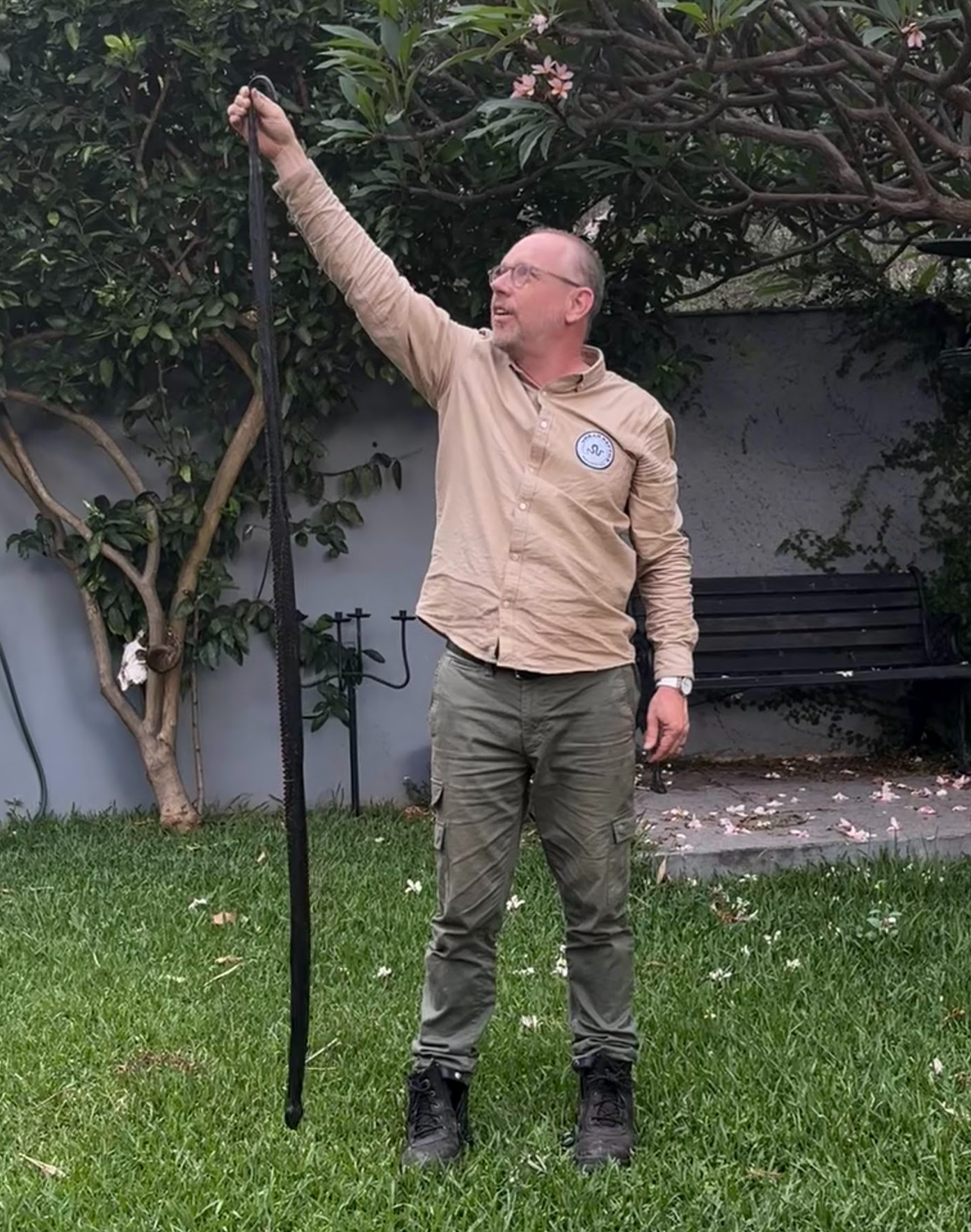
This Red Bellied Black Snake, from Glenhaven was a very old animal and died within a few days of capture. It was donated to The Australian Museum and was officially measured at 1.945m.
It’s the largest one on record and highlights how effective they are at evading humans. This animal would have been at least 20 years old and may have been much, much older.
How dangerous they are
Red-bellied Black venom is primarily myotoxic and anticoagulant — it damages muscle tissue and interferes with blood clotting. It is less neurotoxic than the venom of a Brown Snake or a Tiger Snake, which is part of why outcomes from confirmed bites are better.
A bite to a human typically involves:
Significant local pain and swelling
Nausea, vomiting, abdominal pain
Sweating, headache
Coagulation disturbance
Muscle damage lasting weeks
Hospitalisation and antivenom in serious cases
There are no recorded human deaths from Red-bellied Black Snake bites in Australia. That is remarkable for a species this widely encountered. Effective antivenom, the snake's reluctance to bite, and the relatively manageable venom effects all contribute.
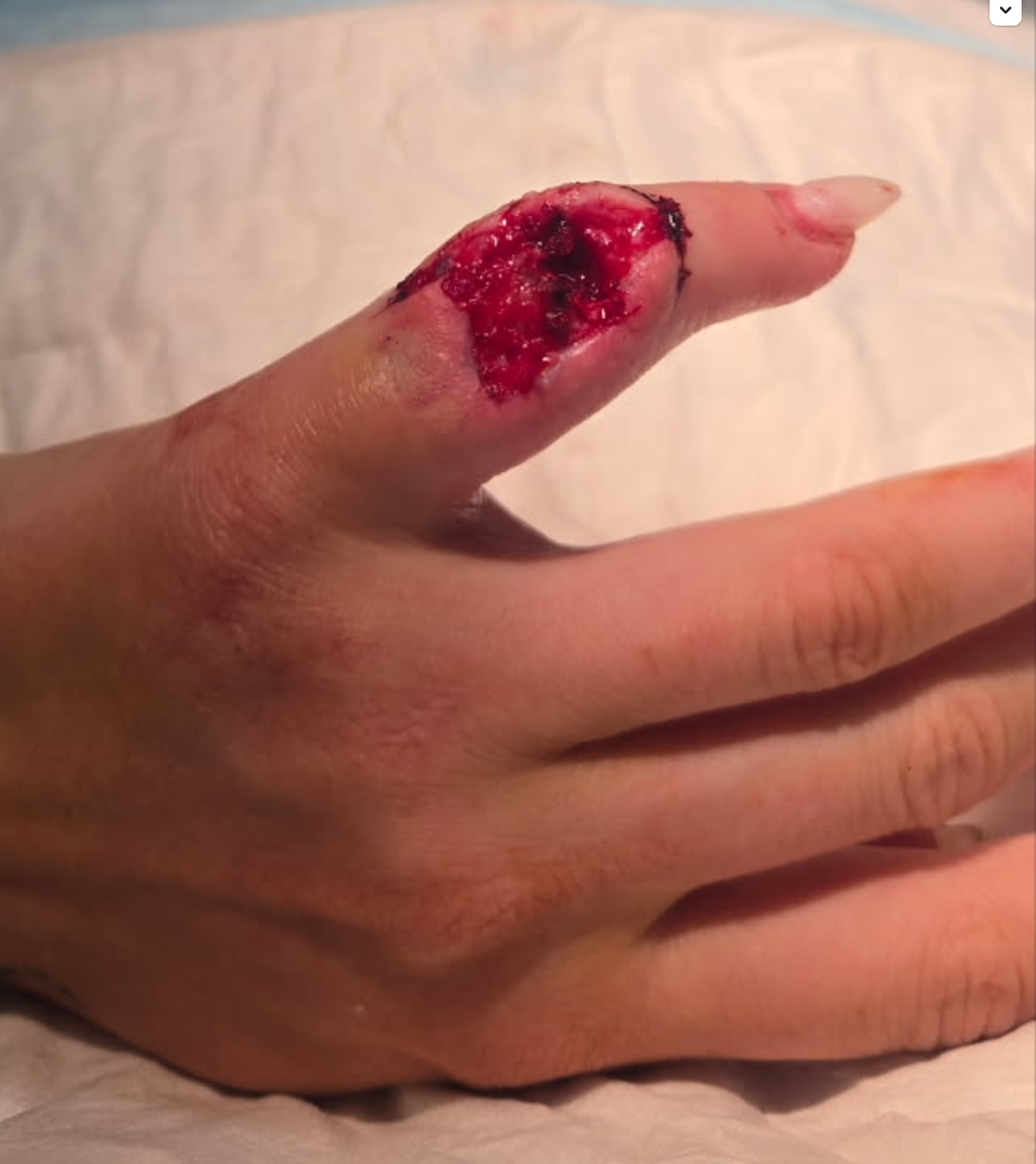
This photograph was taken five weeks after a Red-bellied Black Snake bite to the finger. After almost six weeks of ongoing treatment and repeated hospitalisations, the finger was amputated. We are aware of several other documented cases where bites from this species have led to amputation. Photo courtesy Calista V.
A confirmed bite is still a medical emergency. Call 000, apply pressure immobilisation, keep the patient still.
The risk to dogs
For dogs, the picture changes. Red-bellied Black bites to dogs are common and often fatal without rapid veterinary treatment.
Why dogs fare worse than humans:
Dogs engage with snakes rather than retreating
Bites typically land on the muzzle or paws — both highly vascular
A dog's smaller body size means a higher relative venom dose
Symptoms develop fast — vomiting, paralysis, dark urine, collapse
If you live in Red-bellied Black habitat and you have dogs, know where the nearest 24-hour vet with antivenom is located before you need it. Cats handle the venom better than dogs but still need veterinary treatment.
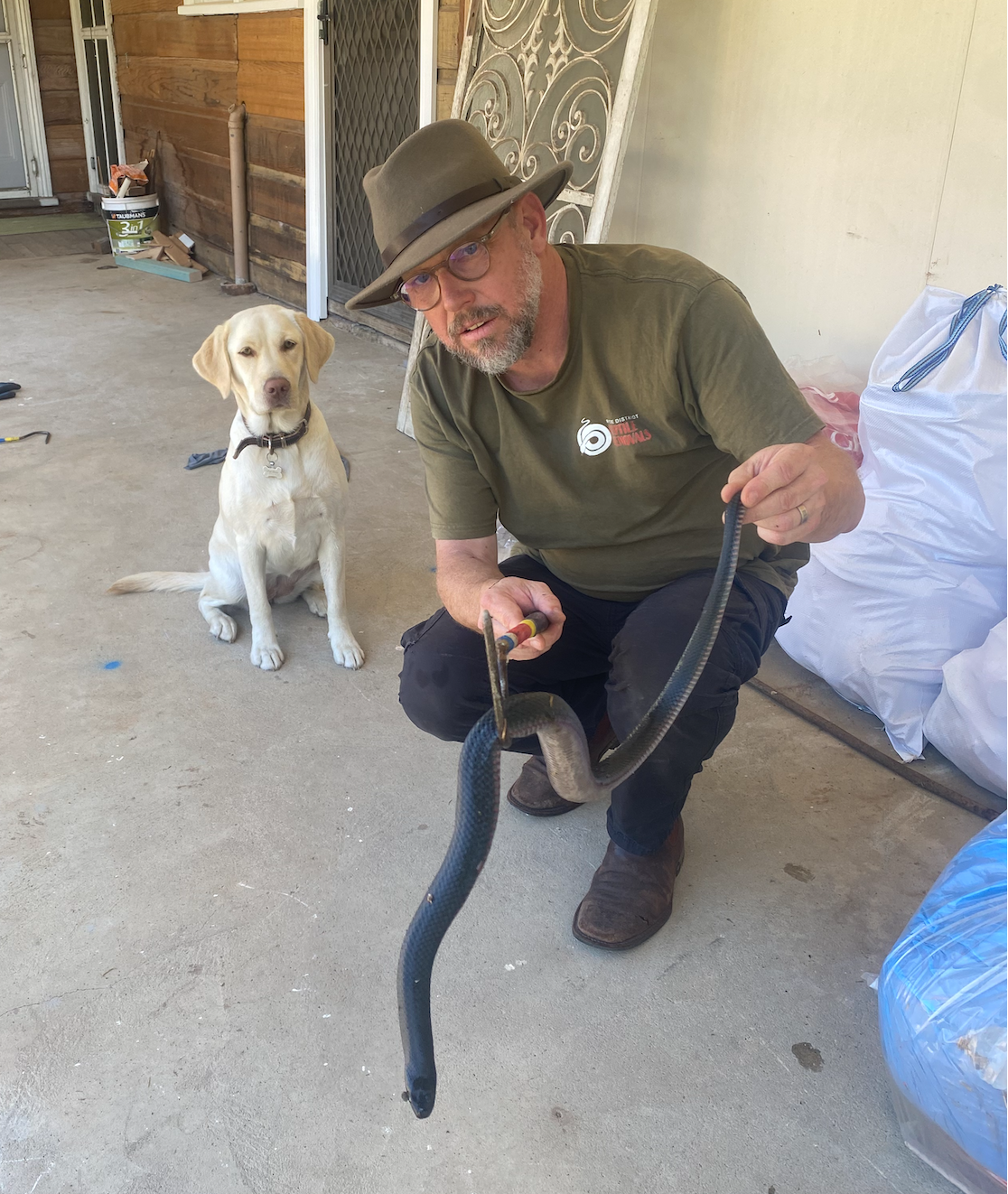
Fortunately, this interaction was uneventful for both the dog and the snake.
Breeding
Red-bellied Blacks are live-bearing rather than egg-laying — unusual among elapids. Mating is in spring, with males combating by intertwining and wrestling. Pregnant females sometimes share shelter sites. Up to 20 live young are born in late summer, fully independent from birth.
Favoured maternity sites — a particular sandstone crevice, a piece of corrugated iron, a specific roof cavity — are often used by multiple females across many years. If your property has one of those sites, you may have generations of Red-bellied Blacks using it.
What to do if you find one at your home
The response is straightforward.
Immediately:
Stop. Don't approach.
Keep at least 3 to 5 metres away
Keep children, pets and other people clear
Watch where the snake goes from a safe distance — if it disappears into cover, keep watching the spot where you last saw it
Then call us on 0418 633 474. We attend 24/7 across the Greater Sydney region. Stay on the phone — we'll talk you through what to do while the catcher is on the way.
What not to do:
Don't try to kill it. It's illegal and dangerous. Most snakebites in Australia happen during attempted killings.
Don't try to catch it. Even experienced amateur reptile keepers shouldn't handle wild venomous snakes.
Don't try to shoo it with a broom or a hose. You'll get a defensive snake instead of a moving one.
If someone is bitten
A confirmed or suspected Red-bellied Black bite is a medical emergency.
Call 000
Keep the patient still and calm — movement spreads venom
Apply pressure immobilisation bandaging — broad firm bandage starting at the bite site, wrapping along the limb, splint the limb
Don't wash the bite — venom traces help antivenom selection
Don't cut, suck or apply a tourniquet
Photograph the snake from a safe distance only if you can do so without delay
For pet bites, get to a 24-hour vet immediately and call ahead so they can prepare antivenom.
Reducing risk on your property
If you live in Red-bellied Black country, these measures reduce — but don't eliminate — the chance of an incidental encounter becoming a dangerous one:
Keep grass short close to the house
Clear rock piles and timber stacks from immediately around buildings
Address rodent problems
Seal gaps in foundations and brickwork
Use a torch outside at night, particularly near water
Wear closed shoes and long pants in the garden through snake season
Keep dogs on lead near water and dense vegetation in summer
You can't make a property in good habitat snake-proof, and trying to is usually counterproductive. The best protection is awareness, identification skill, and a quick number to call when one turns up.
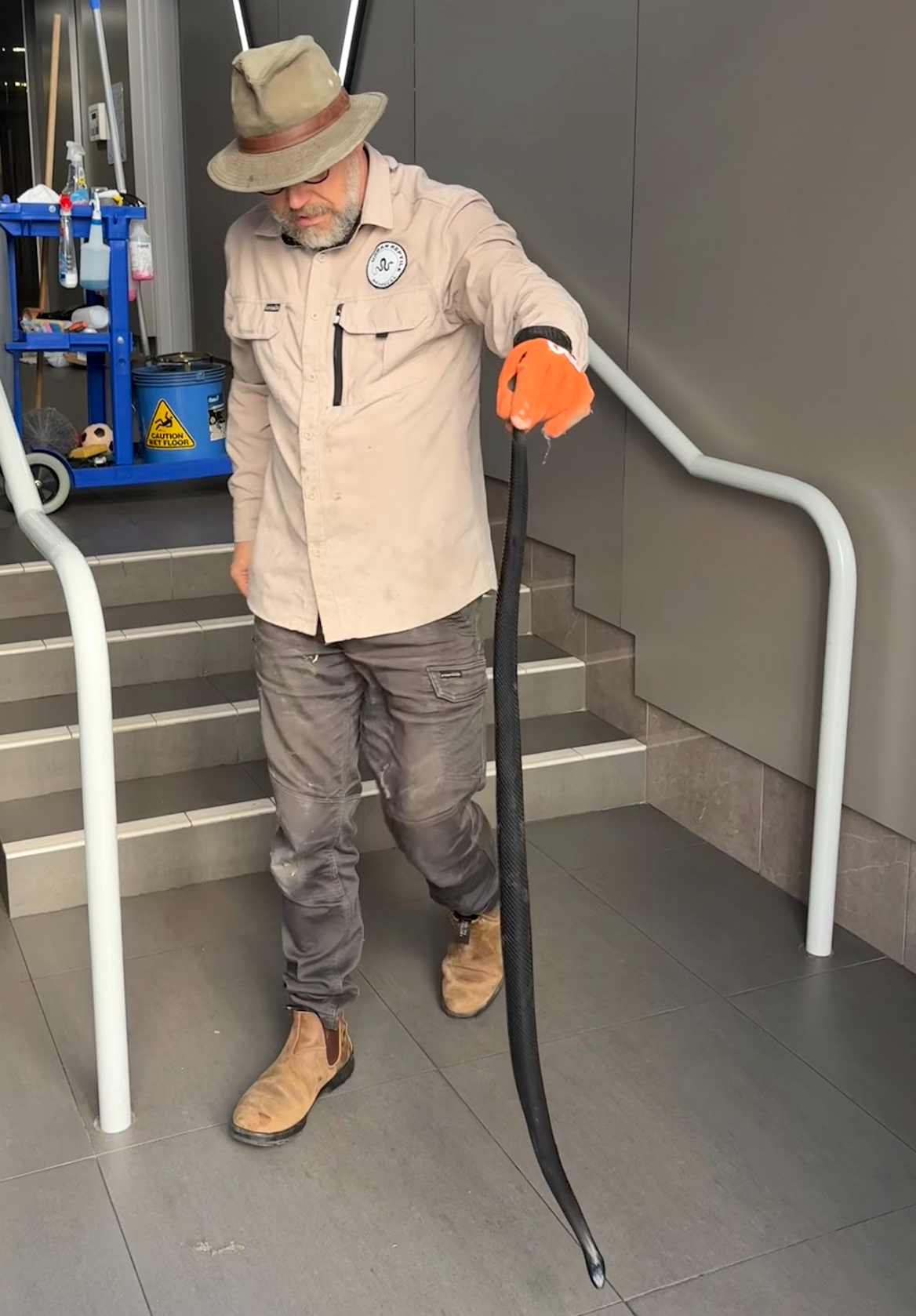
An adult male Red Bellied Black Snake, relocated from a unit complex
Summary
The Red-bellied Black Snake is the venomous snake Sydney residents are most likely to encounter. Most of our calls come from the Hills Shire and the Blacktown LGA. They are dangerously venomous but genuinely shy, with no recorded human deaths in Australia. The risk to dogs is real and high. Identification is easy for adults, harder for juveniles. The right response when you find one is to keep your distance, keep pets and children clear, watch where it goes, and call a licensed reptile catcher.
Found a Red-bellied Black Snake at your home? Urban Reptile Removal operates 24/7 across the Greater Sydney region. We are licensed, insured, and we attend more Red-bellied Black call-outs than any other species. Call 0418 633 474 — day or night.
https://www.inaturalist.org/taxa/35153-Pseudechis-porphyriacus
https://bie.ala.org.au/search?sortField=score&dir=desc&q=Pseudechis+porphyriacus

Interested in Sydney Reptiles?
You can buy the book, featuring full page descriptions on over 70 species
https://sydneysnakecatcher.com.au/product/city-wildlife-guide-reptiles-of-sydney/
About Chris Williams
Urban Reptile Removal is run by Chris Williams, a professional snake catcher and herpetologist with 35 years of experience across the Greater Sydney region. Chris has worked at Taronga Zoo and the Australian Reptile Park, founded Snake Ranch (Australia's largest reptile breeding facility), and has published seven books on Australian reptiles. He has been President of the Australian Herpetological Society since 2014. He licences and trains the catchers who attend jobs across the Urban Reptile Removal network. If you're calling Urban Reptile Removal, you're calling people who know what they're doing.
For the most up to date information on snakebite first aid, visit, snakebitefirstaid.com.au
