
Eastern Brown Snake
The Eastern Brown Snake (Pseudonaja textilis)
The Eastern Brown Snake (Pseudonaja textilis) is the most dangerous snake Sydney residents are likely to encounter. They are responsible for more snakebite fatalities than any other species in Australia, and the second most venomous land snake in the world by venom toxicity.
In 2025 we attended 89 Eastern Brown call-outs — far fewer than Red-bellied Blacks, but every one of them treated with the seriousness this species demands. They are not the everyday venomous snake of Sydney. They are the one you need to know how to identify and respond to, because the cost of getting it wrong is high. Most call-outs were in Penrith and Campbelltown LGA’s, however we have caught several in Quakers Hill and Kellyville Ridge.
Identification
Eastern Browns are deceptively variable. The colour ranges from pale tan to almost black, and the same species can look very different from one individual to the next:
Slim, athletic build with a moderately long body
Length up to 2 metres, average around 1.5 metres
Colour from pale golden tan through to dark brown, occasionally almost black
Faint banding sometimes visible
Cream belly, often speckled with orange or grey
Head only slightly distinct from the neck
Smooth, glossy scales
Round pupils
The colour variation is the difficult part. A pale Eastern Brown and a dark Eastern Brown can look like different species. This is one of the main reasons we tell people not to attempt their own identification — treat any unidentified snake as potentially an Eastern Brown until a licensed catcher confirms otherwise.
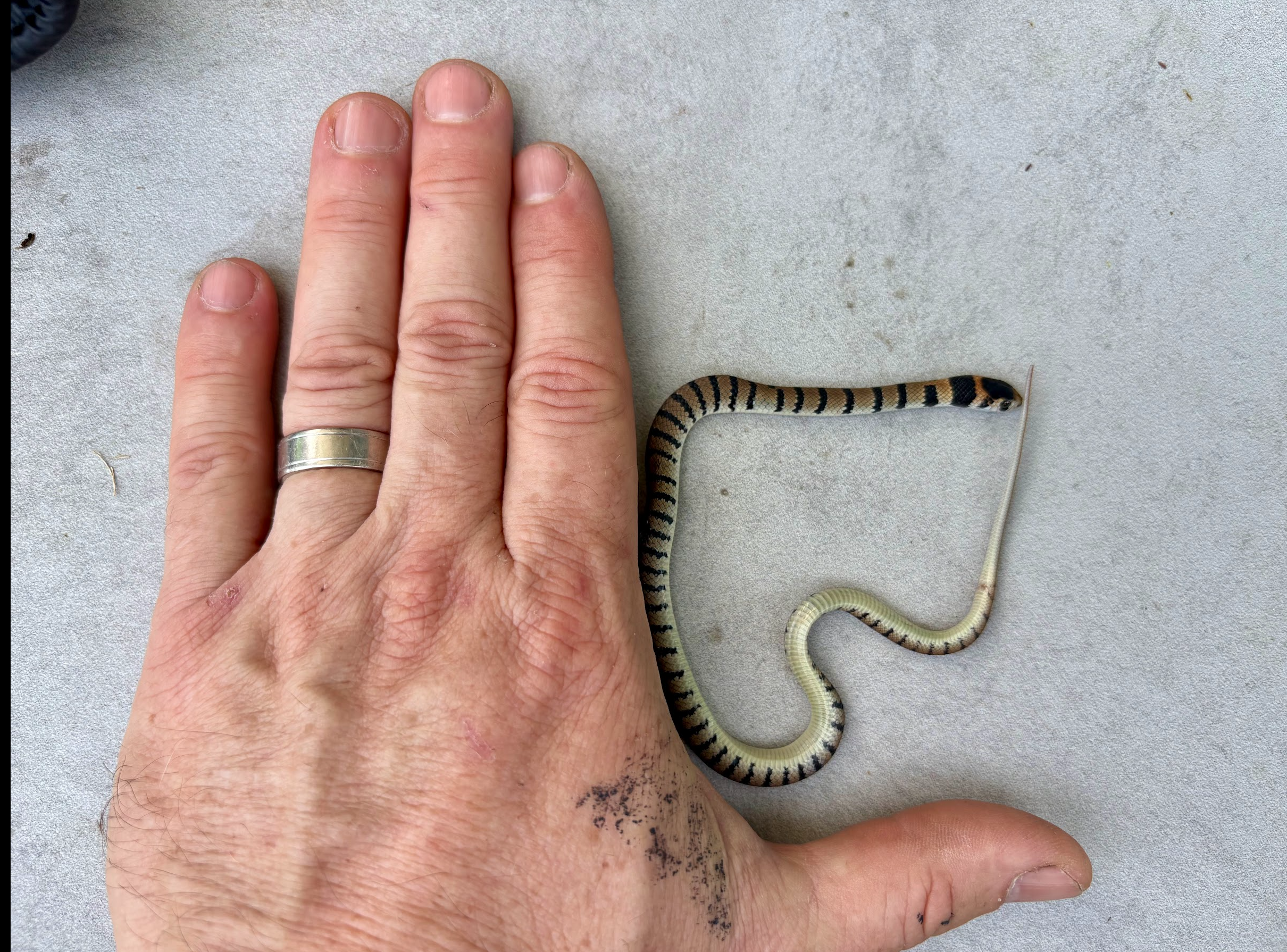
This deceased juvenile Eastern Brown from Kellyville, NSW demonstrates the strong banding that will fade over time and the tiny size. A snake this size is still capable of delivering a fatal bite.
Juveniles look completely different
Juvenile Eastern Browns often have a strikingly different appearance from adults:
Bold black head
Dark band across the nape, sometimes forming a "collar"
Strong banding along the body in Sydney populations
Same slim build, same round pupils
Juveniles are fully venomous from the day they hatch. The smaller size doesn't make them less dangerous, and the bold pattern can lead people to assume they're looking at something harmless.
Where they live
Eastern Browns are habitat generalists with a strong preference for places with mice. They have adapted exceptionally well to human-modified landscapes — agricultural land, rural-residential properties, suburban fringes, industrial estates.
The combination that produces consistent Eastern Brown activity:
A rodent population — mice especially
Open ground for hunting and basking
Cover for shelter — long grass, rock piles, sheets of iron, stacked timber, vegetation
Friable soil for burrows and nesting
In Sydney that means the western suburbs and the bush-edge belt around the city's outskirts. The Hills Shire, the Blacktown LGA, the Hawkesbury, the Macarthur region, the western parts of Penrith — all produce regular Eastern Brown calls. Suburbs with feed sheds, chicken coops, stored grain, vacant lots, or persistent rodent problems are particularly attractive.
Inner-city Sydney and the dense northern suburbs produce occasional Eastern Browns but in much lower numbers. The species is genuinely uncommon in much of the eastern half of the city.
Behaviour
The Eastern Brown's reputation for aggression is partly deserved and partly overstated. Understanding the distinction matters.
What's true:
They are fast — among the fastest snakes in Australia
They are alert and react quickly to perceived threats
When cornered, they defend themselves vigorously
They can strike repeatedly from a considerable distance
They will not always retreat — sometimes they hold ground
What's overstated:
They don't chase people. Apparent "chasing" is usually a snake heading for cover in the same direction the person is moving
Most encounters resolve themselves if the snake is given space to escape
The vast majority of bites occur when people attempt to kill or catch the snake
The defensive display is dramatic — front of the body raised, neck flattened into a distinctive S-shape, head held high, mouth often slightly open. A snake in this posture has been escalated. Back away slowly, give it space, and call a licensed reptile catcher.
How dangerous they are
Eastern Brown venom is the second most toxic of any land snake in the world, after the Inland Taipan. It is primarily neurotoxic and procoagulant — it interferes with the nervous system and causes dangerous blood clotting.
What a bite involves:
Often initially painless or only mildly painful
Rapid onset of coagulation disturbance — the venom consumes clotting factors, causing internal bleeding
Collapse and unconsciousness within minutes in severe cases
Cardiac arrest possible
Death within 30 minutes in the worst envenomations, without treatment
Eastern Browns are responsible for around 60% of all snakebite deaths in Australia. The combination of high venom potency, frequent encounters in populated rural and outer-suburban areas, and rapid onset of effects makes them the most dangerous snake in the country.
With prompt treatment and antivenom, survival is the usual outcome. The critical factor is speed.
The risk to dogs
Eastern Brown bites to dogs are common in rural and outer-suburban areas and frequently fatal without immediate veterinary treatment.
Dogs engage with snakes rather than retreating. Bites typically land on the muzzle or paws. Symptoms develop fast — collapse, paralysis, vomiting. Treatment is expensive, success depends on speed, and smaller dogs have lower survival rates.
If you live in Eastern Brown country and you have dogs, know where the nearest 24-hour vet with Brown Snake antivenom is located before you need to know.
Breeding
Eastern Browns lay eggs rather than bearing live young. Mating is in spring with intense male combat — wrestling, raising the front of the body off the ground. Females lay 10 to 35 eggs (average around 16) in late spring or early summer, typically in burrows, hollow logs, compost heaps or under debris. Eggs incubate for two to three months and hatch in late summer or autumn.
The relatively large clutch size is part of why Eastern Brown encounters sometimes cluster. A single successful nest can produce multiple juveniles dispersing through a small area in late summer.
What to do if you find one at your home
The response is non-negotiable.
Immediately:
Stop. Don't move suddenly. Sudden movement can trigger a defensive strike.
Back away slowly. Aim for at least 5 metres distance.
Keep children, pets and other people clear of the area
Watch where the snake goes from a safe distance — if it disappears into cover, keep watching the spot where you last saw it
Then call us on 0418 633 474. We attend 24/7 across the Greater Sydney region. Stay on the phone — we'll talk you through what to do while the catcher is en route.
What not to do:
Don't try to kill it. The majority of Eastern Brown bites occur during attempted killings.
Don't try to catch it. Even experienced amateur reptile keepers shouldn't handle wild Eastern Browns.
Don't stand close enough to take a clear photograph. 5 metres is the minimum.
Don't assume the snake will move on quickly. Eastern Browns sometimes settle in for extended periods.
If someone is bitten
A confirmed or suspected Eastern Brown Snake bite is a true medical emergency. Every minute matters.
Call 000. Tell them it's a snake bite. Mention "Eastern Brown" if you're confident in the identification.
Keep the patient still and calm. Sit or lie them down. Movement spreads venom rapidly.
Apply pressure immobilisation bandaging — broad firm bandage starting at the bite site, wrapping along the limb in both directions, splint the limb. As firm as for a sprained ankle.
Don't wash the bite — venom traces help antivenom selection.
Don't cut, suck or apply a tourniquet.
Don't give the patient anything to eat or drink.
Photograph the snake from a safe distance only if you can do so without delaying treatment.
For pet bites, the same urgency applies. Get the animal to a 24-hour vet immediately.
Reducing risk on your property
If you live in Eastern Brown country, these measures genuinely reduce the chance of an incidental encounter:
Address rodent problems. This is by far the most important step. No mice, generally no Browns.
Keep grass short — particularly within 10 metres of the house
Remove rock piles, timber stacks, sheets of corrugated iron, and other clutter
Store firewood well away from the house and elevated off the ground
Seal gaps in foundations, brickwork and around pipework
Block gaps under sheds, decks and outbuildings
Secure chicken feed, grain and pet food in metal containers
Use snake-proof mesh on chicken coops
Use a torch outside at dawn, dusk and after dark
Wear long pants and closed shoes in the garden, especially in spring and summer
Teach children — especially children — to recognise Brown Snakes and back away rather than approach
Keep dogs on lead near long grass and bushland in snake season
Summary
The Eastern Brown Snake is Australia's most medically significant snake. They are dangerously venomous, widespread across Sydney's western and outer suburbs, and capable of killing a person within hours if a bite is untreated. They are not aggressive, but they will defend themselves vigorously when they feel threatened, and they don't always retreat. Juveniles are just as dangerous as adults despite looking quite different.
The right response is non-negotiable: stop, back away, keep pets and children clear, watch where the snake goes, and call a licensed reptile catcher. Don't try to handle, kill or interact with the snake. If anyone is bitten, treat it as a life-threatening emergency.
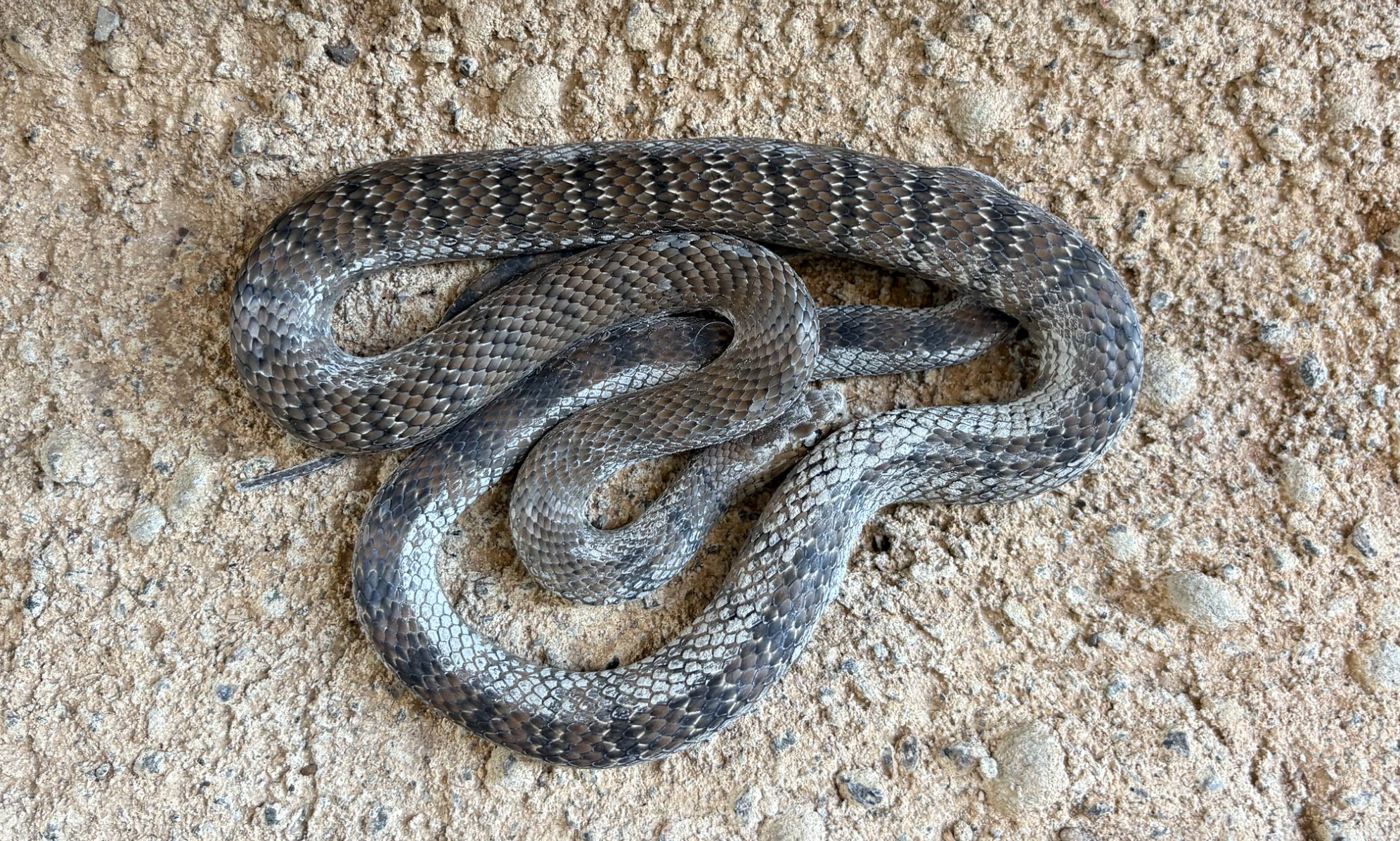
This dusty looking brown snake from Orchard Hills, NSW was just under 1m long. It was relocated from a building site and released into a more suitable spot.
Found an Eastern Brown Snake at your home? Urban Reptile Removal operates 24/7 across the Greater Sydney region. Licensed, insured, and equipped for the most dangerous species we work with. Call 0418 633 474 — day or night.
https://www.inaturalist.org/taxa/35140-Pseudonaja-textilis
https://bie.ala.org.au/search?sortField=score&dir=desc&q=Pseudonaja+textilis

Interested in Sydney Reptiles?
You can buy the book, featuring full page descriptions on over 70 species
https://sydneysnakecatcher.com.au/product/city-wildlife-guide-reptiles-of-sydney/
For the most up to date information on snakebite first aid, visit, snakebitefirstaid.com.au
