Snake Catcher - Ryde
Snake in your yard in Ryde? Here's what to do. Stay calm. Step back. Bring the kids and pets inside. That's it, that's the whole job on your end. Then call 0418 633 474. You don't need to identify the snake. You don't need a photo. You don't need to keep watching it. Just call us, and stay on the phone while we're on our way. We'll talk you through everything until we arrive.
About Ryde
Ryde is one of Sydney's busiest snake catching areas, and it's easy to see why. Older family homes sit next to modern apartments, and parks, creek lines, golf courses and bushland corridors run right through the suburb. The Parramatta River and its connecting creek systems support a strong prey base, which means strong snake activity, especially through spring, summer and early autumn.
Urban Reptile Removal is based in West Ryde, right in the middle of it. That means when you call us for a snake catcher in Ryde, we're usually not driving across Sydney to get to you. We're already close. Most Ryde jobs see us on site within 30 minutes.
The species we see most often
Eastern brown snake. One of the most commonly encountered venomous snakes in the Ryde area. Browns favour edge environments — where lawns meet garden beds, paths meet bushland, or fences border open space. Ryde's parks, school grounds, creek edges, and residential lawns provide exactly that. Highly alert, fast, and easily startled. Never attempt to chase or interfere — they switch to defensive behaviour quickly.
Blue-tongued lizard.Not a snake, but a common reason people in Ryde call us. Slow-moving skinks that hiss, puff up, and display a bright blue tongue when threatened, often with a heavy, snake-like motion that causes the confusion. They're harmless and excellent for the garden. We never mind checking a report — many calls end with relief once people know what they're dealing with.
Red-bellied black snake. Regularly removed from Ryde, especially near creeks, drainage lines, golf courses, parks, and well-watered gardens. Glossy black with a red or pink underside. Strongly associated with moisture, frog habitat, and thick ground cover. Homeowners often encounter them while gardening or moving between the house and outdoor areas. Not aggressive by nature, but will defend themselves if surprised. Should only be handled by a professional.
Yellow-faced whip snake. Slender, fast, often seen moving along fence lines, retaining walls, rock borders, and garden edges. Frequently mistaken for juvenile brown snakes because of their speed and colouring. Mildly venomous and generally shy, but they should never be handled untrained. They disappear into cover quickly — early calls make a real difference.
Green tree snake. Harmless. They climb well and often turn up in garages, sheds, patios, roof voids, and inside homes following prey. When startled, they flatten their heads and coil, which looks alarming but isn't. Still need a trained catcher to safely relocate from a home.
Why snakes turn up in Ryde
Snakes follow food. Ryde has frogs near the creeks and ponds, skinks throughout the gardens, possums in the older neighbourhoods, and a steady rodent population — particularly around the older housing stock, commercial areas, and waterways. Add the warm surfaces (brick walls, paved driveways, retaining walls) that reptiles use to thermoregulate, and the suburb meets every reptile need.
This isn't a reflection on individual properties. Snakes are transient. They move constantly and only shelter where conditions suit them temporarily. A single sighting almost never means a long-term issue.
Where snakes hide in Ryde properties
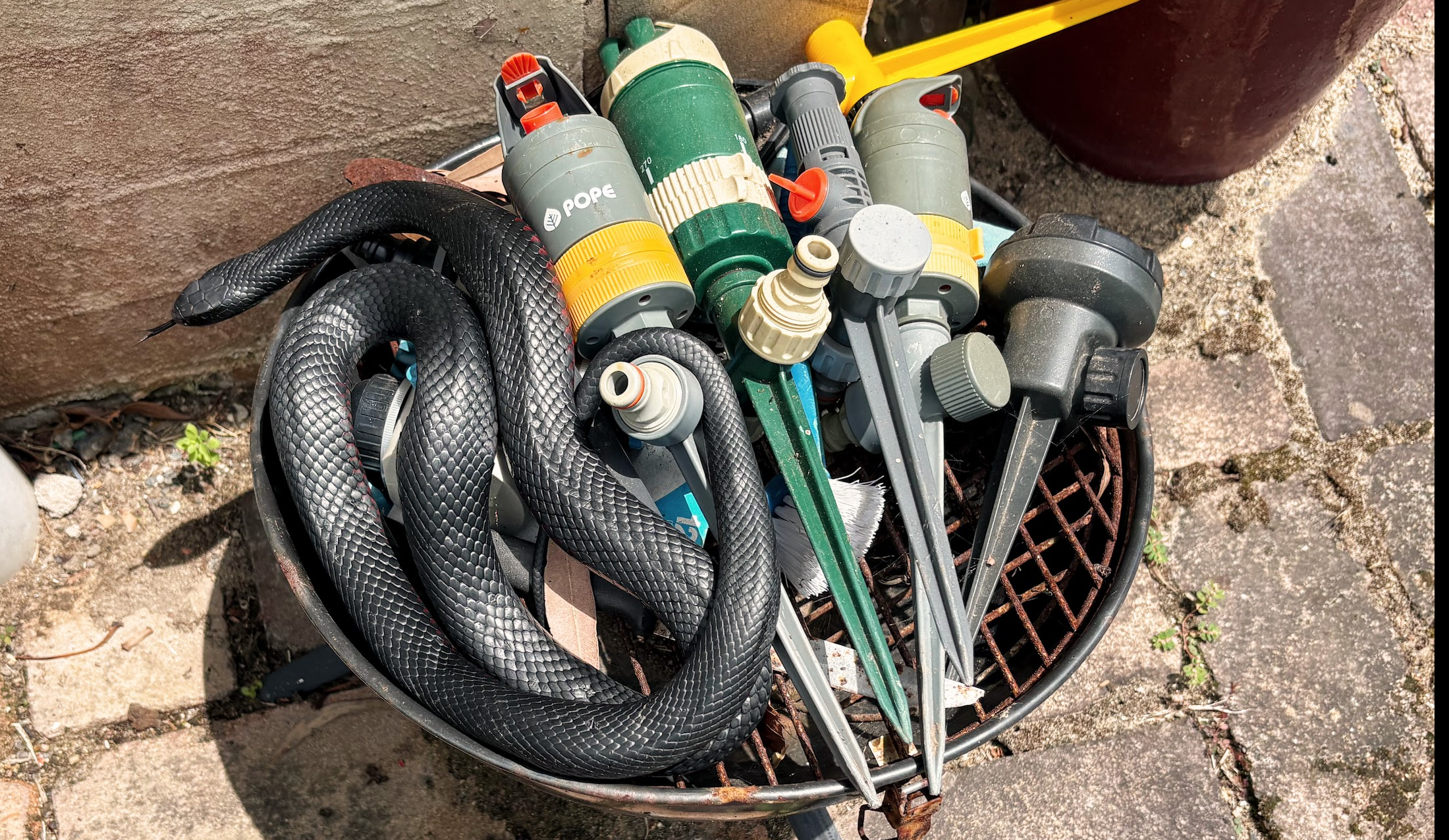
The places we find snakes most often:
Under retaining walls

Beneath garden edging

Behind pot plants and raised tubs

Under timber, tin, or stored materials

In sheds, garages, and meter boxes

Along creek banks and drainage lines

Inside roof cavities and wall gaps

Around pool pump areas

Under decks, stairs, and outdoor furniture

Behind hot water systems and air conditioners

When you call us, you don't need to follow the snake. We use species behaviour, temperature, time of day, and property layout to work out where it's likely gone and search methodically from there.
After we leave
Before we go, we'll explain what likely brought the snake onto your property and what you can do to make it less inviting next time. Skip the repellents. Chemical sprays, mothball powders, ultrasonic plug-ins — none of them work. There's no credible evidence behind any of it, no matter what the packaging claims. Snakes don't respond to smell or sound deterrents the way the marketing suggests. What actually works is removing the reasons a snake would come in: Keep grass and groundcover trimmed short — snakes rely on cover to move around undetected. Clear clutter from fence lines and garden edges — stacked timber, sheet metal, and pots are prime hiding spots. Lift stored items off the ground, or store them on brackets or shelving instead. Repair gaps under sheds, fences, and foundations that let rodents move freely — where rodents go, snakes follow. Secure pet food overnight and clean up spilled seed under bird feeders. Clear leaf litter and dense mulch beds close to the house. None of this makes a property snake-proof. Nothing does. But it removes the food and shelter that draw snakes in, which meaningfully cuts down how often you see one.
Common Questions
one snake mean there's a nest nearby?
No. Snakes are solitary. They don't nest in suburban yards, don't den in groups, and don't travel in pairs. One sighting means one snake, not an infestation.
Did I do something wrong?
No. Snakes move through every suburb in Sydney as a matter of course. Seeing one doesn't mean your property is doing anything differently to your neighbour's — it just happened to be on the snake's path that day.
What attracted it?
Almost always prey. Rodents and frogs are the two biggest drawcards, and if you've had a snake on the property, there's a good chance there's rodent or frog activity you haven't noticed yet. Remove the food source and the snake has less reason to stick around.
If a snake gets inside the house
This doesn't happen often in Ryde, but it does happen — usually a snake following a mouse in through a gap under a door, or moving indoors to escape extreme heat. Treat it as an emergency: Leave the room immediately. Close the door behind you to contain it to one space. Keep kids and pets away from that door. Call 0418 633 474. Don't try to herd it, trap it, or check where it's gone. Just seal the room and call.
First aid if someone is bitten Snakebite is rare, but if it happens, what you do in the first few minutes matters. Call 000 immediately, even if the bite seems minor or you're not sure a bite occurred. Keep the person as still as possible. Movement pushes venom through the lymphatic system faster — carry them if you need to, don't let them walk. Apply a pressure immobilisation bandage: wrap firmly from the bite site up the length of the limb, then splint it so it can't bend or move. Don't wash the bite. Trace venom on the skin can help hospital staff identify the species and treat it faster. Don't cut the wound, apply a tourniquet, or attempt to suck out venom — all of these do more harm than good. Note the time of the bite if you can. It matters for treatment.
When in doubt, call
Fence line your dog won't stop staring at?
Movement in the grass that didn't look right?
A shape near the woodpile you can't quite place?
Call 0418 633 474 — even just for advice. We'd always rather answer a question than have someone try to handle a snake on their own.
We work across Ryde every day of the year.
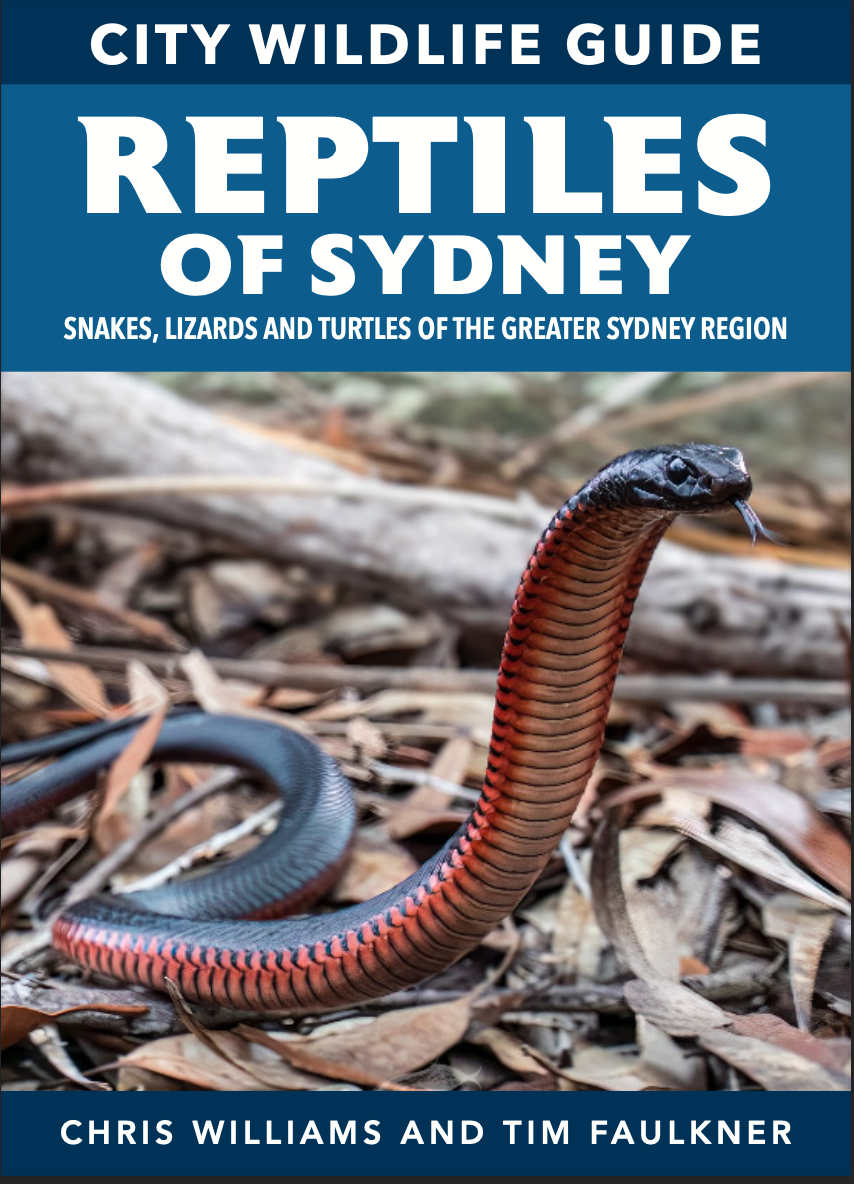

We wrote the book on Sydney reptiles. You can get your copy here https://sydneysnakecatcher.com.au/shop