The Broad-Tailed Gecko
The Broad-Tailed Gecko (Phyllurus platurus) — Sydney's Best-Camouflaged Local you live anywhere in the Sydney sandstone country and you've spent any time turning over rocks or pulling apart a garden shed, you've probably crossed paths with a Broad-Tailed Gecko (Phyllurus platurus) — even if you didn't realise it. They are masters of camouflage and, despite being one of the most common reptiles in the Greater Sydney region, most people walk past them every day without ever knowing they are there.
At Urban Reptile Removal we deal with the full spectrum of Sydney's native reptiles — not just snakes. Geckos, skinks, monitors, blue-tongues, dragons and pythons all turn up regularly in roof cavities, garden sheds, brick walls and rock gardens. The Broad-Tailed Gecko is one of the species we see most often, and one of the few that is genuinely at home in the urban environment.
What is the Broad-Tailed Gecko?
The Broad-Tailed Gecko (Phyllurus platurus) is a medium-sized, nocturnal gecko endemic to the Sydney sandstone region. It is the species that gives this entire group its character — a flattened body, cryptic patterning, and that unmistakable broad, leaf-shaped tail that looks more like a second head than a tail.
Snout-vent length: approximately 95mm
Total length: approximately 165mm
Conservation status: IUCN Least Concern
Activity: Primarily nocturnal
Distribution: All five Greater Sydney zones — Sydney Basin, Illawarra, Southern Highlands, Blue Mountains and Central Coast
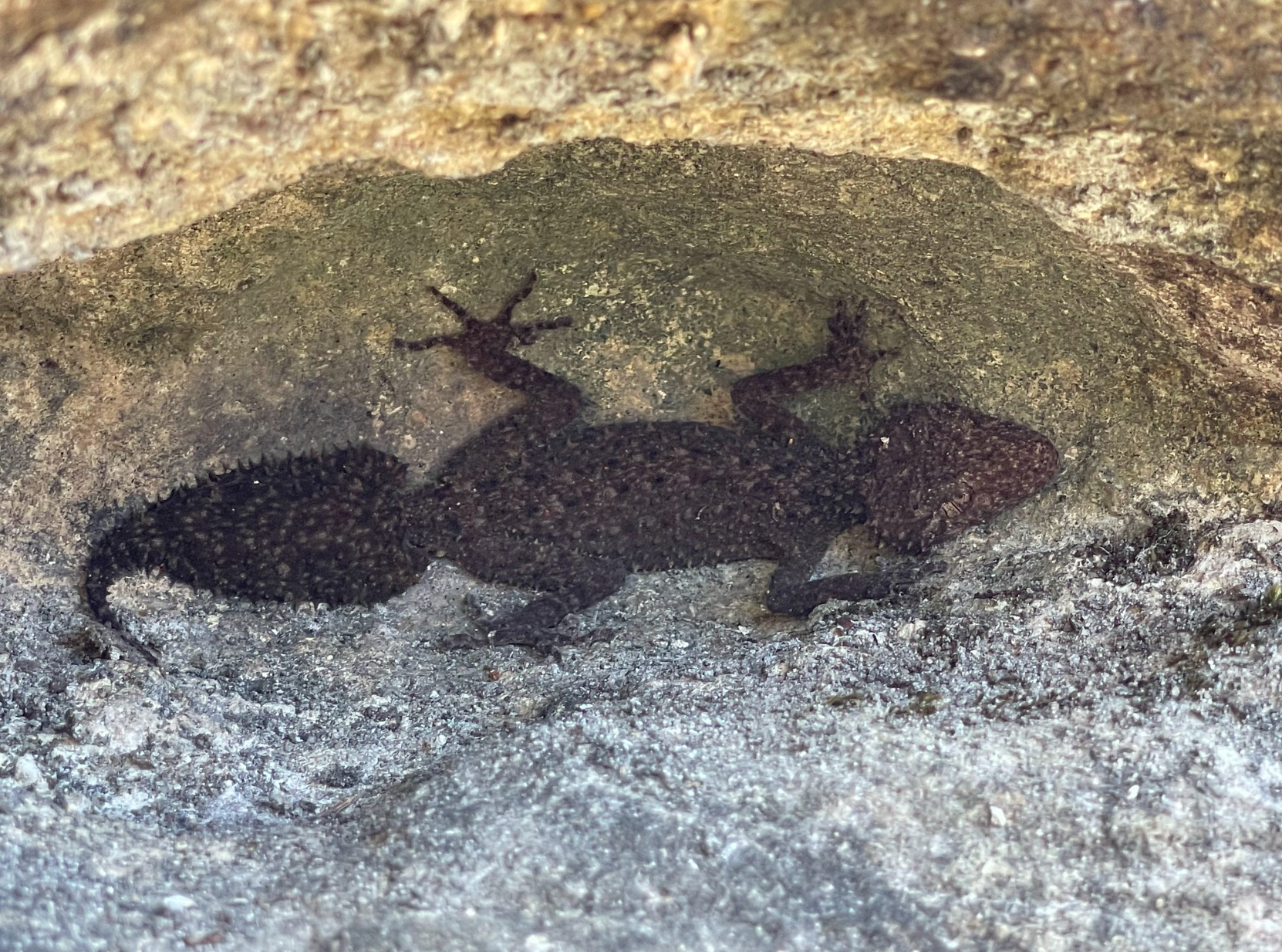
This Broad Tailed Gecko was located in a backyard in Mona Vale while we were searching for a snake.
How to identify a Broad-Tailed Gecko
Identification is usually easy once you know what you are looking at. The combination of a flattened body, broad leaf-shaped tail, and cryptic grey-mottled colouring is unique among Sydney's reptiles.
Flattened body shape adapted for pressing against rock surfaces
Grey base colour with darker mottling, spots or flakes
No distinctive pale bands on the tail, though the original tail may have irregular bands toward the very tip
Broad, leaf-shaped tail that resembles the head and works as a decoy against predators
Eyes large and prominent — typical of a nocturnal hunter
If the tail looks regrown — narrower, smoother, less impressive — that animal has likely shed it at some point to escape a predator. Tail loss is a common defensive trick in this species.
Where do Broad-Tailed Geckos live?
The Broad-Tailed Gecko is one of Sydney's true urban adapters. Their natural habitat is sandstone outcrops and rocky escarpments — exactly the geology underlying most of Greater Sydney. As Sydney has grown over the past two centuries, these geckos have done what only a handful of reptile species in Australia have managed to do: they have moved into the suburbs and made themselves at home.
We commonly find them in:
Sandstone outcrops and natural rock formations
Rocky escarpments along the harbour and the northern beaches
Brick walls, especially older ones with deep mortar gaps
Rock gardens and retaining walls
Garden sheds, garages and external building cavities
Under bark on large trees
If you have a sandstone wall or a sandstone-bordered garden anywhere from the Royal National Park to the Hawkesbury, you almost certainly have Broad-Tailed Geckos living on it. They just come out at night when nobody is watching.
Behaviour and camouflage
The defining feature of the Broad-Tailed Gecko is its camouflage. The flattened body and broken grey pattern allow them to press themselves against rock or brick and effectively disappear. We have walked past them in plain sight on rock faces during the day and only spotted them because they blinked.
When threatened, they have two main strategies. The first is to freeze, trusting the camouflage to do its job. The second, if that fails, is to drop the tail — a process called caudal autotomy. The dropped tail keeps wriggling for a minute or so after detachment, drawing the predator's attention while the gecko itself escapes. A new tail eventually regrows, but it never looks as good as the original.
Breeding and reproduction
Broad-Tailed Geckos have an interesting reproductive cycle, well-suited to the variable Sydney climate:
Mating: Occurs in May
Egg laying: Females lay one or more clutches between November and January
Nest sites: Eggs are typically laid in deep rock crevices or cavities in brick walls
Communal nesting: Known to share nest sites
Site fidelity: Females will return to the same nest site year after year if possible
Hatching: January to April
The site fidelity behaviour is one of the reasons the species is so visible around older Sydney suburbs. Once a female finds a good crevice in a sandstone wall or an old brick foundation, she will use it for years.
Are Broad-Tailed Geckos dangerous?
No. Broad-Tailed Geckos are completely harmless to humans and pets. They have no venom, no significant bite, and no defensive behaviour beyond freezing or dropping their tail. They are not aggressive, and the worst they can do if handled is squirm vigorously and try to escape.
They are also genuinely beneficial garden residents. They eat insects, spiders and other small invertebrates, including some of the pests homeowners would otherwise spend money trying to control.
What to do if you find a Broad-Tailed Gecko at your home
In almost every case, the answer is leave it alone. Broad-Tailed Geckos are a natural and beneficial part of the Sydney environment. If you find one in your shed, on a brick wall, or in your rock garden, the best thing you can do is let it be.
If for some reason a gecko needs to be removed — for example, one has become trapped inside a building — contact a licensed reptile catcher. At Urban Reptile Removal we are licensed to remove all native reptiles in the Sydney region, including geckos, blue-tongues, skinks, monitors, dragons and snakes.
What you should not do:
Do not try to kill it. Broad-Tailed Geckos are a protected native species.
Do not use insecticides or rodent bait near gecko habitat — these accumulate in their food chain.
Do not grab a gecko by the tail. You will end up holding a tail and watching the gecko run away.
https://lizardremoval.com.au/asian-house-gecko-removal-sydney/
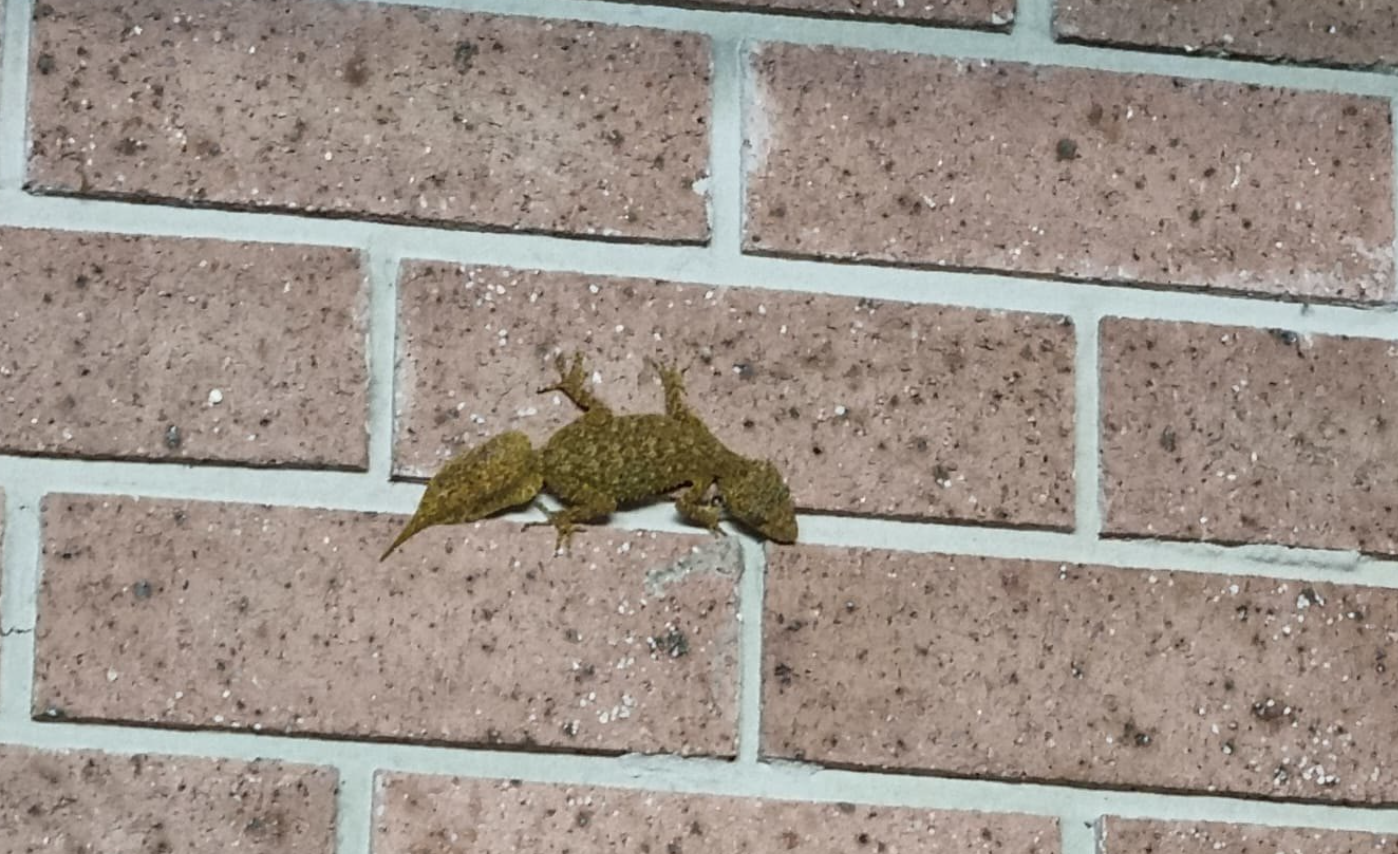
This gecko was spotted on a Garage wall in Glenhaven while searching for a snake.
Summary
The Broad-Tailed Gecko (Phyllurus platurus) is one of Sydney's most successful urban reptiles and a quiet, harmless neighbour to thousands of households across the Greater Sydney region. Most people who have them have no idea they are there. If you have sandstone, you have geckos — and that is something to be quietly pleased about.
Need a reptile removed in Sydney? Urban Reptile Removal operates 24/7 across the Greater Sydney region. We are fully licensed and insured, and we relocate all native reptiles humanely. Call 0418 633 474.
https://www.inaturalist.org/taxa/109465-Phyllurus-platurus
https://bie.ala.org.au/search?sortField=score&dir=desc&q=Nebulifera+robusta

Interested in Sydney Reptiles?
You can buy the book, featuring full page descriptions on over 70 species
https://sydneysnakecatcher.com.au/product/city-wildlife-guide-reptiles-of-sydney/
Saurophobia is the fear of lizards, and we can assure you — it’s very real.
Catching snakes seemed like the obvious direction for a business like Urban Reptile Removal. But over time, we began receiving a steady stream of calls from people needing help with lizards as well — everything from tiny skinks through to large goannas.
That led us to establish a second business focused specifically on lizard removals, making it much easier for people searching for this service to find the help they needed.

For the most up to date information on snakebite first aid, visit, snakebitefirstaid.com.au
