The Asian House Gecko
The Asian House Gecko (Hemidactylus frenatus) — Sydney's Uninvited Guest
If you have spent any time in Brisbane, Cairns or anywhere along the Queensland coast, you have heard them. That distinctive chick-chick-chick call from the wall above your head as you sit on the back deck at night. For decades, the Asian House Gecko (Hemidactylus frenatus) has been the soundtrack of tropical Australia. Now it is here in Sydney too, and the spread is only going to accelerate as the climate warms.
At Urban Reptile Removal we are starting to get more calls about Asian House Geckos — usually from people who have just moved south from Queensland and recognised the sound, or from homeowners who have noticed an unfamiliar gecko hunting moths around their porch light. We deal with every reptile species you can find in Sydney, native and introduced, and the Asian House Gecko is one of the few where active removal is genuinely worth considering.
What is the Asian House Gecko?
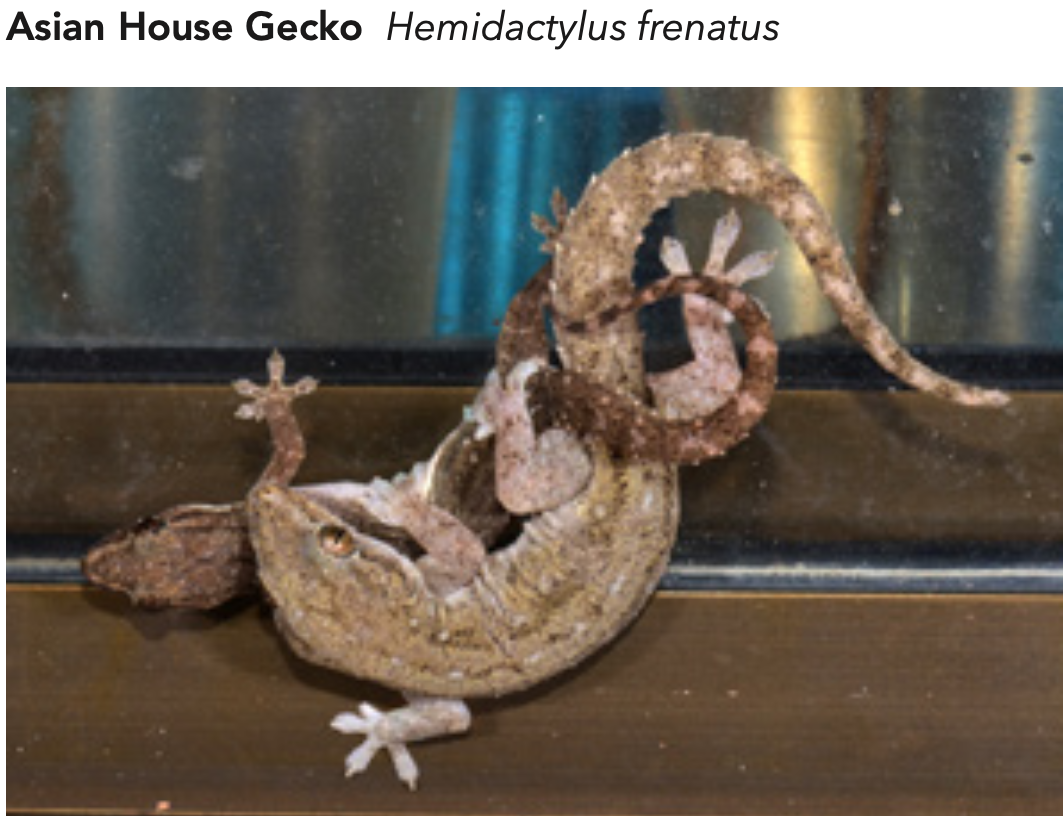
The Asian House Gecko (Hemidactylus frenatus) is an introduced, non-native gecko species originally from South-East Asia. It has become one of the most successful invasive reptile species in the world, hitching rides on shipping containers, in cargo and in luggage. In Australia it is now firmly established across the tropical north and is steadily spreading south.
Snout-vent length: approximately 55mm
Total length: approximately 115mm
Conservation status: IUCN Least Concern (in its native range)
Status in Australia: Introduced, naturalised
Activity: Nocturnal, active year-round in warm climates
Distribution in Sydney: Currently Zones 1 and 5
How to identify an Asian House Gecko
The Asian House Gecko looks markedly different from Sydney's native geckos. Where the Broad-Tailed Gecko is flat, grey and cryptic, the Asian House Gecko is slender, pale and built for vertical climbing on smooth surfaces.
Slender, agile body shape
Granular skin texture
Small spines running along the tail
Colour varies from pale pinkish-grey to light brown
Often mottled, with a white belly
Long toes with distinct adhesive pads, allowing it to climb almost any vertical surface including glass
Frequently seen on walls near outdoor lights at night
The other dead giveaway is the call. Asian House Geckos are vocal in a way that no native Australian gecko is. The distinctive chirping or clicking sound at night is often mistaken for a cricket, but once you have heard it identified, you will never confuse it again.
Where do Asian House Geckos live in Sydney?
The Asian House Gecko is overwhelmingly an urban species. Unlike many native geckos that need specific habitat features, the Asian House Gecko thrives wherever there are buildings, lights and warmth. In tropical regions of Australia they can number in the hundreds on a single building.
In Sydney we are seeing them in:
Crevices of buildings and external walls
Sheds, garages and carports
Letterboxes and electrical boxes
Under bark on trees in suburban gardens
Around outdoor lighting where insects gather
Disturbed urban edge habitats
Their tropical origins mean they are most successful in warmer microclimates — north-facing brick walls, areas around hot water systems, and buildings that retain heat overnight. Sydney's progressively warmer summers and milder winters are making the city steadily more hospitable to them.
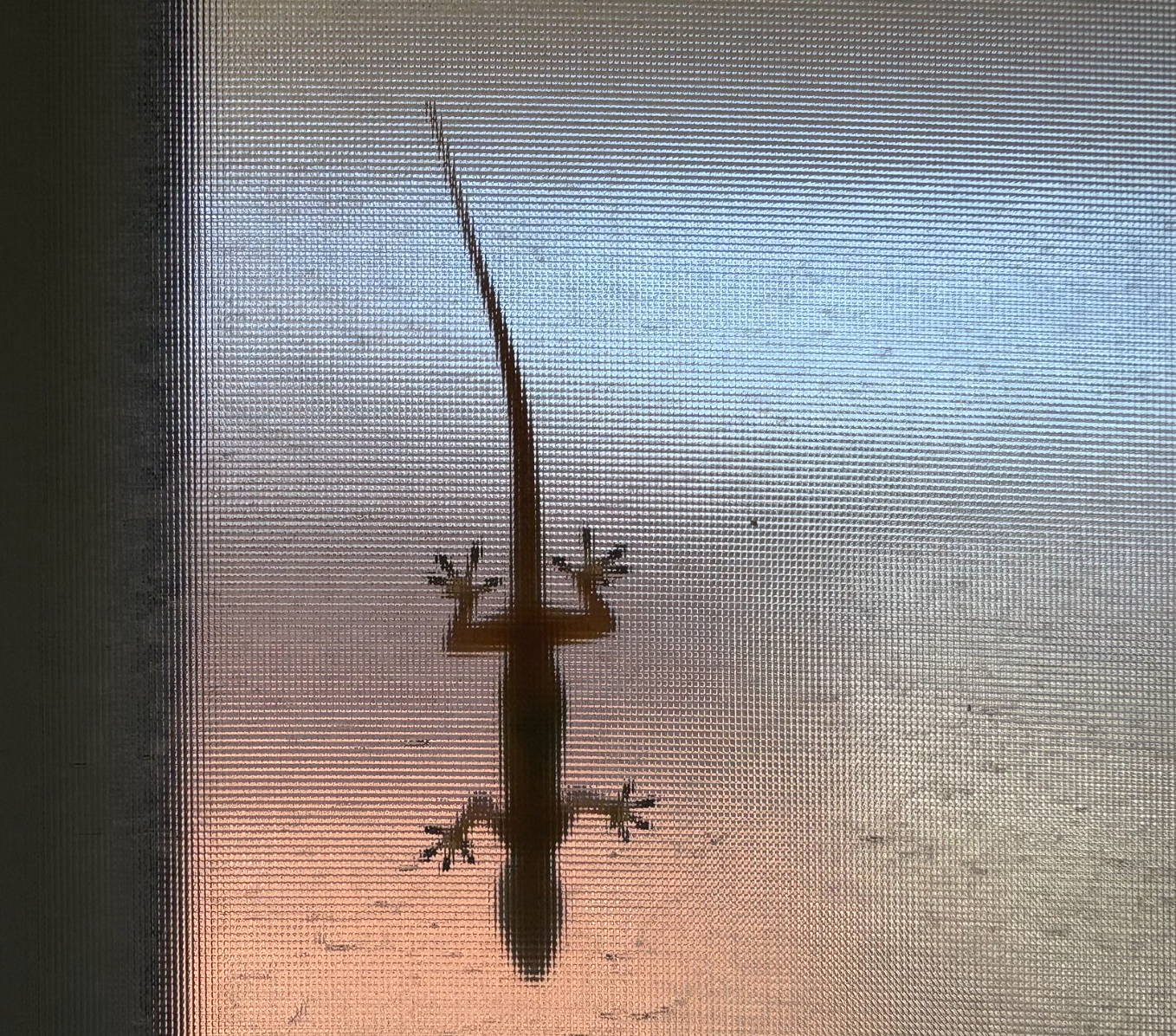
This Asian House Gecko was photographed when i got trapped between the window and flyscreen in a bathroom in The Ponds. https://lizardremoval.com.au/asian-house-gecko-removal-sydney/
Behaviour and the chirping call
The chirping is unmistakable once you know it. Male Asian House Geckos make a series of short, sharp chirps in rapid succession — typically chick-chick-chick-chick-chick — used for territorial display and to attract females. They call most frequently on warm, humid nights.
They are extremely agile climbers, using specialised toe pads that work via van der Waals forces to grip even smooth glass and painted surfaces. They will often be seen hanging upside down on ceilings near outdoor lights, picking off moths and other insects as they arrive.
Breeding and reproduction
Part of what makes the Asian House Gecko such a successful invader is its reproductive efficiency:
Clutch size: Two small, hard-shelled eggs
Nest sites: Secure, hidden locations — wall cavities, behind cladding, in roof spaces
Frequency: Multiple clutches per year in warm regions
Communal egg laying: Known to share nesting sites, sometimes resulting in concentrations of dozens of eggs in a single cavity
Development: Eggs hatch in 6–10 weeks depending on temperature
The hard-shelled eggs are unusual among Australian geckos and are part of why the species transports so well — eggs survive long sea voyages tucked into cargo crevices.
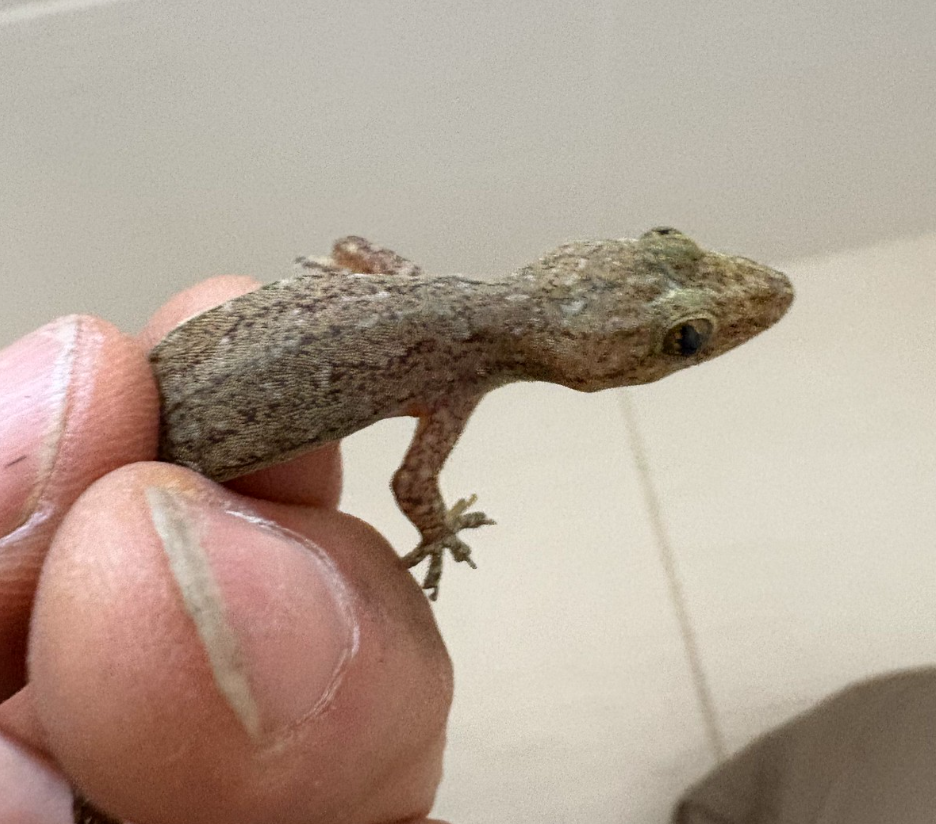
This tiny gecko was terrorising a lady in Neutral Bay. We’ve all heard of arachnophobia, and seem ok with that. The fear of lizards is called Saurophobia…and it’s a very real thing!
The problem with Asian House Geckos
The Asian House Gecko is not just an interesting newcomer. It is a genuine ecological concern. The species is highly adaptable and can outcompete native geckos for food, shelter and breeding sites. In tropical Australia, native geckos such as the Dtella (Gehyra species) have been pushed out of buildings and even some natural habitats by the sheer numbers of Asian House Geckos.
What this means for Sydney:
Native species like the Broad-Tailed Gecko and Lesueur's Velvet Gecko could face increased competition as the Asian House Gecko expands its range south
Eggs and juveniles transported in cargo, building materials, indoor plants and second-hand goods accelerate the spread
Once established in a building, populations are extremely difficult to remove
Are Asian House Geckos dangerous?
To humans and pets, no. They have no venom, no significant bite, and they actively avoid contact with people. They will not damage your home structurally, though their droppings can be a nuisance on walls and outdoor furniture.
The danger they pose is ecological, not physical. They are a slow-burning threat to Australia's native gecko fauna, particularly in the species' current expansion zone.
What to do if you find an Asian House Gecko at your home
This is one of the few reptile species in Sydney where active removal is genuinely worth considering. If you find Asian House Geckos around your home and you are south of their established range, removing them helps slow the spread.
Practical steps:
Reduce outdoor lighting at night to discourage them, or switch to yellow or warm-toned LED bulbs that attract fewer insects
Seal cracks and crevices on external walls where they shelter and lay eggs
Check building materials, indoor plants and shipping cartons for hitchhikers, especially if you have recently moved from Queensland
If you find eggs in a wall cavity, removal is appropriate — they should not be relocated, as Asian House Gecko eggs released in the bush continue the spread
What you should not do:
Do not assume every gecko you see is an Asian House Gecko. Most geckos in Sydney are native species and should be left alone. Correct identification matters.
Do not use insecticides or sticky traps. These kill native species too and have wider environmental impacts.
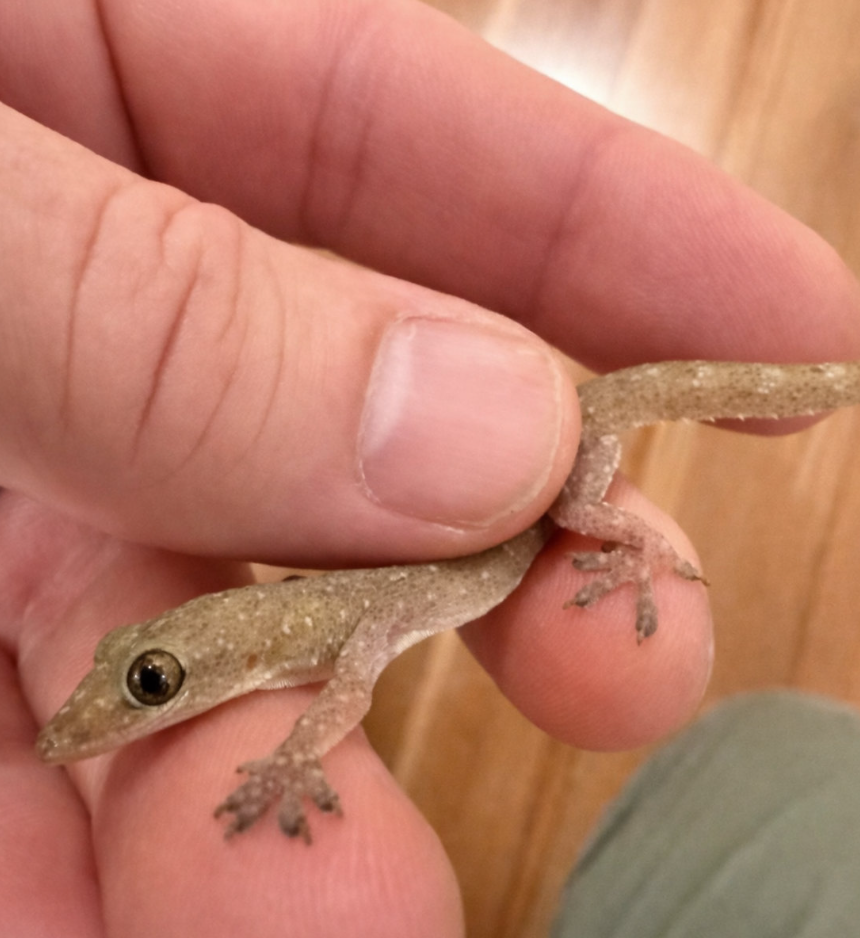
This little guy had the residents of a unit in Hornsby unable to sleep at night…exactly when geckos are out and about.
How to tell the difference from a native gecko
The simple visual test: native Sydney geckos are typically darker, more cryptically patterned, and lack the pinkish-pale base colour of the Asian House Gecko. The Broad-Tailed Gecko (Phyllurus platurus) is flattened and grey. The Asian House Gecko is slender and pale, with toe pads designed for smooth surfaces. And of course, no native Sydney gecko makes that chirping call.
If in doubt, photograph it and send it to a licensed reptile catcher or the Australian Museum for identification before taking any action.
Summary
The Asian House Gecko (Hemidactylus frenatus) is the global gecko equivalent of the cane toad — a successful invader that has spread further and faster than anyone expected. Its arrival in Sydney is a sign of broader environmental change, and a reminder that the city's reptile fauna is not static. Identifying it correctly is the first step in deciding what, if anything, to do about it.
Need a reptile identified or removed in Sydney? Urban Reptile Removal operates 24/7 across the Greater Sydney region. We are fully licensed and insured, and we can identify and manage both native and introduced reptiles. Call 0418 633 474.

Interested in Sydney Reptiles?
You can buy the book, featuring full page descriptions on over 70 species
https://sydneysnakecatcher.com.au/product/city-wildlife-guide-reptiles-of-sydney/
Saurophobia is the fear of lizards, and we can assure you — it’s very real.
Catching snakes seemed like the obvious direction for a business like Urban Reptile Removal. But over time, we began receiving a steady stream of calls from people needing help with lizards as well — everything from tiny skinks through to large goannas.
That led us to establish a second business focused specifically on lizard removals, making it much easier for people searching for this service to find the help they needed.

For the most up to date information on snakebite first aid, visit, snakebitefirstaid.com.au
