
Brown Tree Snake
The Brown Tree Snake (Boiga irregularis) — Sydney's Nocturnal Climber
If you have ever turned on the porch light on a warm summer evening and seen a long, slender snake with huge eyes peering at you from the rafters or sliding along a fence line, you have probably had your first encounter with a Brown Tree Snake (Boiga irregularis). They are one of the most distinctive snakes in the Sydney region — and one that turns up in homes, sheds and roof spaces more often than any other species.
At Urban Reptile Removal we get regular calls about Brown Tree Snakes, particularly through the warmer months and especially after rain. They are excellent climbers, fearless investigators of urban structures, and one of the few snakes that will genuinely come into homes through gaps that other species would walk past. The first thing we want every homeowner to know is that while they are technically venomous, they are not considered dangerous to humans.
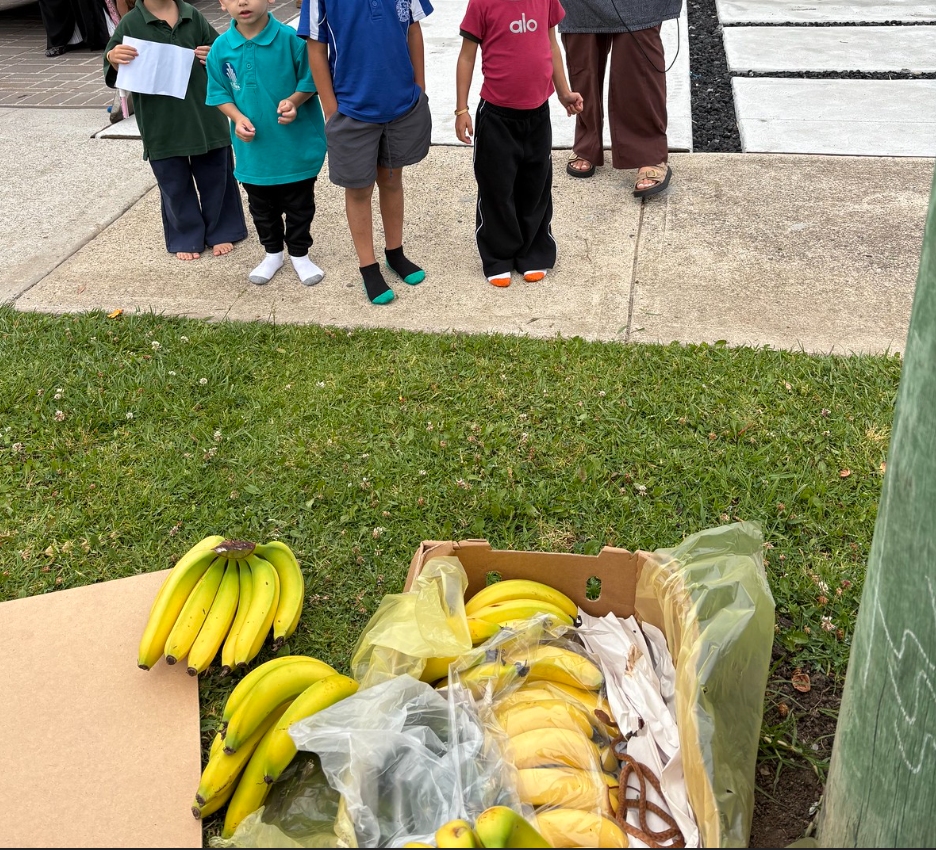
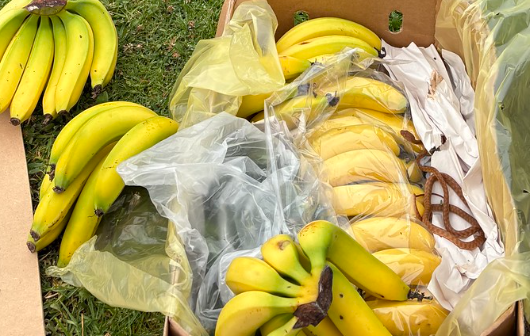
This family in Auburn, NSW got quite the surprise when they found this Brown Tree Snake in their box of bananas.
What is the Brown Tree Snake?
The Brown Tree Snake (Boiga irregularis) is a rear-fanged colubrid snake native to northern and eastern Australia, parts of Indonesia, Papua New Guinea and the Solomon Islands. They are infamous internationally as the species that decimated the native bird population of Guam after being accidentally introduced there in the 1940s — but in their native Australian range, they are simply one part of a healthy ecosystem.
Venom rating: Mildly venomous, not considered dangerous to humans
Total length: 1,200mm average, 2,000mm maximum
Conservation status: IUCN Least Concern
Urban Adaptation Rating: ★★★★★
Activity: Strictly nocturnal, most active in warmer months
Distribution in Sydney: Zones 1 and 2
How to identify a Brown Tree Snake
The Brown Tree Snake has a very distinctive appearance once you know what to look for:
Slender-bodied snake with a notably long, thin profile
Clearly defined head distinct from the neck
Very large eyes with vertical pupils — an adaptation to nocturnal hunting
Body colour ranges from reddish-brown through tan to pale brown
Irregular darker crossbands or saddle markings along the back
Cream to yellow underbelly
Long, prehensile tail used for climbing
Smooth scales with a slight gloss
The combination of the slender body, oversized eyes with vertical pupils, and defined head is unmistakable. No other Sydney snake has those huge cat-like eyes — they are the species' most diagnostic feature.
How to tell a Brown Tree Snake from other Sydney snakes
The Brown Tree Snake can be confused with a few other species, but the differences are usually clear:
Eastern Brown Snake (Pseudonaja textilis): Round pupils, much shorter relative tail, faster movement, very different head shape. Eastern Browns are diurnal and rarely climb.
Diamond Python (Morelia spilota spilota): Heavier built, distinctive diamond patterning with cream centres, no vertical pupils, much larger jaw structure.
Green Tree Snake (Dendrelaphis punctulatus): Round pupils, generally green or olive colouring, more active during the day.
The vertical pupils and oversized eyes are the dead giveaway. If a slender snake is climbing your fence at night and has eyes that look almost too big for its head, it is almost certainly a Brown Tree Snake.
Where do Brown Tree Snakes live?
Brown Tree Snakes are highly adaptable and occupy a wide range of habitats across their natural range. In the Sydney region they are particularly successful in environments where vegetation meets human structures.
Natural habitats:
Open woodlands and dry sclerophyll forest
Rainforest and rainforest margins
Coastal scrub
Rocky outcrops and sandstone country
Riparian vegetation along creeks and rivers
Urban habitats:
Roof spaces and ceiling cavities
Garden sheds and garages
Aviaries and chicken coops
Pergolas, verandahs and external rafters
Mature gardens with trees and shrubs
Brick walls with deep mortar gaps
Stone retaining walls
Wood piles and stacked timber
The species' climbing ability, combined with its nocturnal habits, means it can exploit urban structures that ground-dwelling snakes never reach. A Brown Tree Snake can scale a brick wall, slip through a gap under a roof tile, and spend the day curled up in your ceiling without you ever knowing it is there.
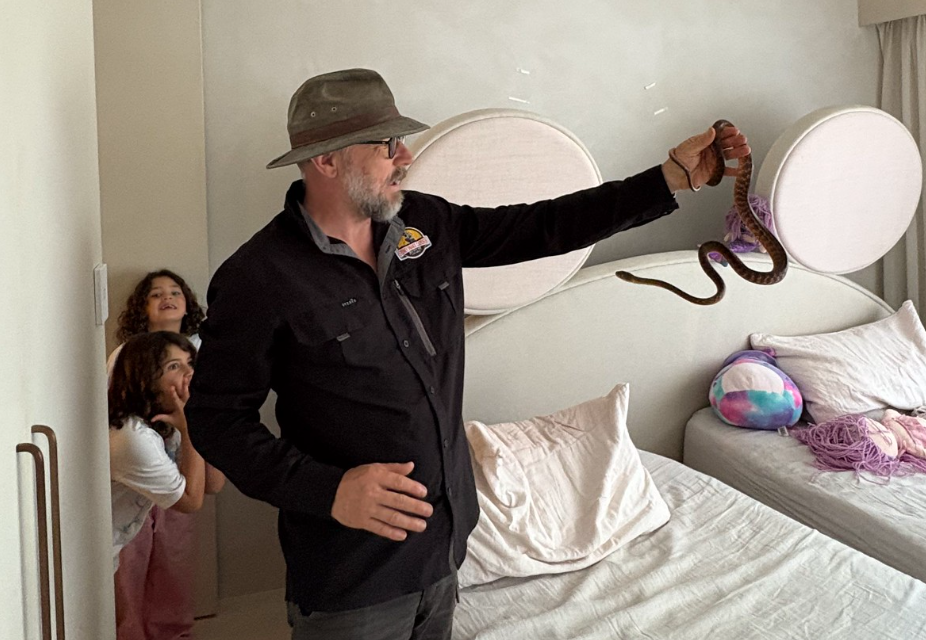
This Brown Tree Snake was loose in this home in Bilgola Plateau, NSW for a week before it was found behind the kids bed! https://au.news.yahoo.com/180cm-discovery-in-childs-bedroom-in-aussie-suburbs-after-almighty-thump-sparks-excitement-040012125.html
Behaviour and climbing ability
The Brown Tree Snake is one of the most accomplished climbing snakes in Australia. The prehensile tail acts almost like a fifth limb, gripping branches, beams and structural elements while the snake reaches forward with its body. They can climb almost any vertical surface that offers grip — brick, bark, mesh, rough timber and even some painted surfaces.
Their hunting style suits this lifestyle. Brown Tree Snakes are sit-and-wait ambush predators that move through vegetation at night, investigating roosting birds, sleeping lizards and the entrances to tree hollows. The huge eyes give them excellent low-light vision, and they can hunt in conditions where most other snakes are effectively blind.
When threatened, their typical behaviours include:
Flattening the body to look larger
Raising the head and front portion of the body
Striking repeatedly with the mouth open
Hissing
Coiling defensively in a tight S-shape
The striking display is impressive and can be alarming, but the bites are rarely a real threat to humans.
Aviaries, chicken coops and roof spaces
This is where Brown Tree Snakes generate the most calls. They are notorious nest raiders, and a backyard aviary or chicken coop full of birds is essentially an open invitation. We have removed Brown Tree Snakes from:
Aviaries housing finches, budgies and other small birds
Chicken coops, where they take eggs and chicks
Roof cavities directly above bedrooms
Garages and sheds with mouse populations
Pergola rafters above outdoor dining areas
External lights where geckos and moths attract them
If you find a Brown Tree Snake in an enclosed space — particularly an aviary or a roof cavity — call Urban Reptile Removal. They are not dangerous, but they are not easy to remove either. They climb, they hide, they squeeze into tight spaces, and the average homeowner trying to deal with one often makes the situation worse.
Are Brown Tree Snakes dangerous?
Brown Tree Snakes are mildly venomous. They have small rear fangs (located toward the back of the upper jaw) and produce a mild venom that they use to subdue prey. A bite to a human typically causes:
Localised swelling around the bite site
Mild pain
Occasionally itching or a rash
No systemic effects in healthy adults
They are not considered dangerous to humans. The combination of small rear fangs, mild venom and the difficulty the snake has in actually getting venom into a human bite means that even confirmed bites usually produce little more than the equivalent of a bee sting.
That said, bites should still be treated seriously:
Wash the bite site with soap and water
Apply a cold compress if there is swelling
Monitor for any unusual symptoms
Seek medical attention if there is significant swelling or any allergic reaction
Children, elderly people and anyone with compromised immunity should always see a doctor
There are no recorded human deaths from Brown Tree Snake bites in Australia.
The risk to pets is more variable. Small birds in aviaries are at significant risk, both from constriction and envenomation. Cats and dogs are generally not at serious risk from a Brown Tree Snake bite, though smaller pets should be monitored if bitten.
Diet and lifestyle
Brown Tree Snakes are opportunistic nocturnal predators. Their diet is broad:
Birds, particularly roosting and nestling birds
Bird eggs
Lizards, especially geckos
Frogs
Small mammals (mice, rats, small possums)
Other snakes occasionally
Their willingness to take birds at the nest is part of what makes them so successful in urban environments. Where suburbs offer thousands of nesting sites — gardens, aviaries, eaves, palm trees — Brown Tree Snakes have plenty of food.
Breeding and reproduction
Brown Tree Snakes follow a breeding pattern typical of arboreal colubrids:
Mating: Spring and summer
Egg laying: Spring through summer
Clutch size: 3 to 12 eggs
Nest sites: Moist, protected locations — roof cavities, tree hollows, deep rock crevices, ceiling spaces
Eggs: Soft-shelled, leathery
Hatchling independence: Fully independent at hatching
The choice of nest sites is part of why they end up in roof cavities. A warm, dry, protected roof space is ideal for incubating a clutch of eggs, and a female that finds one will use it.
What to do if you find a Brown Tree Snake at your home
The right response depends on where you find it.
If outside, in the garden or on a fence:
Leave it alone. It is hunting and will move on by morning.
Photograph it from a safe distance if you want to confirm identification.
Keep pets away.
Do not approach or try to capture it.
If inside, in a roof cavity or in an enclosed structure:
Call Urban Reptile Removal. We handle Brown Tree Snake removals routinely.
Do not try to remove it yourself. They climb, they hide, and you will likely lose track of it.
Close the door to the room or space if possible to contain it.
Keep children, pets and family members clear of the area.
If in an aviary or chicken coop:
Remove birds and eggs from the immediate area if safe to do so.
Call us straight away.
Identify and seal entry points after the snake is removed — Brown Tree Snakes will return to a food source.
What you should not do:
Do not kill it. Brown Tree Snakes are protected native wildlife.
Do not corner it. Cornered snakes will defend themselves, and while the bite is not dangerous, it is still a bite.
Do not assume it is "just a tree snake" and ignore it. Identification matters — a wrong call can be expensive in an aviary.
Reducing the chance of a Brown Tree Snake visit
If you have had Brown Tree Snakes around your property and want to reduce the chances of repeat visits:
Seal gaps in eaves, fascia boards and around roof tiles
Install snake-proof mesh on aviary doors and ventilation gaps
Use snake-proof chicken coops with mesh of less than 12mm aperture
Remove dense vegetation from immediately around buildings
Trim tree branches that overhang roofs
Reduce food sources such as bird seed spillage, unsecured bins and exposed pet food
Address rodent problems, as mice and rats attract snakes
Summary
The Brown Tree Snake (Boiga irregularis) is one of Sydney's most distinctive snakes — a slender, nocturnal, oversized-eyed climber that thrives in suburban Sydney as easily as in the bush. They are mildly venomous but not dangerous to humans, with bites producing only localised swelling and discomfort. They are, however, accomplished raiders of aviaries, chicken coops and roof spaces, and removal from enclosed structures should always be handled by a licensed reptile catcher. Their presence in a garden is a sign that the local ecosystem is intact enough to support a healthy population of birds, lizards and small mammals.
Found a Brown Tree Snake or another reptile at your home? Urban Reptile Removal operates 24/7 across the Greater Sydney region. We are fully licensed and insured, and we can identify and safely manage any reptile you encounter. Call 0418 633 474.
https://www.inaturalist.org/taxa/27686-Boiga-irregularis
https://bie.ala.org.au/search?sortField=score&dir=desc&q=Boiga+irregularis

Interested in Sydney Reptiles?
You can buy the book, featuring full page descriptions on over 70 species
https://sydneysnakecatcher.com.au/product/city-wildlife-guide-reptiles-of-sydney/

For the most up to date information on snakebite first aid, visit, snakebitefirstaid.com.au
