Eastern Bearded Dragon
The Eastern Bearded Dragon (Pogona barbata) — Sydney's Iconic but Vanishing Lizard
There is something quintessentially Australian about a bearded dragon basking on a sandstone outcrop or a sun-warmed fence post. The Eastern Bearded Dragon (Pogona barbata) is the species most people in eastern Australia picture when they think "lizard" — that triangular head, the spiny beard, the alert sideways glance as you walk past. For generations of Sydneysiders, they were a familiar part of the local landscape.
These days, not so much. At Urban Reptile Removal we get fewer and fewer reports of Eastern Bearded Dragons in suburban Sydney. They have not adapted to urban life the way water skinks, forest skinks or diamond pythons have, and their numbers across the Greater Sydney region are visibly declining. When we do get called out to a bearded dragon, it is almost always on the western fringe of the city, in semi-rural areas where the bush still has room to breathe.
What is the Eastern Bearded Dragon?
The Eastern Bearded Dragon (Pogona barbata) is one of Australia's most recognisable native lizards. A member of the agamid family (dragons), it is the largest dragon species native to the Sydney region and a close relative of the Central Bearded Dragon (Pogona vitticeps) more commonly kept as a pet.
Snout-vent length: up to 260mm
Total length: up to 600mm
Conservation status: IUCN Least Concern
Urban Adaptation Rating: ★★
Activity: Diurnal, most active October to March
Distribution in Sydney: Zone 1 only — primarily western fringe areas
How to identify an Eastern Bearded Dragon
The Eastern Bearded Dragon is one of the more distinctive reptiles in the Sydney region:
Large, heavily built lizard with a triangular, slightly flattened head
Grey to reddish-brown body colour, sometimes almost black in cool conditions
Spiny beard along the throat — the species' namesake feature
Beard and chest can flush jet black during territorial or defensive display
Keeled, ridged scales giving a rough, armoured texture
Pale dorsolateral stripes running along each side of the body
Heavy build with a thick body and short, robust limbs
Long tail, slightly less than half the total length
Spines along the flanks, particularly behind the ear and along the lower jaw
The combination of the triangular head, spiny beard and heavy build is unmistakable. Once you have seen a beardie, you will never confuse it with anything else in Sydney.
How to tell an Eastern Bearded Dragon from other Sydney dragons
There are two other dragon species you might encounter in the Sydney region. The differences:
Jacky Dragon (Amphibolurus muricatus): Much smaller and more slender. No prominent beard. More patterned with dark markings. Tends to stand high on its legs and run on two legs when alarmed.
Eastern Water Dragon (Intellagama lesueurii): Larger and more elongate. Long, laterally compressed tail for swimming. Always associated with water. No spiny beard.
The Eastern Bearded Dragon's heavier build, expandable black beard and habit of basking on fence posts and rocks well away from water make it relatively easy to separate from its relatives.
Where do Eastern Bearded Dragons live?
The Eastern Bearded Dragon's habitat preferences are part of the reason for its decline in urban Sydney. Where Water Skinks adapt to backyard ponds and Forest Skinks settle into double-brick walls, beardies need something closer to their natural environment to thrive.
Preferred habitats:
Open woodland with scattered trees and clearings
Dry sclerophyll forest with good understorey
Rocky outcrops and sandstone country
Bush-edge areas with elevated basking sites — fence posts, fallen logs, low branches
Friable soil for digging nest chambers
Areas with scattered fallen timber for retreat
In Sydney specifically, they persist on the western fringe of the city — semi-rural areas where housing density is lower, gardens are larger, and pockets of remnant bushland remain. They are essentially gone from the inner suburbs and most of the established residential areas.
The road fatality problem
One of the biggest pressures on Eastern Bearded Dragons in the Sydney region is traffic. On cool mornings, beardies often emerge to bask on warm bitumen — the road surface heats up faster than the surrounding bush and offers a quick way to raise body temperature.
The problem is obvious. A 60cm lizard sitting on a road during the morning commute does not have great odds. Road mortality is a significant factor in the decline of bearded dragons across the species' range, and it is one of the most visible signs of how habitat fragmentation affects them. Where there used to be continuous bushland, now there are roads cutting through every remaining patch.
Behaviour and display
The Eastern Bearded Dragon is famous for its dramatic threat display. When confronted by a predator or a rival male, the species can:
Inflate the spiny beard outward into a prominent throat fan
Flush the beard and chest jet black
Open the mouth wide to show the bright yellow inner lining
Flatten the body sideways to look larger
Bob the head in slow, deliberate movements
Despite the impressive display, they are not aggressive toward people. The bluff is intended for predators and rivals, not humans. If you approach a wild beardie, it will usually run for cover or climb the nearest tree or fence post long before it does any displaying.
They also use head-bobbing and arm-waving as social signals. A male claiming territory will bob his head in a stiff, vertical motion. A submissive lizard, often a female or smaller male, will respond with a slow, circular arm-wave — almost like a wave hello. It is one of the more charming reptile behaviours you can witness in the wild.
Diet and lifestyle
Eastern Bearded Dragons are omnivores. Their diet shifts with age and seasonal availability:
Insects of all kinds — beetles, crickets, ants, grasshoppers
Spiders and other arthropods
Other small lizards (occasionally)
Flowers, leaves and soft plant material
Fruits and berries when available
Carrion when encountered
Juveniles tend to eat more insects, adults take more plant material. They are sit-and-wait foragers as much as active hunters — basking on an elevated perch, watching for movement, and dropping down to grab anything that looks promising.
Are Eastern Bearded Dragons dangerous?
No. Eastern Bearded Dragons are completely harmless to humans and pets. They have no venom, and while their bite can pinch (the jaws are strong for their size), they almost never bite unless handled roughly. The dramatic threat display is bluff. If you stand still and observe one, it will usually go about its business.
The risk runs the other way, as it does with most native reptiles. Cars, cats, dogs, habitat loss and the gradual fragmentation of bushland are all working against them. They are one of the species most likely to be missing from a Sydney garden that has them in living memory.
Breeding and reproduction
Eastern Bearded Dragons have a reproductive cycle that contributes to their vulnerability — they need stable, undisturbed nest sites and a long enough warm season:
Mating: Late winter to spring, often involving head-bobbing and chasing displays
Clutches: One to three clutches per season
Clutch size: 8 to 25 eggs
Nest sites: Friable, sunny soil — females dig a chamber 15–30cm deep
Laying period: October to January
Incubation: 60–80 days depending on soil temperature
Hatchling independence: Hatchlings are fully independent from the moment they emerge
The dependence on sunny, friable soil for nesting is another reason for their decline. Manicured lawns, paved gardens and dense housing developments offer almost nothing in the way of usable nesting habitat. A female beardie that cannot find a good nest site cannot reproduce successfully, and over time the local population fades.
What to do if you find an Eastern Bearded Dragon at your home
If you have Eastern Bearded Dragons on your property in Sydney, you live in one of the lucky areas where the species still persists. Treat them as a privilege rather than a problem.
Practical steps:
Leave them alone. They will not harm you, your pets or your property.
If you see one crossing a road, and it is safe to do so, you can encourage it to move along by approaching it slowly from behind in the direction it is already heading. Never grab a wild reptile unless you are licensed.
Keep cats indoors. Cats kill significant numbers of dragons, particularly juveniles.
Avoid pesticide use in gardens. Beardies eat insects, and pesticides accumulate up the food chain.
Preserve any patches of friable, sunny soil — these are nest sites whether the lizards are nesting now or not.
Leave fallen logs and rock piles for shelter and basking.
What you should not do:
Do not kill them. They are protected native wildlife.
Do not capture them and try to keep them as pets. Eastern Bearded Dragons are protected and require a NSW reptile keeper licence to keep — and even then, captive-bred Central Bearded Dragons are the species typically kept by hobbyists, not wild-caught Easterns.
Do not relocate them. Eastern Bearded Dragons have established home ranges, and a relocated animal typically does not survive long in unfamiliar territory.
A vanishing local icon
The Eastern Bearded Dragon is one of the species whose decline tells the story of Sydney's environmental change in microcosm. Half a century ago they were common across much of the city. Today they are confined to a few pockets on the western fringe. Habitat loss, road mortality, cats, pesticides and the slow grind of suburban densification have all worked against them.
The decline is not inevitable. Properties on the western edge of the city that retain bushland, friable soil and structural complexity still hold healthy beardie populations. With careful land management, these populations can persist. But for most of Sydney, the era of the backyard bearded dragon is largely over — and that is a loss worth acknowledging.
Summary
The Eastern Bearded Dragon (Pogona barbata) is one of Sydney's classic native reptiles, but also one of the most visibly affected by the city's growth. Once common across much of the region, they are now largely restricted to Zone 1 on the western fringe, where remnant bushland and lower housing density still support viable populations. They are harmless, charismatic, and an indicator species for the health of Sydney's outer bushland. Where they still exist, they are worth protecting — because once they are gone from an area, they rarely come back.
Found a reptile you need identified or removed in Sydney? Urban Reptile Removal operates 24/7 across the Greater Sydney region. We are fully licensed and insured, and we can identify and safely manage any reptile you encounter. Call 0418 633 474.
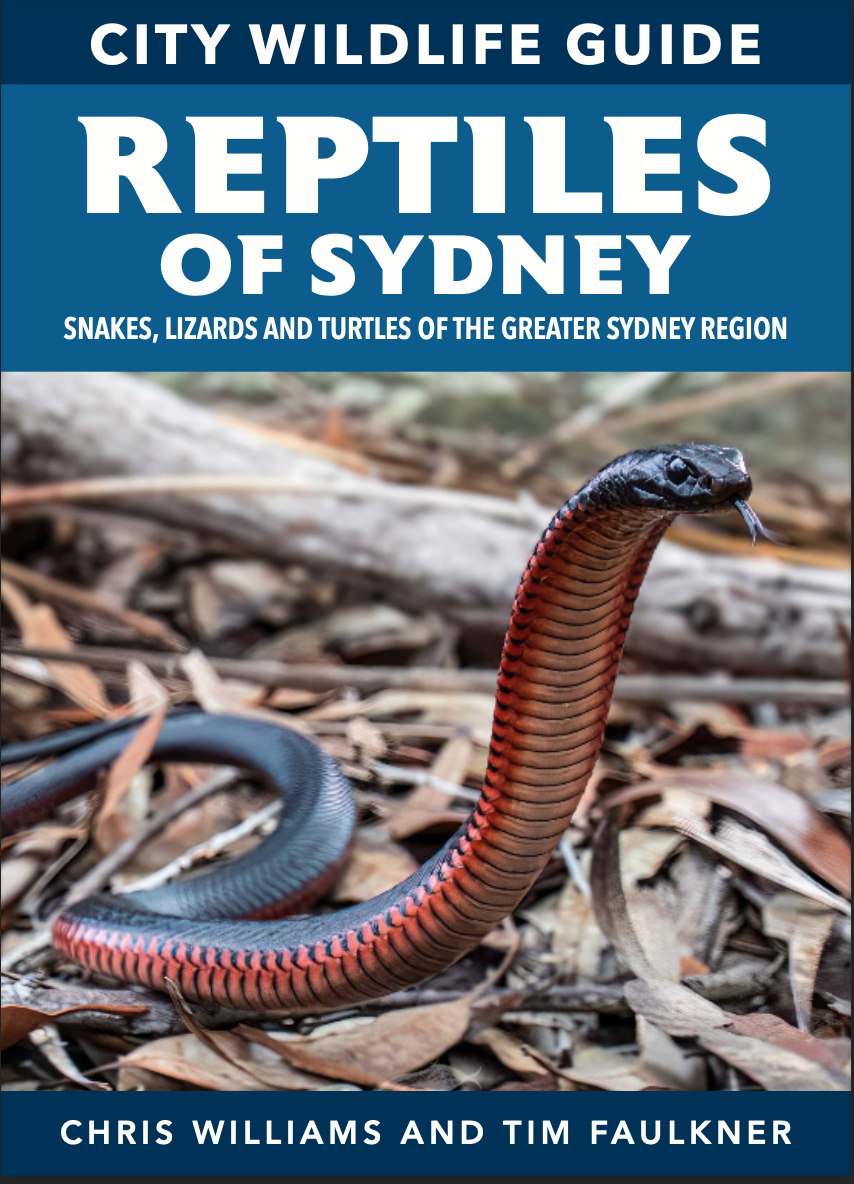
Interested in Sydney Reptiles?
You can buy the book, featuring full page descriptions on over 70 species
https://sydneysnakecatcher.com.au/product/city-wildlife-guide-reptiles-of-sydney/
Saurophobia is the fear of lizards, and we can assure you — it’s very real.
Catching snakes seemed like the obvious direction for a business like Urban Reptile Removal. But over time, we began receiving a steady stream of calls from people needing help with lizards as well — everything from tiny skinks through to large goannas.
That led us to establish a second business focused specifically on lizard removals, making it much easier for people searching for this service to find the help they needed.
For the most up to date information on snakebite first aid, visit, snakebitefirstaid.com.au
