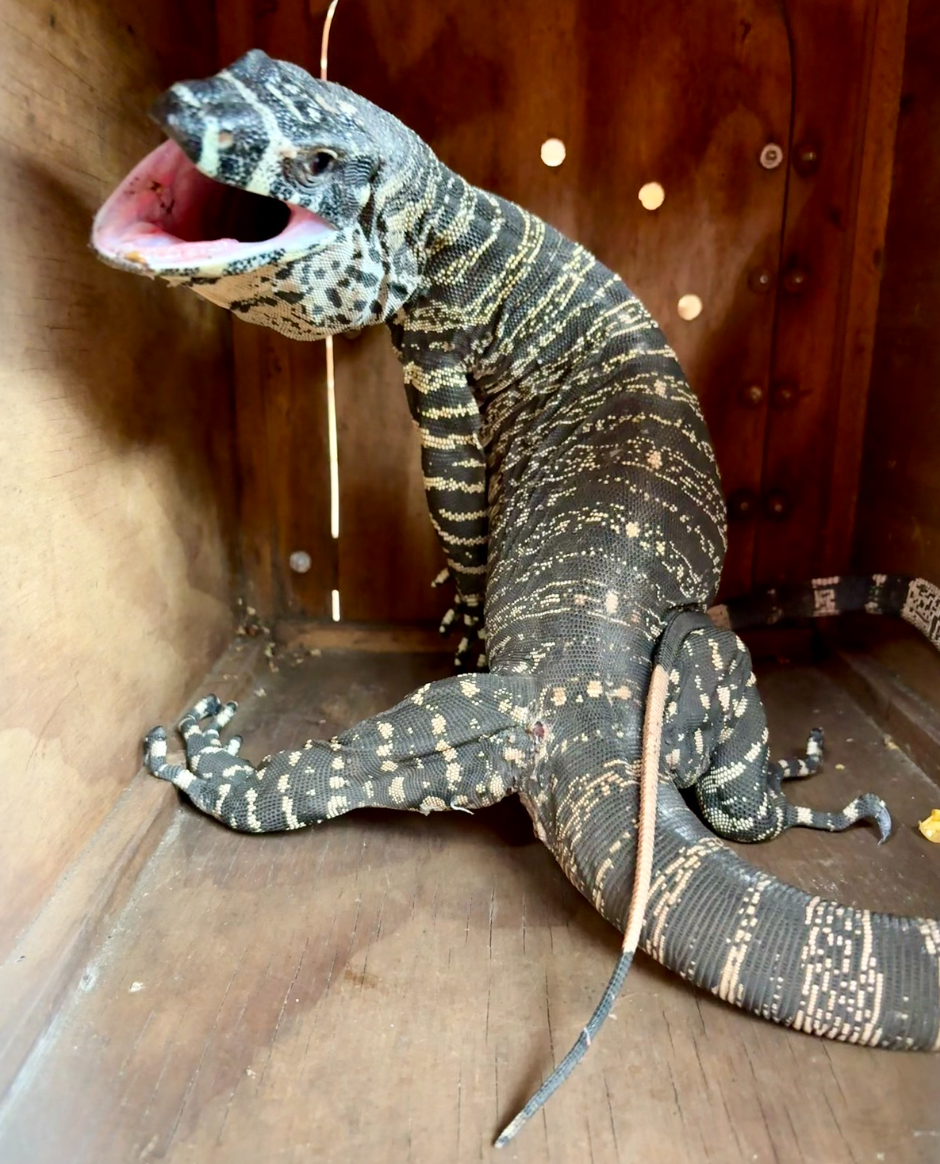
The Lace Monitor
The Lace Monitor (Varanus varius) is Sydney's largest lizard and one of the most impressive reptiles in the region. They are still common across Zones 1 to 4, particularly in areas bordering bushland and national parks. They are intelligent scavengers and predators, generally peaceful around humans who give them space, and an important part of the ecology of Sydney's bushland fringe. The proper response to finding one in your yard is to enjoy the sight, take a photo from a respectful distance, and let the animal go on its way.
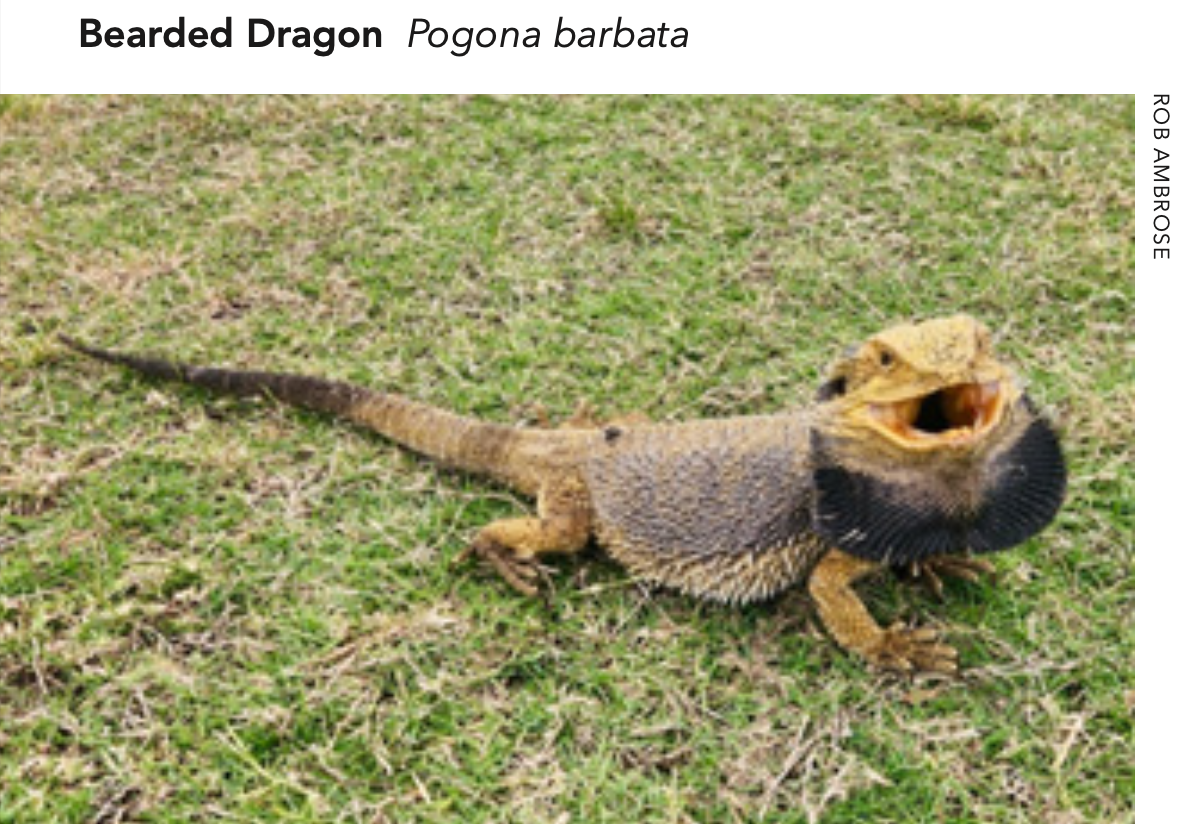
Eastern Bearded Dragon
The Eastern Bearded Dragon (Pogona barbata) is one of Sydney's classic native reptiles, but also one of the most visibly affected by the city's growth. Once common across much of the region, they are now largely restricted to Zone 1 on the western fringe, where remnant bushland and lower housing density still support viable populations. They are harmless, charismatic, and an indicator species for the health of Sydney's outer bushland. Where they still exist, they are worth protecting — because once they are gone from an area, they rarely come back.
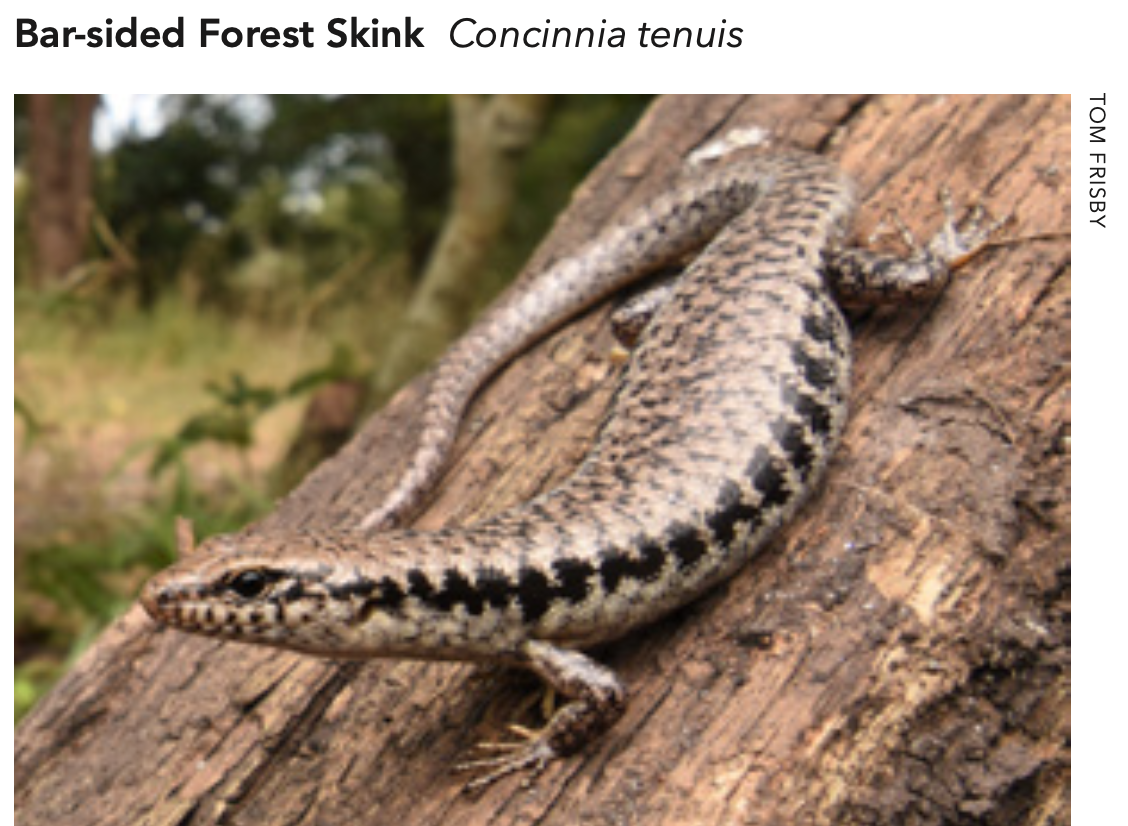
Bar-Sided Forest Skink
The Bar-Sided Forest Skink (Concinnia tenuis) is one of Sydney's quiet success stories — an agile, semi-arboreal native lizard that has adapted brilliantly to the older suburbs of the Lower and Upper North Shore, where mature gardens and double-brick homes provide near-ideal habitat. The cavity in double-brick walls gives them a vertical highway that lets them move freely up and through homes, often turning up on first floors after climbing inside from the ground. Their curious nature means they are one of the few Sydney lizards that will readily come inside — usually harmlessly, and usually departing on their own once you open a door. Their presence is a good sign that your home and garden retain the structure to support a functioning native ecosystem.
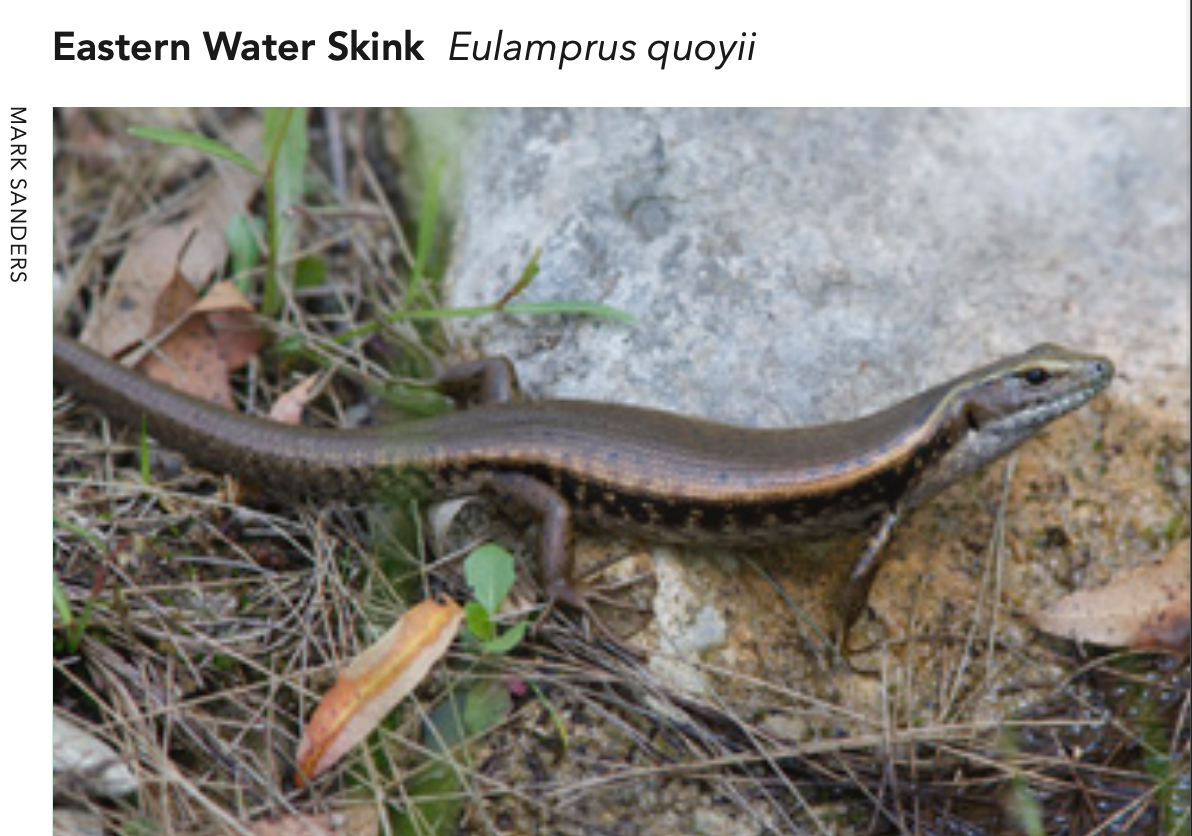
Eastern Water Skink
The Eastern Water Skink (Eulamprus quoyii) is one of Sydney's most successful and most visible native reptiles. Common across all five distribution zones of the Greater Sydney region, adapted to both natural waterways and urban garden ponds, and genuinely beneficial to have around, they are a species worth appreciating rather than dismissing. If you have a creek, pond or even a damp corner with good cover in your Sydney garden, you almost certainly have water skinks — and that is a good sign.
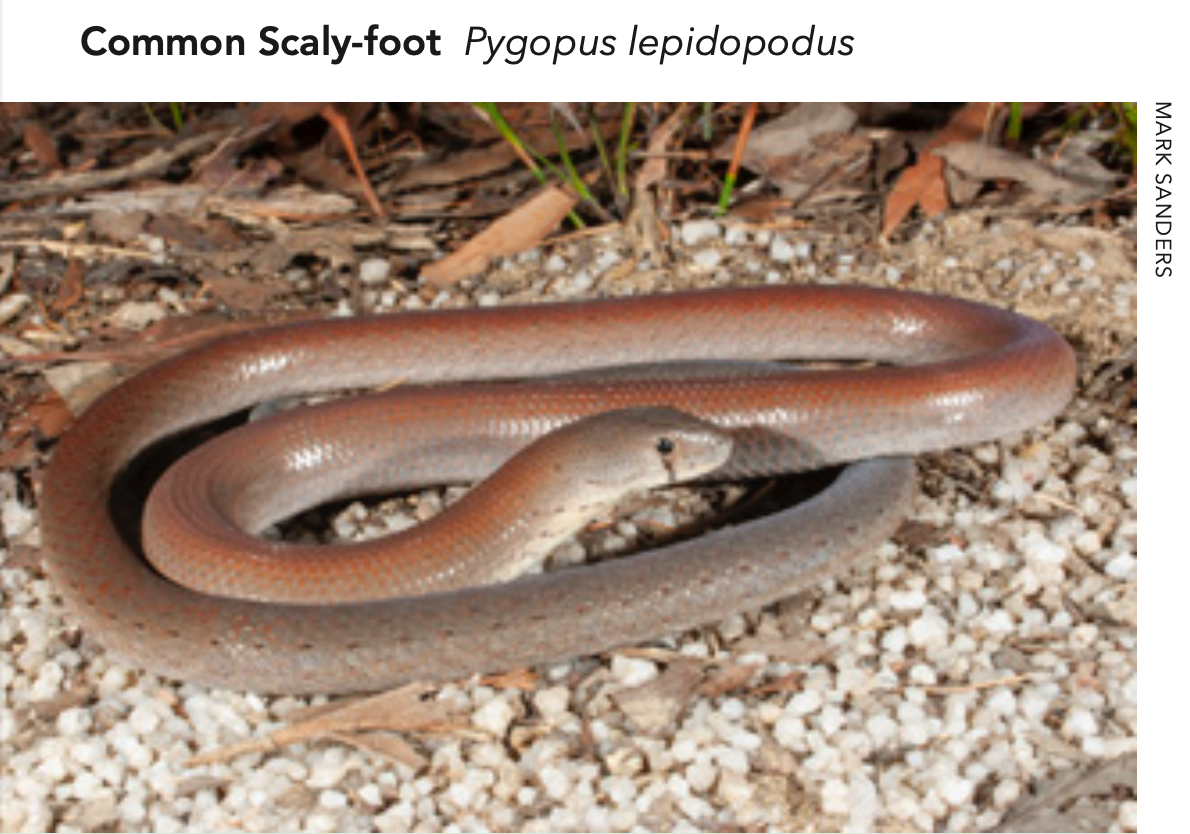
Common Scaly-foot
The Common Scaly-foot (Pygopus lepidopodus) is a harmless native lizard that has evolved to look and act like a snake, and it does that job almost too well. They are widespread across Greater Sydney, common in the right habitats, and almost always misidentified when they are encountered. Learning to recognise them — ear openings, fleshy tongue, long tail, vestigial limb flaps — is one of the most useful pieces of reptile knowledge any Sydney homeowner can have.