Macquarie Park Snake Catcher
Emergency Snake Removal in Macquarie Park
Urban Reptile Removal – Call 0418 633 474
If you need a Snake Catcher Macquarie Park residents and businesses can rely on, call Urban Reptile Removal on 0418 633 474. We provide fast, professional emergency snake removal services throughout Macquarie Park and surrounding northern Sydney suburbs, with attendance often possible within around 30 minutes depending on location, traffic and availability.
Macquarie Park is best known for its office towers, university campus, business parks and high-density residential developments, but it also contains extensive green space, creek corridors, landscaped reserves and connected bushland that support a surprising amount of wildlife. As a result, snakes are occasionally encountered around apartment complexes, commercial buildings, loading docks, pathways, courtyards, landscaped gardens and public open spaces throughout the suburb.
If you see a snake, stay calm and keep your distance. If it is safe to do so, keep the animal in sight. The single most useful thing you can do before we arrive is maintain visual contact with the snake. A snake that is being watched is usually straightforward to locate and remove, while a snake that disappears into dense vegetation, drainage infrastructure, retaining walls or building surrounds can be much harder to find. You do not need to take a photograph or identify the species — simply watch where it goes and leave the rest to us.
Urban Reptile Removal provides licensed, insured and professional snake and reptile removal services throughout Greater Sydney. We regularly attend residential properties, apartment developments, university grounds, commercial premises, warehouses and corporate campuses, helping people safely resolve encounters with native reptiles.Why Snakes Are Found in Macquarie Park
Macquarie Park is one of the most unusual suburbs in Sydney when it comes to wildlife movement. While it is known for offices, apartments and transport hubs, it also contains:
Large university grounds
Landscaped business parks
Pockets of bushland
Creek lines and drainage corridors
Older residential streets
Long green corridors linking built areas
These features combine to create continuous habitat. Snakes move through Macquarie Park far more often than most people realise. They follow shelter, warmth and prey animals, using the same routes that lizards, birds and possums use every day.
Snakes are not looking for people. When one appears near a building or path, it is usually passing through, moving quietly between cover.
If a snake has appeared unexpectedly, keep your distance and call Urban Reptile Removal on 0418 633 474.
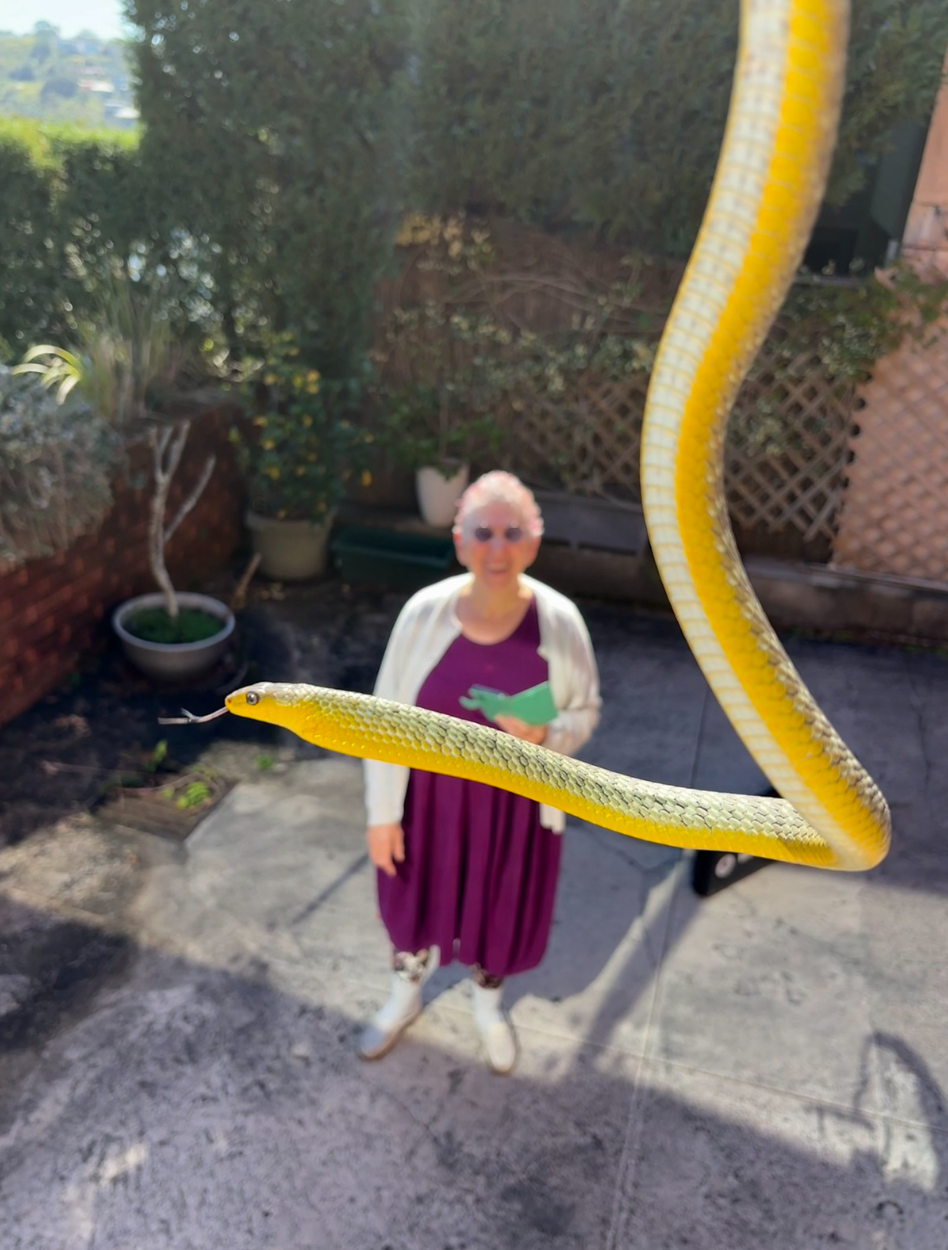
Tree Snakes, lie this one, are common around Macquarie Park
Landscaped Corridors, Bush Links and University Grounds
Macquarie Park is made up of very different environments sitting side by side. There are commercial towers near the station, the open lawns and tree-lined paths of the university precinct, residential pockets around Talavera Road, business parks with manicured gardens, and bush connections leading toward Lane Cove National Park.
These areas are linked by hedges, tree lines, drainage channels and footpaths. Wildlife uses these features as movement corridors.
It is common to see:
Skinks running along warm edging
Blue-tongue lizards sheltering under shrubs
Water dragons basking on steps and rock walls
Possums moving between rooftops
Birds feeding in large street trees
Snakes follow these same pathways, usually unseen, staying close to cover and avoiding people.
Common Snakes Found in Macquarie Park
Below is a clear explanation of the snake species most commonly relocated by Urban Reptile Removal in Macquarie Park and why they appear.
Diamond Pythons in Macquarie Park
Diamond pythons are encountered in Macquarie Park more often than people expect. They are non-venomous, calm and harmless.
Diamond pythons move slowly and rely on camouflage rather than speed. Their patterned scales blend perfectly with:
Mulch and bark
Stone retaining walls
Garden beds
Timber sleepers
Leaf litter
They often travel along landscaped corridors between buildings and around the edges of university grounds, where warmth and shelter are easy to find.
People may notice a diamond python stretched along a warm wall, curled behind shrubs, lying quietly across a garden path or resting near unit complexes. Because they rely on camouflage, they often remain still when approached, which can make them seem larger or more intimidating than they really are.
Diamond pythons sometimes enter roof spaces, including older homes and sections of commercial buildings where gaps allow access. Roof cavities provide warmth and safety. If you hear movement above the ceiling or see a python along guttering or high walls, call Urban Reptile Removal on 0418 633 474 for safe removal.
Diamond pythons also play an important role in natural rodent control, which is valuable in a mixed residential and commercial suburb.
Red-Bellied Black Snakes in Macquarie Park
Red-bellied black snakes are commonly found in Macquarie Park because the suburb connects to creek lines, drainage corridors and bushland that feed into the Lane Cove River system.
These snakes follow:
Frogs
Moisture
Cool, shaded soil
Even heavily landscaped areas around offices and apartments often retain moisture, especially after rain, creating ideal conditions for black snakes to move through.
Red-bellied black snakes are venomous, but they are generally shy and quick to retreat. They avoid people and only act defensively if cornered. Most bites occur when someone tries to catch or interfere with a snake.
If you see a red-bellied black snake near gardens, shaded rock, drainage lines or landscaped areas around buildings, keep your distance and call 0418 633 474 immediately.
They usually keep moving unless frogs or moisture are consistently present.
Golden Crown Snakes in Macquarie Park
Golden crown snakes are extremely common in Macquarie Park, though rarely seen.
They are:
Small
Nocturnal
Very shy
Usually hidden
Golden crown snakes live under pot plants, leaf litter, bricks, stones, sleepers and shaded soil. The combination of older residential gardens and newer landscaped developments provides countless small hiding places.
These snakes are harmless. Their bite is not medically significant. Most people only encounter them while gardening or moving items that have not been disturbed for a long time.
Urban Reptile Removal relocates golden crown snakes only when they wander into homes, garages or commercial buildings where they cannot easily escape.
Green Tree Snakes in Macquarie Park
Green tree snakes are frequently seen throughout Macquarie Park. They are slender, bright green, fast and very agile. Their quick movements can startle people, but they are completely harmless.
They hunt:
Skinks
Geckos
Small frogs
All of these thrive in the suburb’s gardens, university grounds, bush edges and landscaped corridors.
Residents and workers may see green tree snakes weaving through shrubs, moving along fences, climbing trees, gliding over rock walls or appearing briefly near building entrances. Because they climb extremely well, they often appear on balconies, elevated walkways and rooflines.
If a green tree snake enters a home, office, unit or becomes trapped where it cannot escape, call Urban Reptile Removal on 0418 633 474 for prompt assistance.
Why Snake Sightings Increase in Macquarie Park
Snake sightings increase:
During warm weather
After rainfall
In spring and early summer
Snakes are cold-blooded animals. As temperatures rise and prey becomes active, snakes move more often.
Snakes are not appearing because anything is wrong with your property or building. They are responding to environmental conditions.
As a simple guide:
Diamond pythons often follow rats and mice
Red-bellied black snakes follow frogs and moisture
Golden crown snakes follow small lizards
Green tree snakes follow skinks and geckos
What to Do If You See a Snake
If you see a snake in Macquarie Park:
Stop and stay calm
Keep several metres away
Keep others clear of the area
Do not touch, chase or block the snake
Call Urban Reptile Removal on 0418 633 474
If it is safe to do so, keep visual contact from a distance so we can locate it quickly.
Repeated Sightings in the Same Area
If snakes appear repeatedly in one location, we can inspect the site and explain why. Common reasons include:
Moisture from drainage or irrigation
Dense landscaping
Stored materials
Heat-retaining surfaces
High prey activity
Green corridors funnelling wildlife
Solutions are usually simple and practical once the cause is identified.
About Chris Williams
Chris Williams has spent more than 35 years working with reptiles and amphibians throughout Australia and is widely recognised as one of the country's leading herpetologists. Since 2014, he has served as President of the Australian Herpetological Society, helping to promote reptile education, research and conservation nationwide.
His professional background includes roles with the Australian Reptile Park and Taronga Zoo, as well as extensive field experience working with reptiles across New South Wales. Chris is also the founder of Snake Ranch, which grew to become Australia's largest reptile breeding facility.
In addition to his field and zoo work, Chris has authored seven books on Australian reptiles, amphibians and wildlife. He is regularly interviewed regarding reptile interactions. Through Urban Reptile Removal, he continues to train and mentor snake catchers throughout New South Wales, ensuring the highest standards of safety, professionalism and reptile expertise are maintained across the network.
Need a Snake Removed in Macquarie Park
Call Urban Reptile Removal – 0418 633 474
For fast, safe and reliable snake removal in Macquarie Park, call Urban Reptile Removal on 0418 633 474. We attend residential properties, apartments, offices, university facilities and landscaped commercial areas.
Macquarie Park will always support wildlife due to its unique mix of bushland, gardens and development. With professional help available 24 hours a day, you can remain calm and protected whenever a snake appears.