Urban Reptile Removal- Colebee
Colebee is one of our highest-volume suburbs. There were six days across the 2025/26 season where we dispatched catchers three times in one day to different Colebee addresses — six days, three jobs each, all in this one suburb. That kind of density doesn't happen by accident, and it hasn't been a one-off. Colebee produced volume on that scale season after season.
Most of those callouts are Red-bellied Black Snakes. Eastern Browns are a close second. Both species are well-established residents of this suburb, and both turn up in numbers that warrant taking sightings seriously.If you have spotted a snake or other reptile in Colebee, call Urban Reptile Removal on 0418 633 474. Licensed, insured, and available every day of the year.
Why Colebee Produces the Volume It Does
Colebee one of the largest, oldest and most diverse suburbs in Western Sydney. The land use runs the full range — established residential streets going back decades, town centre and high-density development around the station, industrial blocks, schools, the hospital precinct, parkland, creek lines and reserves. From a reptile catcher's point of view, every one of those land uses contributes to the work in a different way.
Breakfast Creek and its tributaries run through the suburb. Lalor Creek connects through to Seven Hills. The Blacktown Showground and the surrounding reserve system, the cemetery, the parkland along the creek line and the corridors connecting the suburb to Doonside, Marayong, Kings Park and Toongabbie all act as continuous reptile habitat. Snakes have been resident here for as long as the creek lines have existed. The modern suburb hasn't displaced them so much as built around them.
The species mix tells you which part of the landscape is doing the most work. Red-bellied Black Snakes dominate because the creek lines, drainage corridors and frog populations support them year-round. Eastern Browns are a close second because the rodent populations of a large established suburb sustain them. On any given Blacktown callout, either is plausible. Often we're called for a snake the resident has identified as one and arrive to find the other.
The species we see most often
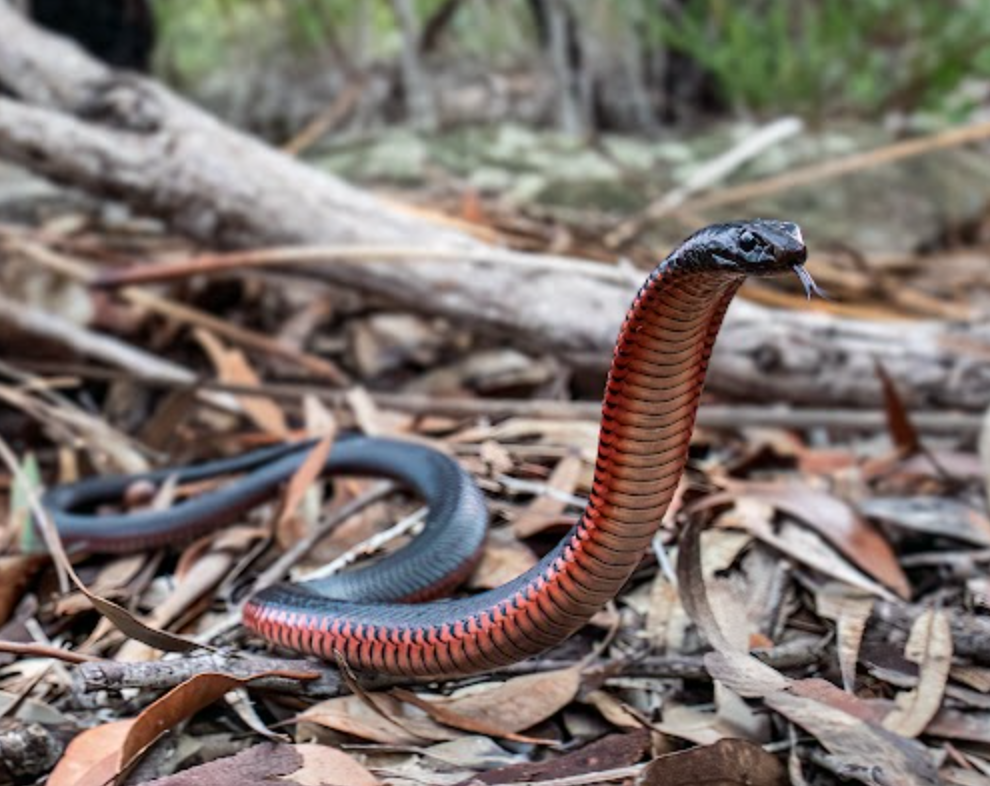
Red-bellied Black Snake. The species we catch most often in Colebee. They use Breakfast Creek, Lalor Creek and the wider drainage and reserve system as habitat and movement routes. Pool pump housings, garden beds with thick mulch, water features, and properties backing onto creek line or reserve are their reliable spots. Venomous, but generally far less defensive than Browns. They will move away if given the chance.
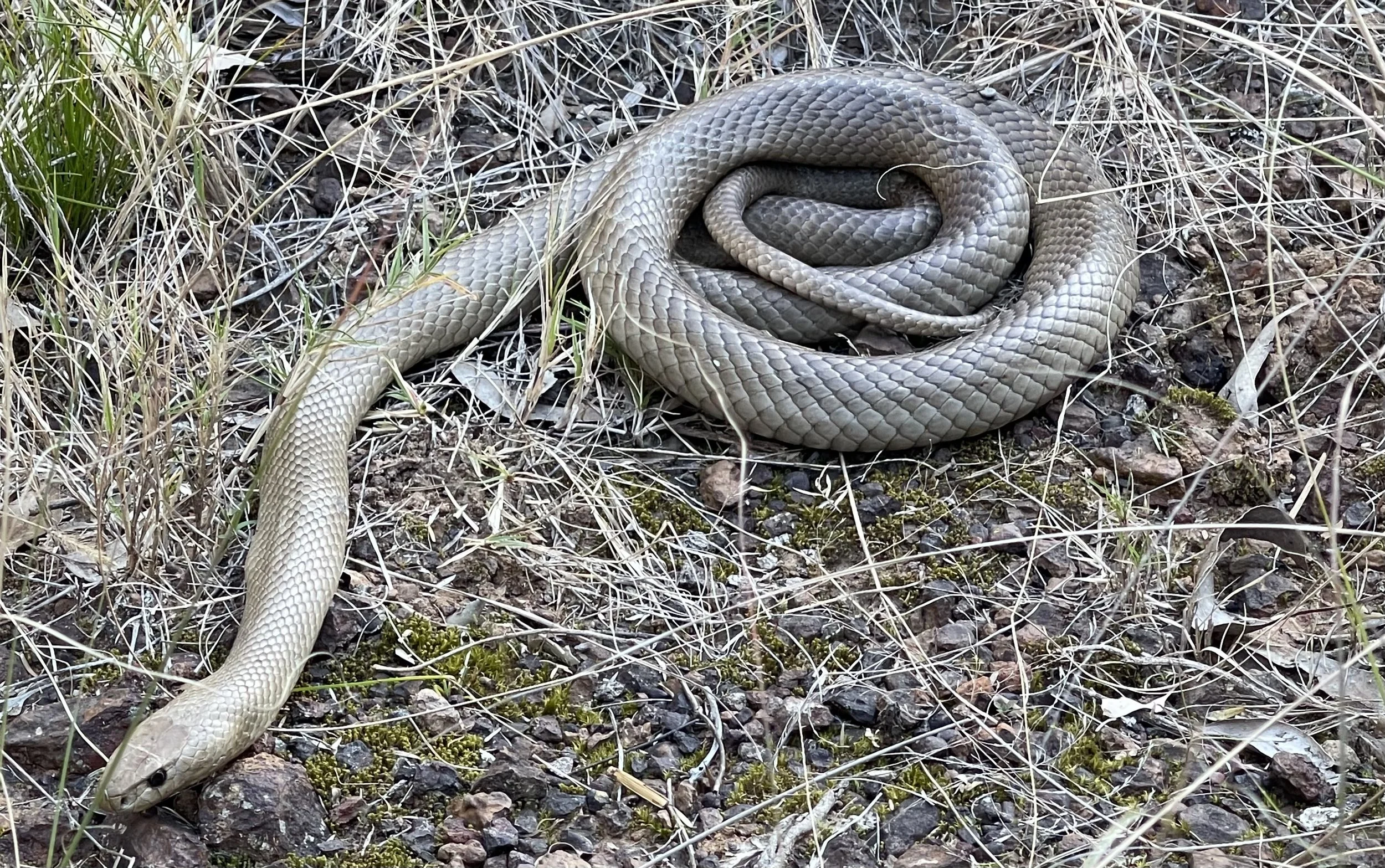
Eastern Brown Snake. A close second, and not by much. Browns follow rodents through the established residential streets, the older industrial blocks, the school grounds, the hospital surrounds and the drier margins of the suburb. They travel along fence lines, drainage easements and back lanes without warning. The older Blacktown housing stock — gaps under the slab, full sheds, undisturbed corners of yards — gives them plenty of hiding options. Highly venomous, fast, and quick to disappear into cover. Step back, keep a visual from a safe distance, and call us on 0418 633 474.
Blue-tongued Lizard. Not a snake, but the reptile we are called for almost as often. Blue-tongues are large, slow-moving native skinks that get mistaken for snakes because of their size and the way they flatten their bodies when threatened. They are harmless, beneficial, and good for a garden — they eat snails, slugs and beetles. We attend, identify the animal on site, and either leave it where it is or relocate it to a safer part of the property.
Where We Find Reptiles on Colebee Properties
Across decades of work in this suburb, the hiding spots are well-known.
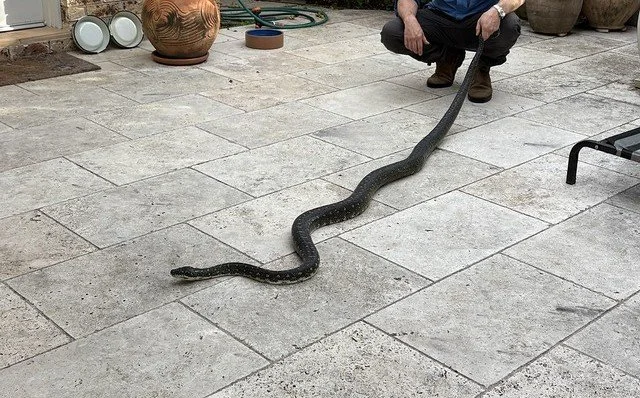
For the Red-bellied Black Snakes that make up most of our work here, pool pump housings come up on almost every job — warm, dark, undisturbed, close to water. Garden beds with thick mulch, especially anything dense against a boundary fence. Pool surrounds and water features. Under decks, verandahs and outdoor seating. Along fences backing onto creek line, reserve, drainage corridor or the railway. Inside laundries, garages and bathrooms where a snake has followed a frog through a gap.
For Eastern Browns, the pattern shifts toward the older-suburb hiding spots. Garages and the gaps under garage rollers. Sheds and accumulated yard storage. Gaps under the slab on older brick and fibro homes. Retaining walls and rock features. Long grass on vacant blocks and overgrown corners of properties. Around chicken coops, aviaries and outdoor pet bowls. Inside houses where a Brown has followed rodents through a gap in the brickwork or beneath an external door.
On commercial and institutional sites — schools, the hospital, industrial blocks, the showground — we find reptiles around perimeter fencing, in storage areas, along loading bays, in landscaped frontages and around any quiet corner that hasn't been disturbed for a while.
What to Do If You See a Snake in Colebee
Stay calm. Step back from the snake. Bring children and pets indoors. If possible, keep watching the snake until we arrive. Call 0418 633 474. You don't need to take a photo or identify the snake. You don't need to follow it. But if you can keep a visual from a safe distance, that helps us. If it disappears into cover, keep watching the spot where you last saw it — snakes often reappear within minutes once the area goes quiet. Knowing where it last was makes our job much faster when we arrive.
Snake Inside the House
A snake inside a Blacktown home is an emergency. Both Red-bellied Black Snakes and Eastern Browns will work their way inside given the chance — Red-bellies following frogs, Browns following rodents. Entry points are the usual ones: open doors, gaps under garage rollers, plumbing penetrations, cracks beneath external doors, gaps in the brickwork on older homes. We attend snake-inside-the-house jobs in Blacktown regularly. We respond as quickly as we can, locate the snake, remove it safely, and check the house is secure before we leave.
What Actually Reduces Snake Activity on a Colebee Property
The reptile-deterrent products sold at hardware stores — powders, sprays, ultrasonic devices — do not work. Skip them. For Red-bellied Black Snakes, keep pool pump housings clear and unappealing, thin out heavy garden beds along the boundary side facing creek line or reserve, and manage frog activity where it has become concentrated against the house. For Eastern Browns, reducing rodent activity is the single most effective thing. If you have mice or rats in numbers, Browns will eventually follow. Across both species: keep grass short along fence lines, particularly the sides facing creek, reserve, drainage corridor or vacant land. Tidy sheds, garages and outdoor storage. Seal gaps under sheds, decks, pool equipment housings, and — on older homes — gaps under the slab and around external doors.
Why Colebee Calls Urban Reptile Removal
We work calmly, without panic, and without making anyone feel judged about the state of their property. Both Red-bellied Black Snakes and Eastern Browns have been resident in this suburb for far longer than the modern streets have existed. That is the landscape, not the housekeeping. We explain what we are doing, what species we are dealing with, why the snake is on the property, and what — if anything — can be done to reduce the chance of the next one settling in. We have catchers in the area on most operational days through the season. There are weeks in summer where Blacktown is our single busiest suburb across the whole network. If you see movement, hear rustling, or notice your pet fixated on one area of the yard, call 0418 633 474 immediately.
Snakebite First Aid for Colebe
Colebee's mix of established streets, creek lines, parkland and reserve corridors means snake activity is a normal part of the landscape here, not an unusual event. Knowing the basics of snakebite first aid is worth having in the back of your mind if you spend time in the garden, near the creek lines, or through the connecting parkland
Step 1: Call 00
If someone is bitten, call 000 immediately and ask for an ambulance. Stay on the line and follow their instructions
Step 2: Keep the person stil
Movement speeds up how quickly venom spreads through the body. The person who was bitten should stop moving straight away and sit or lie down where they are If you're with them, keep them calm and still. If they can't safely stay where they are, carry them rather than letting them walk
Step 3: Apply a pressure immobilisation bandag
✔ Wrap a broad bandage firmly over the bite site, similar to bandaging a sprain.
✔ Continue wrapping up the entire limb, not just the bite area.
✔ Splint the limb so it can't bend or move.
✔ The bandage should be firm but not so tight that it cuts off circulation — if fingers or toes turn pale or feel cold, ease it slightly.
Step 4: What not to do
✔ Don't wash the bite — a trace of venom on the skin helps hospital staff identify the right antivenom.
✔ Don't cut the bite or try to suck out venom.
✔ Don't apply a tight tourniquet.
✔ Don't try to catch, move, or kill the snake.
Step 5: Note the time
Note the time of the bite if you can. It helps hospital staff assess how things are progressing once treatment begins. For more information on snakebite first aid, visit snakebitefirstaid.com.au.