
Normanhurst Snake Catcher
If you find a snake in Normanhurst, call Urban Reptile Removal on 0418 633 474.
Normanhurst is one of the North Shore’s most active snake movement corridors. The combination of deep gardens, shaded blocks, moisture, sandstone walls, leaf litter, wildlife flow and warm surfaces creates perfect conditions for snakes to move quietly through properties. A snake may appear on your lawn, in your garage, under your deck, behind the shed, beside the pool filter, or even inside the home — always without warning.
Urban Reptile Removal is widely recognised as the number one Sydney snake catcher, completing more snake removals across Greater Sydney than any other service. When a snake appears in Normanhurst, our experience, calm approach, and deep understanding of snake behaviour ensure your safety and the safe relocation of the animal.
If a snake is present, do not try to kill it, scare it, trap it, or move it yourself. Snakes respond defensively when startled or pressured. A single wrong move can turn a manageable situation into a dangerous one. Step back, clear the area, keep your pets inside, and call 0418 633 474. We’ll take care of the rest.
Why Snakes Frequently Appear in Normanhurst
Normanhurst provides ideal natural conditions for snakes because it combines:
• Dense, established gardens
• Shaded soil
• Moisture and damp corners
• Warm driveways and sandstone
• Leaf litter and compost
• Under-house voids
• Deck gaps
• Garden shelters
• High wildlife activity
• Rodent movement
Snakes do not seek out specific suburbs — they seek out resources. Normanhurst offers all the resources snakes instinctively need: food, water, warmth, and shelter. Once these conditions exist, snakes naturally follow the paths created by shade, garden edges, rock walls, moisture zones and fencing lines.
Snake sightings spike during:
• Warm, sunny mornings
• After summer rain
• During rodent increases
• In spring when snakes emerge
• In summer when temperatures peak
• In autumn during pre-winter feeding
• On warm winter days
Snakes remain active throughout large parts of the year, especially in pockets of Normanhurst where shade and moisture interact.
What To Do When You See a Snake in Normanhurst
Your safety depends on your first response. The rules are simple….
• Stop where you are
• Step back calmly
• Bring pets indoors immediately
• Keep children away
• Do not approach the snake
• Do not touch, trap or block it
• Do not spray it with water
• Do not attempt DIY removal
• Maintain visual contact from a safe distance
• Call Urban Reptile Removal on 0418 633 474
Snakes are defensive, not aggressive. They react only when they feel threatened. A calm, controlled response keeps everyone safe and ensures a smooth removal when we arrive.
Snakes Commonly Seen in Normanhurst
Normanhurst has all major Sydney snake species. Some are dangerous, some harmless, and some large enough to scare anyone, especially when surprised. Urban Reptile Removal handles all species safely, legally and professionally.
Here are the five most frequently encountered:
Red-Bellied Black Snake
A glossy black snake with a bright red belly. Often found in shaded, cool, moist parts of gardens.
Key behaviour:
• Venomous
• Prefers damp garden beds, drains, and shaded edges
• Often seen near frog and lizard habitat
• Usually shy but dangerous if cornered
If you see one, back away and call Urban Reptile Removal.
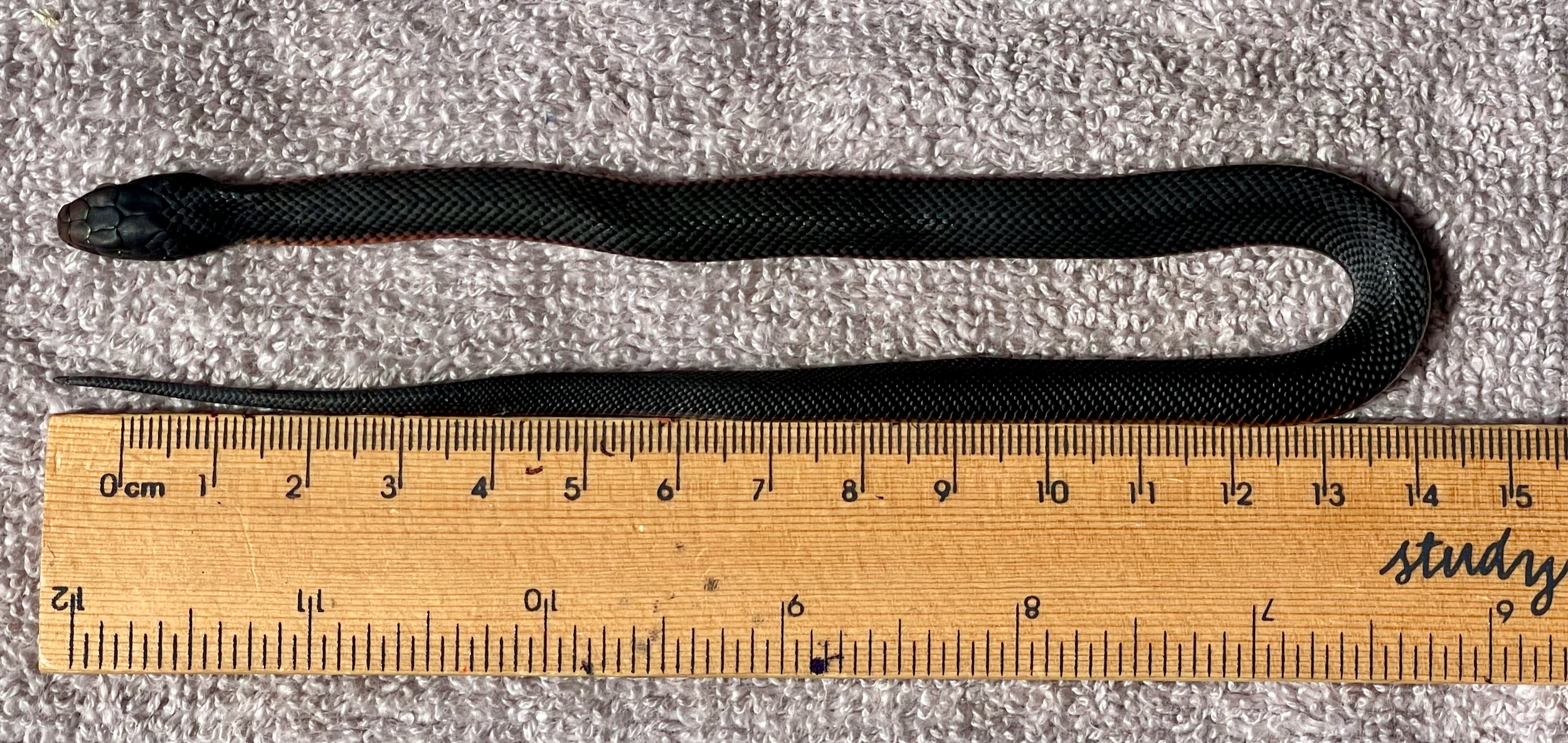
A neonate Red Bellied Black Snake, similar to the ones we find in Normanhurst. https://urbanreptileremoval.com.au/sydney-reptile-advice/faq-after-a-visit-from-a-red-bellied-black-snake
Eastern Brown Snake
One of the world’s most venomous snakes. Fast, alert and highly defensive when threatened.
Key details:
• Extremely dangerous
• Quick-moving and reactive
• Attracted strongly to rodents
• Hides in narrow warm spaces like edges, steps, and garden clutter
• Often mistaken for harmless species
If you think you’ve found a brown snake, keep your distance and call immediately. We prioritise these callouts.
Golden Crown Snake
A small, slender snake with a golden marking across the head. Frequently discovered during gardening.
More information:
• Not dangerous
• Lives in mulch, compost, leaf litter and pot plants
• Often mistaken for baby brown snakes
• May bite if handled
Though harmless, they should still be relocated by a professional to avoid confusion and risk.
Green Tree Snake
Fast, harmless, and brightly coloured. Very common in leafy suburbs like Normanhurst.
Behaviour:
• Non-venomous
• Excellent climber
• Seen frequently on fences, pergolas, garden structures and walls
• May wander indoors through open windows
• Moves rapidly, startling residents
If a green tree snake enters your home, we can remove it gently and safely.
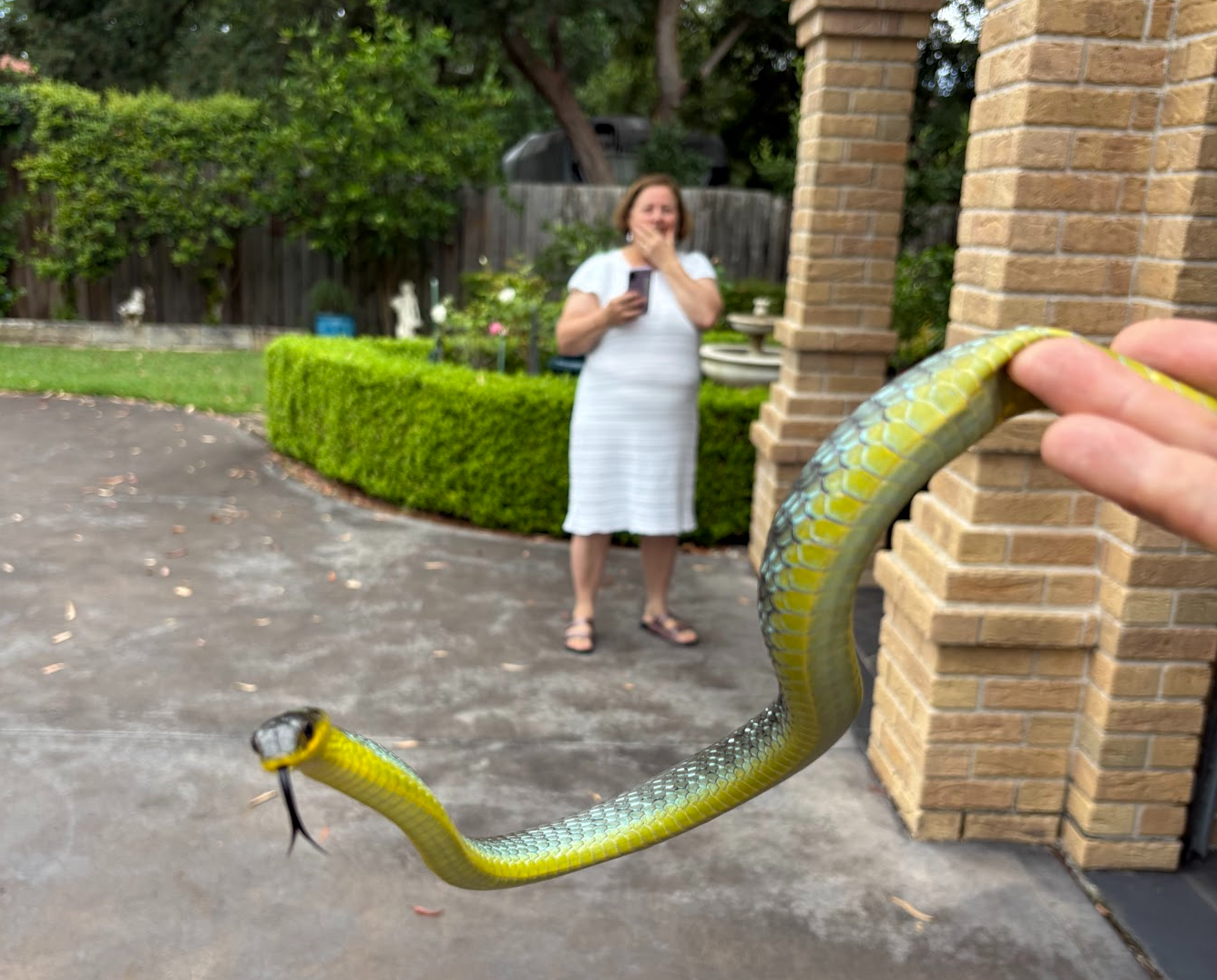
A Green Tree Snake, similar to the ones we find in Normanhurst. https://urbanreptileremoval.com.au/sydney-reptile-advice/faq-after-encountering-a-green-or-common-tree-snake-dendrelaphis-punctulatus
Diamond Python
A large, slow-moving python with yellow-and-black diamond patterns. Non-venomous and excellent for natural rodent control.
Key behaviour:
• Frequently seen on roofs, warm walls and garden surfaces
• Often hides in roof cavities
• Moves silently at night following rodent scent
• Calm and gentle but intimidating due to size
If a python is somewhere inconvenient or causing concern, we relocate it humanely.
What Brings Snakes Into Normanhurst Properties
Snake appearances in Normanhurst are not random. They follow resources, and Normanhurst properties tend to offer several of them at once.
Rodents are the most reliable driver. Even a small mouse presence in a roof void, under-floor cavity, shed, or garage is enough to attract snakes. They locate rodents efficiently and return to the same food source repeatedly. A minor rodent problem has a way of becoming a snake problem before homeowners make the connection.
Moisture draws snakes in dry conditions. Bird baths, garden ponds, dripping taps, irrigation overspray, overflow trays, pet bowls, damp soil, and mulch beds all create the water sources snakes seek when natural moisture is reduced. Properties with established gardens and regular irrigation tend to hold moisture in ways that make them consistently attractive.
Heat pulls snakes toward structures. Driveways, sandstone blocks, stone steps, brickwork, timber decks, roof sheeting, and pathways all absorb and hold solar heat. Snakes use these surfaces to regulate body temperature, which is why encounters along garden paths and on driveways are most common in the morning before surfaces have cooled.
Shelter keeps snakes on the property once they arrive. Sub-floor voids, deck cavities, retaining wall gaps, timber piles, rock crevices, pool pump enclosures, sheds, and areas of accumulated leaf litter all offer the quiet and protection snakes look for between movements. A snake that finds suitable shelter will return to it.
When two or three of these conditions exist on the same block, encounters stop being occasional and start being regular.
About Chris Williams
Chris Williams has spent more than 35 years working with reptiles and amphibians throughout Australia and is widely recognised as one of the country's leading herpetologists. Since 2014, he has served as President of the Australian Herpetological Society, helping to promote reptile education, research and conservation nationwide.
His professional background includes roles with the Australian Reptile Park and Taronga Zoo, as well as extensive field experience working with reptiles across New South Wales. Chris is also the founder of Snake Ranch, which grew to become Australia's largest reptile breeding facility.
In addition to his field and zoo work, Chris has authored seven books on Australian reptiles, amphibians and wildlife. He is regularly interviewed regarding reptile interactions. Through Urban Reptile Removal, he continues to train and mentor snake catchers throughout New South Wales, ensuring the highest standards of safety, professionalism and reptile expertise are maintained across the network.

Grab your copy here https://sydneysnakecatcher.com.au/shop/
