Kellyville Snake Catcher
If there's a snake at your home or property in Kellyville, call 0418 633 474.
If you need a Snake Catcher Kellyville residents can rely on, call Urban Reptile Removal on 0418 633 474. We provide professional snake removal services throughout Kellyville seven days a week and can often attend quickly when a snake is reported in a backyard, garden, pool area, garage, retaining wall, construction site or public space.
Kellyville has become one of the most active snake-catching areas in Sydney's north-west. Despite extensive residential development, the suburb remains connected by a network of creek lines, drainage corridors, detention basins and remnant bushland that continue to support healthy reptile populations. New housing estates sit alongside older acreage properties, horse paddocks and reserve systems, creating ideal conditions for snakes to move through the landscape.
Eastern Brown Snakes and Red-bellied Black Snakes are the species most commonly encountered in Kellyville, although Diamond Pythons, Blue-tongued Lizards and a variety of smaller reptiles are also regularly reported. Many sightings occur around landscaped gardens, retaining walls, drainage easements, construction sites and properties backing onto reserves. As Kellyville continues to expand, encounters between people and reptiles remain a regular part of life in this part of Sydney's north-west.

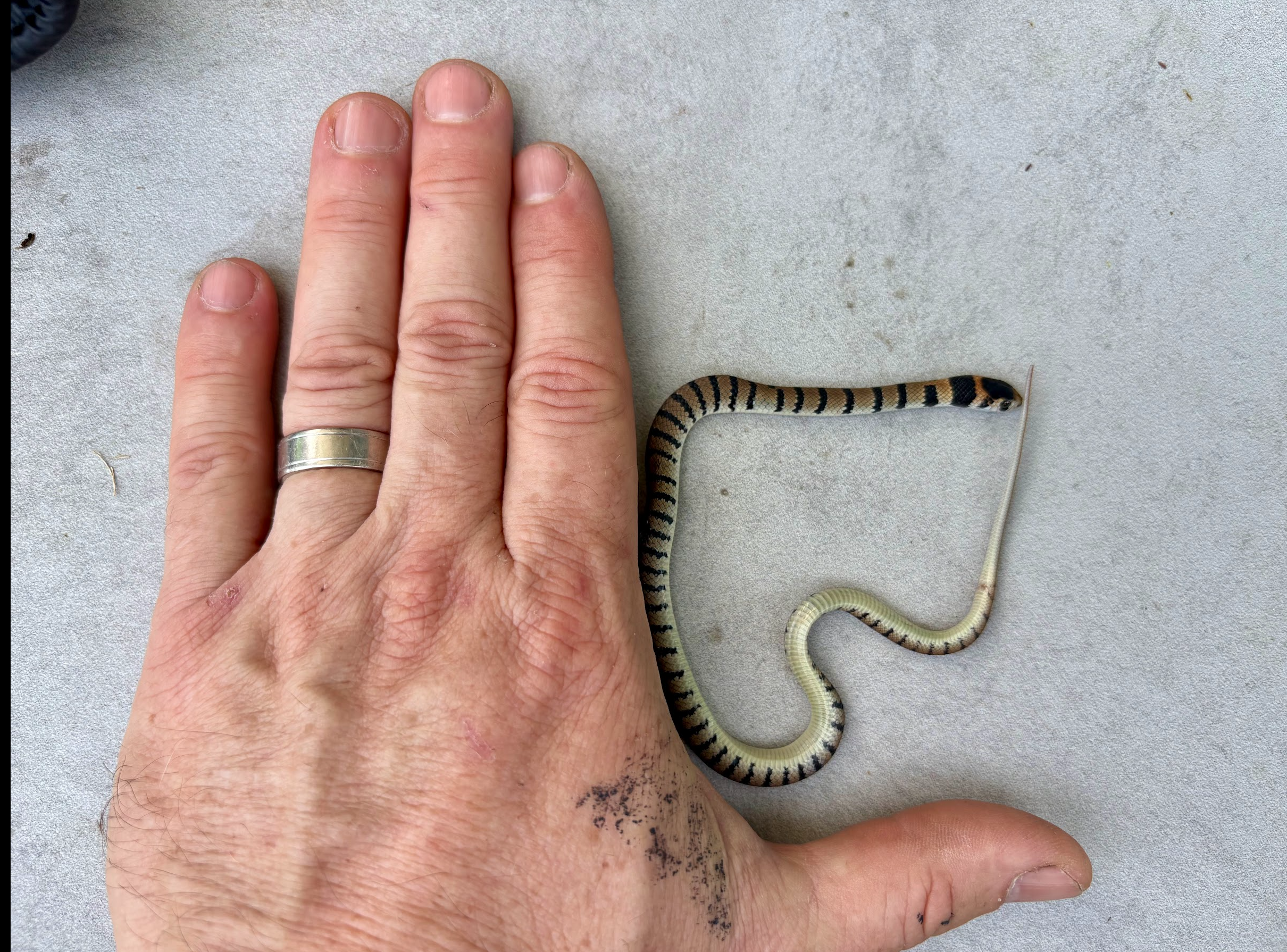
Even a tiny Brown Snake, like this hatching are capable of inflicting a fatal bite.
The species we see most often
Red-bellied black snake. Common in Kellyville, especially near water features, drainage areas, frog habitat, and well-watered gardens. Glossy black with a red or pink underside. They feed on frogs, lizards, small snakes, and fish, and bask on warm surfaces in the morning before retreating to shade. Venomous, but shy. They flee if given space. Should only be handled by a professional.
Golden-crowned snake. Small, slender, and active mostly at night. Pale yellow band across the head, pink to reddish underside. Venomous, but bites usually produce only mild local symptoms. Often confused with baby brown snakes because of size and colour. They hide under garden edging, in mulch, beneath rocks, and behind timber. Most active after rain, frequently seen moving across paths and driveways.
Diamond python. Large, non-venomous, calm by nature. Black scales with yellow or cream rosette patterns. Common across Kellyville because the suburb supports the rats and possums they hunt. Excellent climbers — they rest on fences, verandas, rafters, pergolas, and in roof spaces. We encourage residents to leave them alone where it's safe to do so. When relocation is needed, their size and strength means it should be done by a trained handler.
Green tree snake. Slim, fast, harmless. Bright green, olive, grey, or almost black, with a yellow underside. They move quickly through hedges, fences, pool surrounds, gardens, and roof edges. When startled, they flatten their bodies and show flashes of pale blue between the scales — alarming but not dangerous. Not venomous. Still need a trained catcher to safely relocate from a home.
Blue-tongued lizard. Not a snake, but the most common reason Kellyville residents call us thinking they've seen one. Heavy-bodied skinks that rustle loudly through leaf litter, hiss, puff up, and display a bright blue tongue when threatened. They hide under pot plants, garden equipment, timber piles, sheds, and warm corners. They eat insects, snails, fruit, and pet food, and are excellent for the garden. We'd rather come out for a blue-tongue than not come out and find out it wasn't.

Get your copy of Reptiles of Sydney here - https://sydneysnakecatcher.com.au/shop/
Where snakes hide on Kellyville properties
Kellyville is a mix of newer estates and older established homes, and the hiding spots reflect both. On the newer side, snakes use construction debris, unsealed gaps in retaining walls, fresh mulch beds, and the gaps under garden sheds and outdoor units. On the older side, mature gardens with dense planting, sandstone walls, established trees and the kinds of forgotten corners that build up over decades.
The places we find them most often:
Behind hot water systems and air conditioning units
Under pot plants and raised tubs
Inside garages behind shelving and storage
Beneath retaining walls and along garden edging
In roof cavities and wall gaps
In sheds behind tools, boxes or stored bags
Under timber, tiles or leftover building materials
Inside hedges, dense shrubs and ground cover
Around pool pumps and filtration housing
In compost heaps and mulch beds
Behind large rocks, water features and garden ornaments
Along fence lines and narrow side passages
Under outdoor furniture and tarps
Beneath decks, stairs and raised garden structures
You don't need to track the snake yourself. Once we arrive, we use species behaviour, temperature, time of day and the layout of the property to work out where it's likely gone, and we find it from there.
After we leave
Every job ends with a walk through of the property. We tell you what brought the snake in, what's keeping it interested, and what you can change to reduce the chance of another visit.
The things that genuinely work are practical:
Control rodents. On most Kellyville properties this is by far the biggest single factor.
Keep grass and edges trimmed.
Lift stored items off the ground.
Clear leaf litter and unused materials.
Organise sheds and garages.
Store timber off the soil.
Secure outdoor pet food and feed.
Trim vegetation back from walls and fences.
The things that don't work, chemical repellents, sulphur powders, ultrasonic devices, mothballs, garlic, diesel, we'll tell you about those too. There's no evidence behind any of them despite the marketing, and we'd rather you spent the money on the things that actually move the needle.
The questions Kellyville residents most often ask
Did I do something wrong?
No. Snakes move through every suburb in the Hills District. Your property isn't the reason. It's just on the route.
Does one snake mean there's a nest?
No. Snakes don't form nests in suburban yards, don't live in groups, and don't travel in pairs. One sighting almost always means one snake.
What attracted it?
Almost always rodents or frogs. If you've seen a snake on the property, there's a strong chance prey activity has been there too, even if you haven't noticed it. The food draws the predator.
When in doubt, call
If you've noticed movement, heard rustling in the garden, or seen your dog or cat fixated on a part of the yard, call 0418 633 474. Even just to check. We'd rather answer the question than have someone try to handle a snake themselves.
We work across Kellyville and the wider Hills District every day of the year.
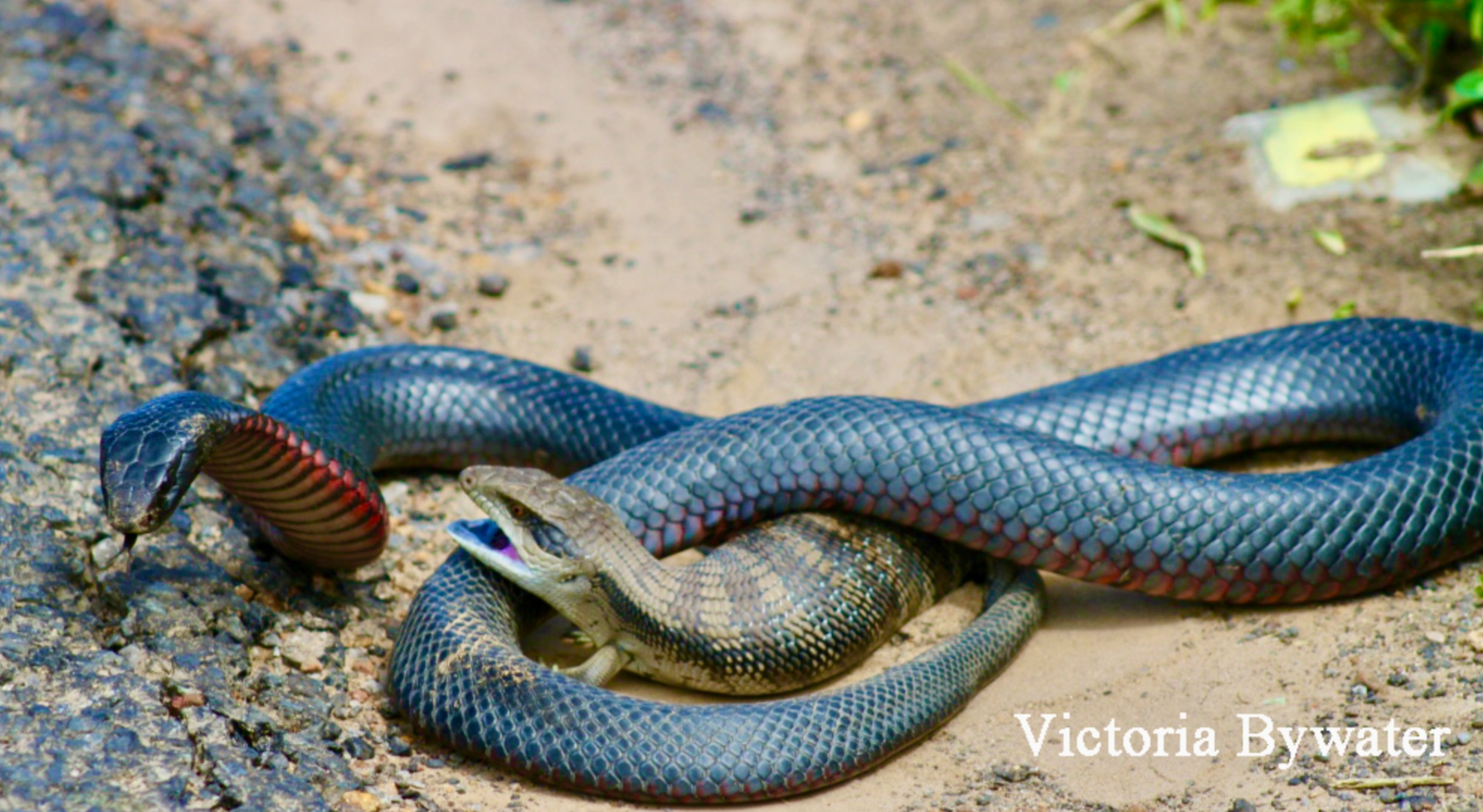
Red Bellied Black Snakes regularly feed on Blue Tongue Lizards
About Chris Williams
Chris Williams has spent more than 35 years working with reptiles and amphibians throughout Australia and is widely recognised as one of the country's leading herpetologists. Since 2014, he has served as President of the Australian Herpetological Society, helping to promote reptile education, research and conservation nationwide.
His professional background includes roles with the Australian Reptile Park and Taronga Zoo, as well as extensive field experience working with reptiles across New South Wales. Chris is also the founder of Snake Ranch, which grew to become Australia's largest reptile breeding facility.
In addition to his field and zoo work, Chris has authored seven books on Australian reptiles, amphibians and wildlife. He is regularly interviewed regarding reptile interactions. Through Urban Reptile Removal, he continues to train and mentor snake catchers throughout New South Wales, ensuring the highest standards of safety, professionalism and reptile expertise are maintained across the network.
