Seven Hills Snake Catcher
Snake Catcher SEVEN HILLS — Urban Reptile Removal 0418 633 474
Stay calm and keep your distance. Keep your eyes on the snake from a safe spot. The most useful thing you can do before we arrive is maintain visual contact. A snake that's been watched is far easier to find. If it disappears into cover, keep watching the spot where you last saw it. Snakes will often reappear within minutes once the area goes quiet. You don't need a photo or to identify the species. Just watch where it goes.
Why Are There Snakes in Seven Hills?
Seven Hills is one of the busier suburbs in Western Sydney, with a mix of older homes, renovated properties, leafy streets, backyard sheds, large gardens, industrial pockets and open reserves. That mix creates the kind of conditions that support resident reptile populations, particularly through the warmer months. Snake sightings around gardens, fences, sheds and driveways are a normal part of summer in Seven Hills, and Urban Reptile Removal attends a high volume of call outs in the suburb every snake season.
The suburb sits between the Toongabbie Creek and Blacktown Creek catchments, with the connecting drainage easements and parkland threading through the residential streets. Add the rodent populations that build up around older sheds, the industrial fringe and unsealed storage areas, and the conditions add up. Eastern browns in particular do well in Seven Hills because the prey base is there.
If you've found a snake in Seven Hills, call 0418 633 474. You don't need to move closer. You don't need a photo. You don't need to scare it off. Step back, keep your distance, and let a licensed snake catcher handle the rest.
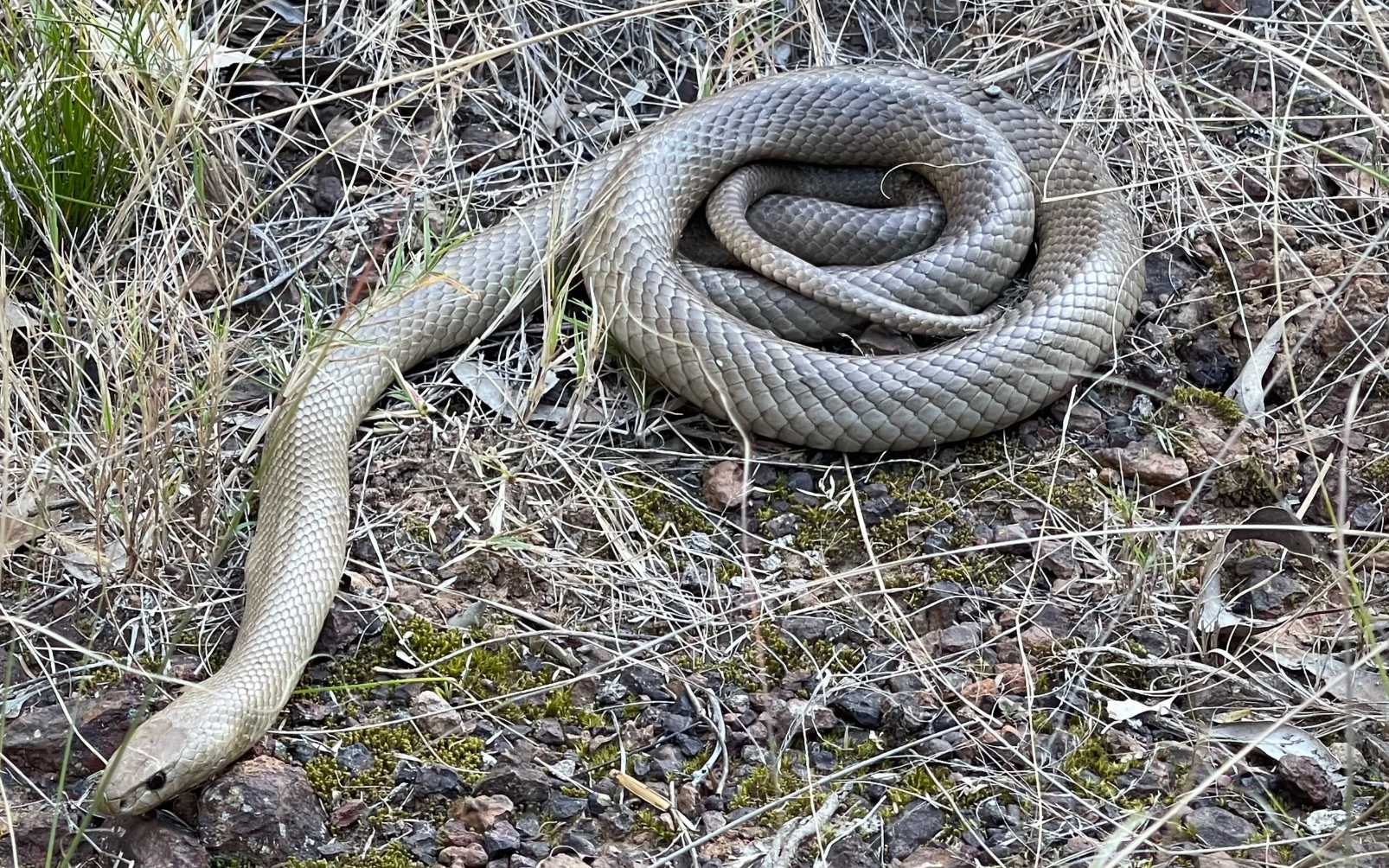
A large Eastern Brown Snake, similar to the ones we find in Seven Hills.
The Eastern brown snake is the species most commonly removed in Seven Hills. Browns flourish here because the suburb offers plenty of warm hiding spots, rodents, gardens, long fence lines and sheltered spaces around homes. They’re extremely fast, highly venomous and quick to defend themselves when startled. Many residents spot them moving across driveways, slipping under garden edging, basking beside sheds or crossing open lawn areas. If you ever see one, stay well back and call immediately. Brown snakes should only ever be handled by trained professionals.
Seven Hills also has a strong population of red-bellied black snakes, especially in parts of the suburb with thicker vegetation, shaded gardens and damp areas. These snakes prefer spots where frogs, skinks and water sources are present. Their glossy black scales and red belly make them easy to recognise. While they are generally shy, they are still venomous, and professional removal is essential. If a red-bellied black snake appears on your property, call 0418 633 474 and we will attend as quickly as possible.
Another species seen frequently in Seven Hills is the yellow-faced whip snake. These slender, quick-moving snakes often cause panic because they are mistaken for baby browns. Whip snakes move incredibly fast through gardens, rock edges, driveways and narrow gaps between fences. They are venomous but avoid confrontation, disappearing almost instantly once disturbed. The sooner you contact us, the greater the chance we can locate it before it retreats into deeper cover.
Not all reptile sightings in Seven Hills involve snakes. The area is home to many green tree snakes, a harmless species that can move quickly and flatten its head when alarmed, making it seem more intimidating than it actually is. Green tree snakes frequently show up near garden beds, fences, garages, roofs, pool areas and outdoor sheds. They pose no risk to people or pets but still require careful handling so they are not injured during removal.
And then there are the blue-tongued lizards, among the most common backyard reptiles in Seven Hills. Blueys bask in sunny spots, hide under pot plants, crawl along fence lines and explore veggie gardens. Their puffing, hissing and wide open mouth can alarm residents, leading many to believe they have a snake. We receive countless calls like this and we are always happy to check — better to confirm than to take a chance.
With so many established houses in Seven Hills, there are countless hiding spots and warm surfaces that attract snakes. People spend a lot of time outdoors here — mowing, gardening, fixing things in the shed, looking after pets or setting up outdoor spaces — so discovering a snake can be a stressful interruption. Calling Urban Reptile Removal means you can step back and let a trained professional take over. You never need to follow the snake or watch where it goes. Just stay safe and keep others away.
When we arrive at a Seven Hills property, we begin by identifying the snake’s last known location. Snakes don’t travel far once they find a place that feels safe. The most common hiding spots we find in this suburb include:
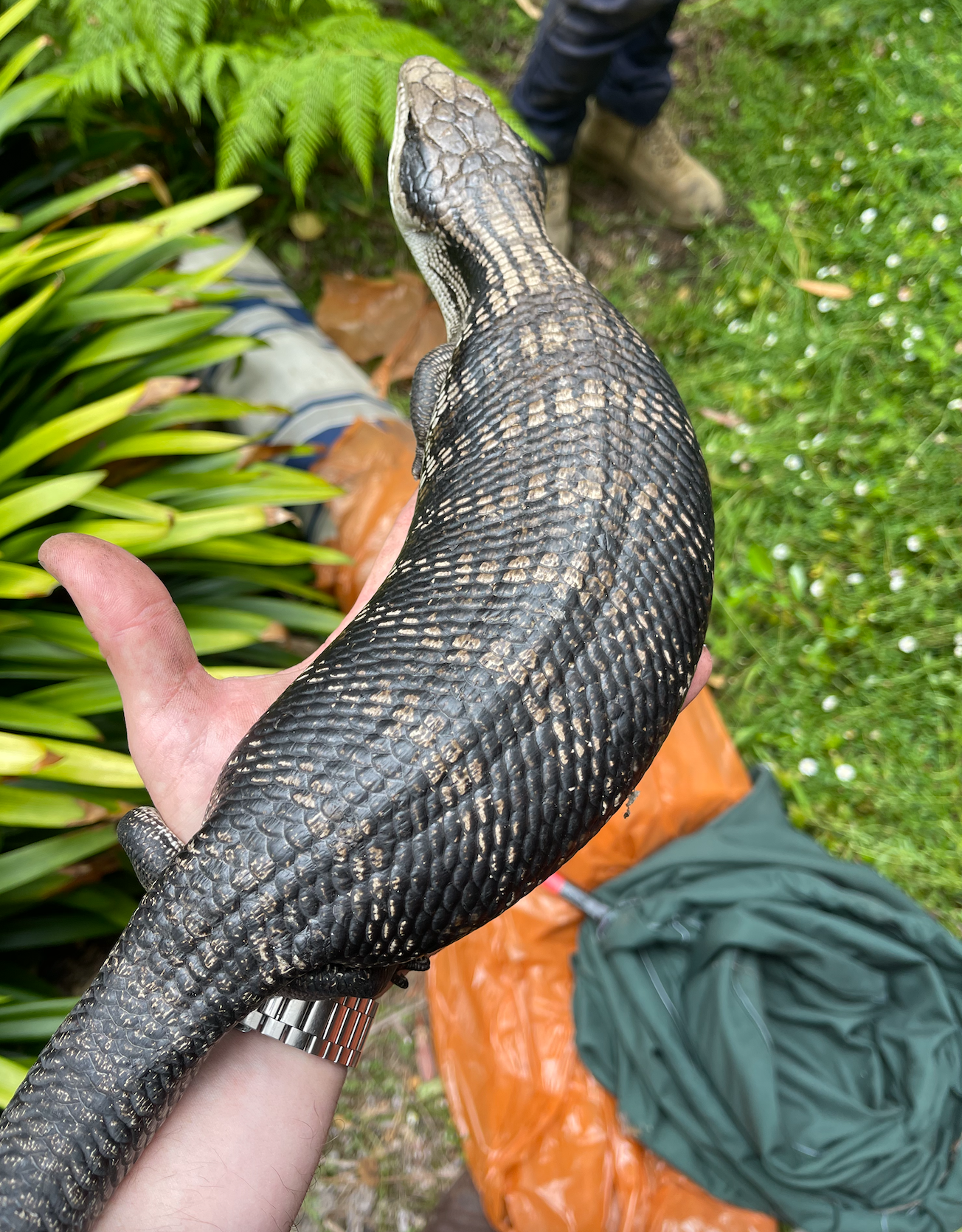
Large Blue Tongue Lizards, like this one, are regularly seen in Seven Hills and are often mistaken for snakes.
Where snakes hide on Seven Hills properties
The places we find them most often are predictable:
Behind hot water systems
Beneath garden edging and retaining walls
Inside garages, particularly along the walls
Under pot plants
Behind sheds and storage units
In overgrown garden beds
Behind air conditioning units
Under timber and metal piles
Around pool pump areas
Beneath kids' play equipment
Inside wheelie bin storage areas
Between fence gaps and along boundary edges
When we arrive, we work through each of these quietly and methodically until the snake is found and safely removed.
After we leave
Most people want to know why the snake appeared in the first place. The answer is almost always prey. Snakes follow rodents, skinks and frogs, and Seven Hills has the mix that supports all three. Bush corridors, older fencing, shaded gardens, warm surfaces and the kind of suburban infrastructure that allows prey populations to build. The snake isn't choosing your house. It's following its food.
The good news is that the conditions are manageable. The things that genuinely work are practical:
Keep grass and edges trimmed
Clear clutter along fence lines
Lift stored materials off the ground
Secure outdoor pet food and feed
Tidy garden beds and reduce heavy vegetation
Seal small gaps where rodents travel
Remove debris, timber and metal piles
The things that don't work, chemical repellents, sulphur powders, ultrasonic devices, mothballs, garlic, diesel, we'll tell you about those too. There's no evidence behind any of them despite the marketing, and we'd rather you spent the money on the things that actually move the needle.
The questions Seven Hills residents most often ask
Does one snake mean there's more?
No. Snakes are solitary. They don't nest in suburban yards, don't live in groups, and don't travel in pairs. One sighting almost always means one snake. Once it's removed, the situation is resolved.
What attracted it?
Almost always rodents or frogs. If you've seen a snake on the property, there's a strong chance prey activity has been there too, even if you haven't noticed it.
If a snake is inside the house
A snake indoors is an emergency. They get in through open garage rollers, gaps under external doors, rodent holes, open laundry areas and renovation related gaps. Leave the room, close the door behind you, and call 0418 633 474 straight away. Indoor snake jobs are prioritised because the safety risk is higher.
When in doubt, call
If you see movement in the garden, hear your dog barking persistently at a fence line, or simply aren't sure whether a sighting is serious, call 0418 633 474. Even if it turns out to be a blue tongue, we'd rather take the call and tell you so.
We work across Seven Hills and the wider Blacktown LGA every day of the year. When a snake turns up where it shouldn't be, we'll handle it quietly, calmly and properly, and explain what brought it in once it's gone.