Normanhurst Snake Catcher
Snake Catcher NORMANHURST — Urban Reptile Removal 0418 633 474
Snake Catcher Normanhurst — Call 0418 633 474
If you've found a snake in Normanhurst — in the yard, the garage, a garden bed, or somewhere on the property you'd rather it wasn't — call Urban Reptile Removal on 0418 633 474. We're usually on site within about thirty minutes depending on traffic and access, and we operate 24 hours a day across Normanhurst and the wider Hornsby Shire.
Step back, keep your distance, and let us handle the rest. You don't need a photo. You don't need to identify the species. The most useful thing you can do is watch it from a safe distance, and if it moves into cover, keep an eye on the spot where you last saw it. Snakes will often reappear within minutes once the area goes quiet. We'll stay on the phone and talk you through what to do until we arrive.
Why Are There Snakes in Normanhurst?
Normanhurst is one of the more wildlife-rich pockets in the Hornsby Shire. The suburb sits on the ridge that carries the railway line and the Pacific Highway north through Hornsby, but the streets fall away on both sides into deeper bushland. To the west, the land drops into the Berowra Creek catchment and Berowra Valley National Park. To the east, the gullies feed into Lane Cove and the wider Lane Cove River system. Most Normanhurst streets have a green corridor within a few minutes' walk.
The character of the suburb completes the picture. Older brick homes, updated rebuilds, mature canopy, generous backyards, sandstone retaining walls, and a mix of established gardens and shaded corners that have had decades to mature. Many properties back directly onto reserve land or have a creek line running along the boundary. For snakes moving along the gullies between the two national park systems, Normanhurst backyards aren't a barrier. They're part of the same continuous habitat.
Snakes aren't appearing in Normanhurst because something is wrong with a property. They're appearing because the suburb sits on top of, and continuous with, one of the better reptile corridors in northern Sydney.

What Normanhurst Snake Activity Looks Like
Normanhurst produces the kind of call out profile you'd expect from a bushland edge suburb on the Hornsby ridge. Diamond pythons are consistent residents in roof cavities, on pergolas and through the established trees, drawn to possum and rat populations. Red bellied blacks move along the creek lines, around frog ponds and through any property with consistent moisture. Eastern browns show up less often than in the western Hornsby suburbs but do turn up, particularly on the more open blocks. Golden crowned snakes appear occasionally in the leaf litter and mulched beds of the more shaded properties.
Blue tongued lizards are common across the suburb, and a good portion of our Normanhurst calls turn out to be blue tongues that have surprised someone by rustling loudly through a garden bed. We'd rather take that call and confirm it than have someone assume it was harmless and be wrong.
The activity follows the standard pattern. Spring brings the snakes out of brumation. Summer holds the peak. Autumn tapers as temperatures drop. Pythons can still turn up in roof cavities through winter, drawn to warmth and resident possums.
Golden crowned snakes are often encountered in Normanhurst. These small, nocturnal snakes have a pale yellow band across the head and nape and a pink or reddish belly. They are venomous but normally cause only local symptoms. Golden crowned snakes prefer damp, shaded environments such as garden beds, rock piles, leaf litter, and raised sections of the yard. In a suburb like Normanhurst, with so many shaded areas and bush edges, golden crowned snakes move quietly through gardens and are sometimes seen after rain. They are often mistaken for juvenile brown snakes due to their size and quick movements.
Red bellied black snakes are another species commonly found in the area. These snakes have a shiny black body with a deep red or pink underside. They are usually seen near water, damp gardens, drains, shaded corners, and frog rich areas. Residents often find them basking after rain or moving across open ground on warm sunny days. Although red bellied black snakes are less defensive than brown snakes, they are still venomous and should never be approached. A trained snake catcher can manage them safely, minimising risk to both people and pets.
Diamond pythons are one of the largest native reptiles in the region. These gentle, non venomous pythons climb extremely well and often appear in trees, on fences, beside sheds, or inside roof spaces. Because Normanhurst backs onto large bush corridors, diamond pythons regularly move through the suburb looking for warm surfaces to rest on and places to hide. They may appear curled on verandas, stretched along garden walls, or resting quietly in sheds. Although harmless, they can be difficult to remove because of their size and strength, so professional snake removal is recommended.
Green tree snakes are commonly seen in Normanhurst due to the large amount of vegetation. These thin, fast moving, non venomous snakes may be bright green, olive, or dark grey with a yellow underside. They have excellent vision and flee quickly when disturbed. Green tree snakes often appear along fences, balconies, garden beds, garages, and trees. When threatened, they flatten their body to look larger, which can frighten residents, but they are completely harmless. A snake catcher can safely relocate them if they are inside a home or stuck in a dangerous place.
Blue tongued lizards are abundant in the suburb and are often mistaken for snakes. These slow moving skinks have a large body, a bright blue tongue, and a habit of puffing up when frightened. They feed on garden pests such as snails and insects and help keep yards healthy. Blue tongued lizards hide under pot plants, in garden beds, beneath decks, or near sunny edges of the yard. Urban Reptile Removal is always happy to check whether a reptile is a lizard or snake, as many residents are unsure at first glance.
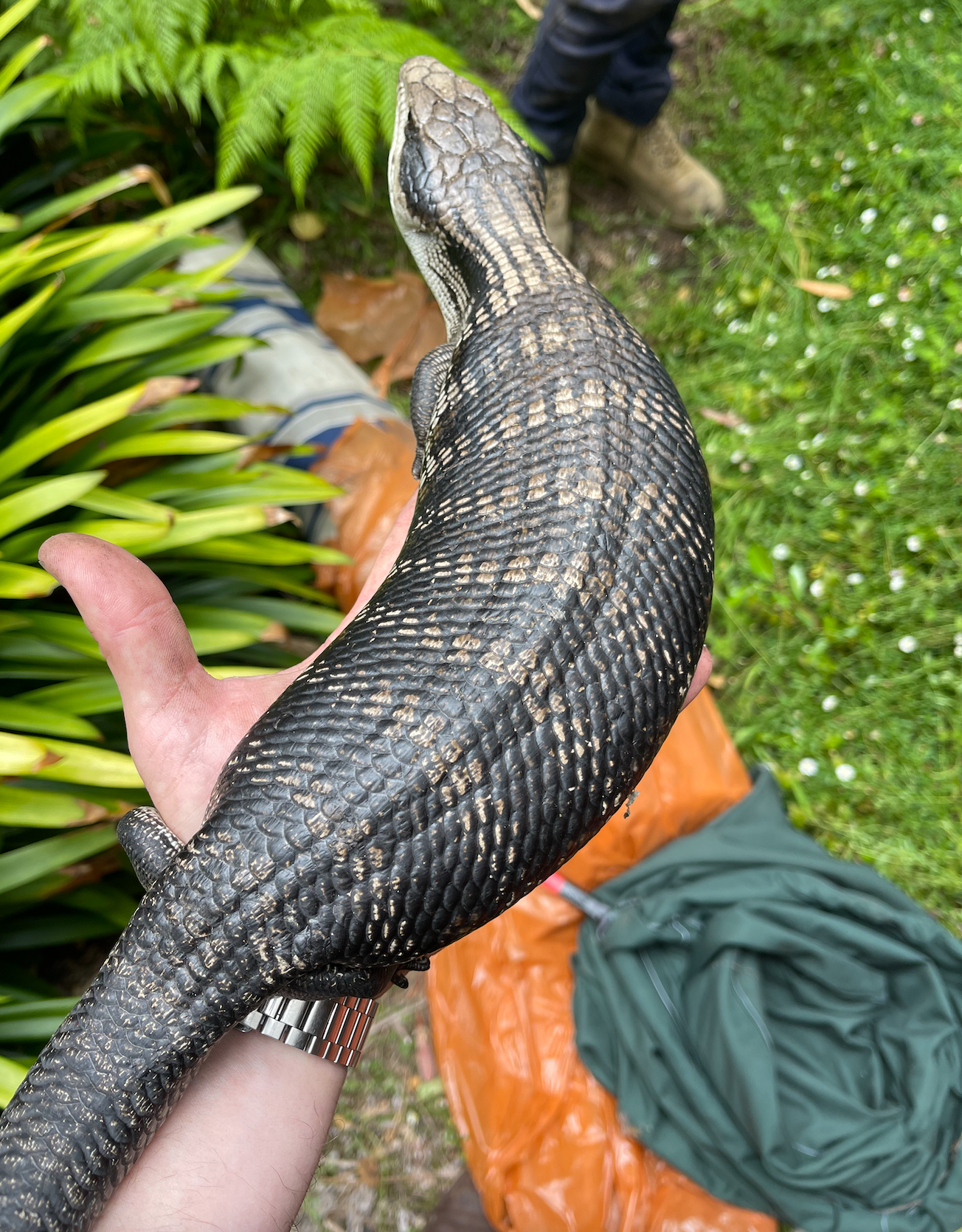
Blue Tongue Lizards like this one are common in Normanhurst. The d ofen get mistaken for snakes if only part of the lizard is seen.
Normanhurst properties have many ideal hiding spots because of the suburb’s natural layout and dense vegetation. When we attend a snake removal job, we commonly search the following locations:
• under garden edging or rocks
• behind hot water systems
• next to air conditioners
• inside garages behind stored items
• under pot plants
• beneath decks or steps
• inside shrubs, hedges, or thick gardens
• around pool equipment
• along fence lines
• under timber or old building materials
• near wheelie bin storage areas
• inside sheds or storage units
You do not need to keep watching the snake after calling Urban Reptile Removal. We search each likely hiding spot until we find and remove the snake safely.
Many Normanhurst residents want to know why snakes appear in their yard. The answer is simple: snakes follow food. The suburb has frogs, skinks, insects, small mammals, and other prey animals that attract snakes. Normanhurst has many bush corridors and shaded areas that snakes use to move across the landscape. Snakes are not trying to enter homes deliberately, nor are they targeting people. They are simply travelling through an environment that suits them.
After removing the snake, we explain what conditions attracted it and how to reduce future visits. You do not need snake repellent powders or devices. These do not work. Effective prevention includes:
• keeping grass short
• removing clutter
• lifting items off the ground
• keeping garden beds tidy
• clearing leaf litter
• controlling rodents
• trimming hedges and bushes
• securing outdoor pet food
• clearing fence lines
• removing unused building materials
• organising sheds and storage areas
These steps reduce hiding places and remove the food sources that attract prey animals.
Some people fear that one snake sighting means more are nearby. This is a myth. Snakes do not travel in pairs, live in groups, or build nests in residential yards. One sighting almost always means one snake. Once relocated, the issue is usually resolved.
Snakes can enter homes in Normanhurst through open doors, damaged screens, gaps near sliding doors, cracks around pipes, or small holes created by rodents. Any snake found inside a home is considered an emergency snake removal situation. Urban Reptile Removal responds quickly to secure the property.
Residents choose Urban Reptile Removal because we remain calm, professional, and respectful. We remove the snake without panic, explain why it appeared, and provide advice that genuinely helps. We have extensive experience with snake removal in Normanhurst and understand the suburb’s bushland interface.
If you see unexpected movement in the garden, hear rustling sounds, or notice your pet reacting strongly to something outside, call 0418 633 474 and we will assist immediately.
For fast, safe, and reliable snake removal in Normanhurst, you can depend on Urban Reptile Removal every day of the year. We resolve the problem quickly and professionally so you can get on with your day with peace of mind.

About Chris Williams
Chris Williams has spent more than 35 years working with reptiles and amphibians throughout Australia and is widely recognised as one of the country's leading herpetologists. Since 2014, he has served as President of the Australian Herpetological Society, helping to promote reptile education, research and conservation nationwide.
His professional background includes roles with the Australian Reptile Park and Taronga Zoo, as well as extensive field experience working with reptiles across New South Wales. Chris is also the founder of Snake Ranch, which grew to become Australia's largest reptile breeding facility.
In addition to his field and zoo work, Chris has authored seven books on Australian reptiles, amphibians and wildlife. He is regularly interviewed regarding reptile interactions. Through Urban Reptile Removal, he continues to train and mentor snake catchers throughout New South Wales, ensuring the highest standards of safety, professionalism and reptile expertise are maintained across the network.
