North Rocks Snake Catcher
f there's a snake at your home, garage, shed, or property, CALL NOW

North Rocks is a genuinely productive reptile catching suburb, and the reason is geographic. The suburb sits on the western edge of Bidjigal Reserve, with Darling Mills Creek running through the southern boundary, the Muirfield Golf Course corridor threading through the middle, and steep gully blocks, sandstone outcrops and retained bushland in between. A substantial proportion of properties back directly onto reserve, creek line or golf course. Almost every other property is within a couple of streets of one. The result is a suburb where reptiles have continuous habitat running through the centre of the residential area, not just along the boundary.
Stay calm and keep your distance. Keep your eyes on the snake from a safe spot. The most useful thing you can do before we arrive is maintain visual contact. A snake that's been watched is far easier to find. If it disappears into cover, keep watching the spot where you last saw it. Snakes will often reappear within minutes once the area goes quiet. If we arrive and the snake hasn't been seen for a while, the job becomes much harder. You don't need a photo or to identify the species. Just watch where it goes.
The other defining feature is the housing. North Rocks has older homes on large blocks, established gardens dating back decades, sandstone retaining walls, multi level backyards, long fence lines and the kind of mature shrubs and timber stacks that give snakes plenty of options once they're on the property.
If you've spotted a snake or other reptile in North Rocks, call Urban Reptile Removal on 0418 633 474. Licensed, insured, and available every day of the year.
What Drives the Activity Here
Bidjigal Reserve is the heavyweight. It runs along the eastern side of the suburb and connects through to Baulkham Hills, Pennant Hills and the wider Hills District bushland network. The reserve is one of the most significant reptile refuges in this part of Sydney, with sandstone country, retained bushland, gullies and a long history of resident reptile populations. Properties facing the reserve see the highest activity in the suburb by a clear margin.
Darling Mills Creek runs through the southern boundary and supports the Red bellied Black Snake population year round. Permanent water, frog populations, dense bankside vegetation. The Muirfield Golf Course corridor threads through the centre of North Rocks, with water features, irrigated turf and bushland margins acting as continuous reptile habitat right inside the residential area. The smaller pocket reserves and steep gully blocks running between the streets connect everything together.
Diamond Pythons are a real part of the picture here. The reserves and the Hills District corridor support a resident population, and we attend Python relocations in North Rocks regularly through the warmer months. Often in roof spaces and sheds.
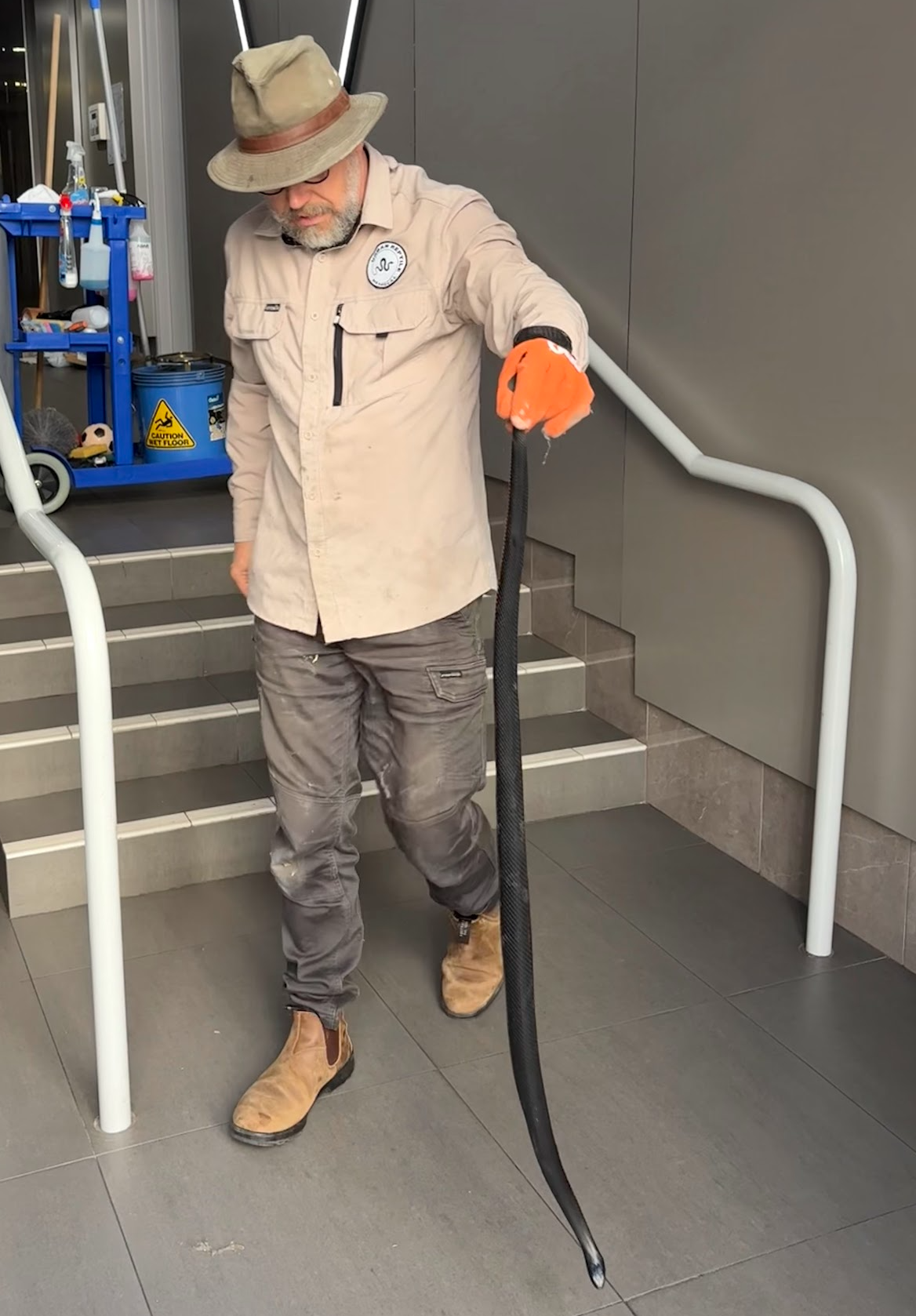
Red Bellied Blac Snakes like this one are the most common species we encounter in North Rocks. https://urbanreptileremoval.com.au/sydney-reptile-advice/faq-after-a-visit-from-a-red-bellied-black-snake
Where We Find Reptiles on North Rocks Properties
The Hills District terrain gives reptiles plenty of hiding options.
For Eastern Browns: garages and the gaps under garage rollers, sheds with accumulated yard storage, sandstone retaining walls (a near-universal feature of North Rocks properties), rock features, long grass along boundary fences facing reserve or gully, around chicken coops, aviaries and outdoor pet bowls.
For Red-bellied Black Snakes: pool pump housings, pool surrounds and water features, garden beds with thick mulch and dense plantings against boundary fences, under decks and verandahs in shaded damp corners, along fences backing onto Darling Mills Creek or the wetter sections of the reserves.
For Diamond Pythons: roof cavities are the standout, particularly on older properties with bushland exposure. Also sheds, garages, pergolas, aviaries, chicken coops and outdoor entertainment areas. Occasionally inside the house when one has come down from the roof through a downlight cavity or wall gap.
For Golden-crowned Snakes: under sandstone blocks, around rockeries and leaf litter, beneath timber piles, paths and outdoor tiles, and around damp sheltered corners of the garden.
What to Do If You See a Snake in North Rocks
Stay calm. Step back. Bring children and pets indoors. If possible, keep watching the snake until we arrive. Call 0418 633 474.
You don't need to take a photo or identify the snake. You don't need to follow it. But if you can keep a visual from a safe distance, that helps. If it disappears into cover, keep watching the spot where you last saw it — snakes often reappear within minutes once the area goes quiet. Knowing where it last was makes our job much faster.
If you hear movement in the roof through the warmer months and you live on a bushland-edge street, a Diamond Python is one of the more likely explanations. Possums and rats are the others. We can tell the difference on site.
What Actually Reduces Reptile Activity on a North Rocks Property
The reptile-deterrent products on the market — powders, sprays, ultrasonic devices — do not work. Skip them.
For Eastern Browns and Red-bellied Black Snakes, the standard rules. Reduce rodent activity. Keep grass short along boundary fences, particularly the side facing reserve or gully. Tidy sheds, garages and outdoor storage. Lift timber, pots and metal sheets off the ground. Keep pool pump housings clear. Thin out heavy garden beds along the boundary side facing bushland. Manage frog activity where it has become concentrated against the house, without killing the frogs — they're protected.
For Diamond Pythons specifically, reducing rodent activity in the roof is the single most useful thing. Pythons follow rats. If a python turns up in the roof, the rats got there first. Seal roof entry points where you can, keep the roof clear of stored items that draw rodents, and address roof rodent activity through proper rodent control.
Snake Inside the House or in the Roof
A snake inside a North Rocks home or in the roof cavity is an emergency for venomous species and a priority job for Diamond Pythons. We attend these calls regularly through the warmer months. We respond as quickly as we can, locate the snake, remove it safely, and check the building is secure before we leave.
One Thing Worth Saying
A snake sighting doesn't mean your house is infested. Snakes don't live in pairs, don't form groups, and don't build nests in suburban backyards. One sighting almost always means one snake. Most are transient — they move through, looking for food, water or shelter. Once the individual is removed, the situation is usually resolved.
Why North Rocks Calls Urban Reptile Removal
We work calmly, without panic, and without making anyone feel judged about the state of their property. We're across the North Rocks / Baulkham Hills / Carlingford / Pennant Hills corridor regularly through the season, and we know the Bidjigal Reserve patterns, the Darling Mills Creek patterns and the roof-Python pattern of the older Hills District streets from years of practical work. We explain what we're doing, what species we're dealing with, why it's there, and what — if anything — can be done to reduce the chance of the next one.
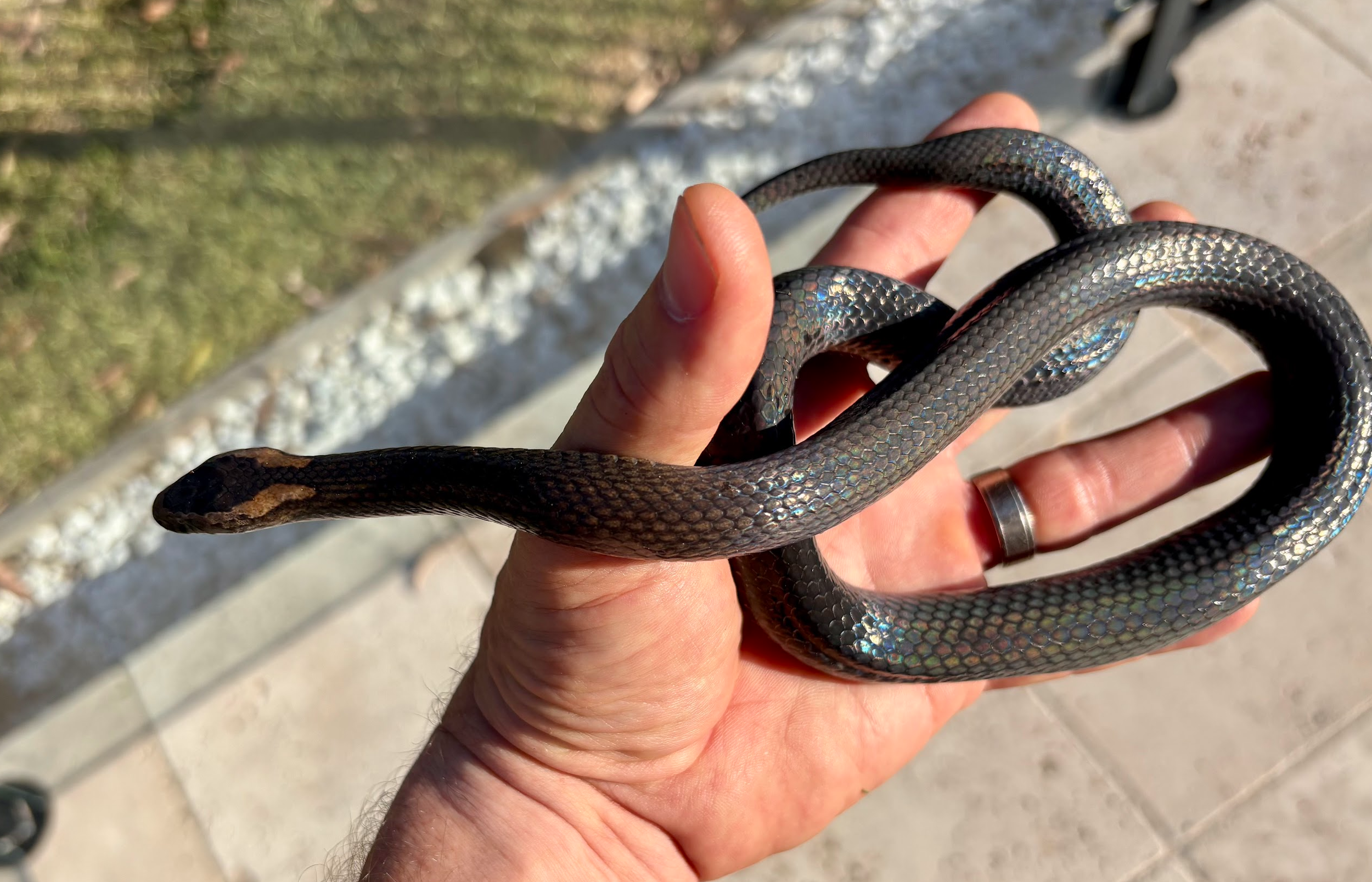
A Golden Crowned Snake, similar to the one e ftn catch in North Rocks. https://urbanreptileremoval.com.au/sydney-reptile-advice/faq-after-encountering-a-golden-crowned-snake
If you see movement, hear rustling in the yard or the roof, or notice your pet fixated on one area, call 0418 633 474 immediately.
Urban Reptile Removal — 0418 633 474
Licensed, insured, on call 24/7 across North Rocks and the wider Hills District.

